CSF Leak: Can It Kill You? Risks, Signs, and Urgency
Understand cerebrospinal fluid (CSF) leaks, their potential dangers, warning signs, how they’re diagnosed, and urgent steps to take. Learn what to expect from treatment and when to seek immediate care.


CSF leaks can be dangerous and may lead to serious infections if untreated. While death is not inevitable, the condition can cause meningitis or brain sagging if not managed promptly. Seek urgent medical evaluation for suspected CSF leak—red flags include sudden severe headache, persistent clear drainage from the nose or ear, neck stiffness, or light sensitivity.
What is a CSF Leak?
A cerebrospinal fluid (CSF) leak occurs when the fluid that cushions and protects the brain and spinal cord escapes through the skull or spine. CSF acts as a protective cushion and helps maintain proper pressure in the nervous system. When a leak happens, the brain may lose its supportive cushion, which can lead to a cascade of symptoms and potential complications. Understanding the mechanism helps homeowners and DIYers recognize when a leak is a medical concern rather than a simple runny nose. According to Leak Diagnosis, the seriousness of a CSF leak depends on location, cause, and how quickly treatment starts. This awareness shapes decisions about when to seek care and how to manage risk in the meantime.
In practice, a CSF leak is not a “common home problem,” but it can arise from various factors, including recent head trauma, invasive procedures, or spontaneous changes in pressure within the skull. The brain and spinal cord rely on a stable CSF environment; disruption can lead to headaches and other symptoms that warrant professional evaluation. The emphasis for homeowners is to differentiate symptoms that are likely innocuous from those that signal a medical emergency.
How Leaks Develop: Causes and Risk Factors
CSF leaks have several potential causes. Spontaneous leaks may occur with minor trauma or anatomical weaknesses, while iatrogenic leaks can follow surgical or diagnostic procedures involving the skull or spine. Traumatic leaks result from injuries that create a pathway for CSF to escape. Understanding these categories helps you assess risk—yet the right move in every case is to seek medical advice when symptoms are suspicious. In the long run, risk factors such as prior sinus surgery, skull base defects, or high-pressure headaches can raise the likelihood of a leak. Leak Diagnosis emphasizes that identifying the exact cause often requires a specialist’s evaluation and targeted imaging to locate the breach and guide treatment.
Symptoms and Warning Signs: When to Worry
Common signs include a severe, positional headache that worsens when standing or sitting up, a clear nasal or ear drainage that matches CSF characteristics, neck stiffness, photophobia, and sometimes a salty taste or metallic smell in the mouth. Not every symptom confirms a CSF leak, but when several red flags appear, prompt evaluation is essential. If you have persistent drainage after nose surgeries or after head trauma, contact a clinician. Sudden, severe headaches with fever or confusion may indicate meningitis or another urgent complication. In such cases, do not delay seeking urgent care. The combination of headaches and clear drainage is a strong signal that medical assessment is needed.
Diagnosis: How Doctors Confirm a CSF Leak
Verification relies on lab tests and imaging. A hallmark test is beta-2 transferrin in nasal or ear discharge, which is highly specific for CSF. Imaging options include CT or MRI to locate the leak and assess surrounding structures; CT cisternography or MRI cisternography can help pinpoint the site. Because treatment decisions hinge on precise localization, timely referral to a neurosurgical or ENT specialist is common after initial evaluation. Theory and practice align here: accurate diagnosis reduces unnecessary interventions and guides appropriate therapy.
Complications If a CSF Leak Is Left Untreated
Untreated leaks raise the risk of serious infections such as meningitis and can lead to intracranial hypotension, brain sagging, or subdural hematomas due to altered pressure dynamics. Repeated or chronic leaks may complicate recovery and increase the likelihood of long-term headaches or neurologic symptoms. While fatal outcomes are not guaranteed, the potential consequences are significant enough to warrant prompt evaluation and treatment. Early management can prevent many complications and preserve neurological health.
Treatment Options and Prognosis
Treatment depends on leak location, cause, and the patient’s overall health. Small, self-limited leaks may resolve with conservative measures such as rest, hydration, and avoiding activities that raise skull pressure. Persistent leaks or those caused by structural defects typically require procedures to seal the leak, including targeted surgery or epidural blood patches. Medication may address symptoms, while serial imaging monitors progress. Prognosis improves with timely intervention, careful follow-up, and adherence to medical advice. The primary goal is to restore CSF integrity and prevent infections.
Emergency Guidelines: When to Seek Immediate Help
If you experience sudden, severe headaches that worsen when upright, persistent clear drainage from the nose or ears, neck stiffness, fever, confusion, or vision changes, seek emergency care. Time-sensitive decisions matter, and an early professional assessment can prevent complications. If you have recently undergone skull-base surgery or a head/neck procedure and develop new nasal drainage or headaches, contact your clinician promptly. In acute settings, emergency departments can initiate diagnostic workups and coordinate care with specialists.
Prevention, Self-Care, and Risk Reduction
Prevention focuses on minimizing risk factors and seeking prompt evaluation for suspicious symptoms. Stay hydrated, avoid activities that increase pressure on the head (heavy lifting, certain splinting tasks), and adhere to your clinician’s instructions after procedures near the skull base. If a CSF leak is confirmed, follow the plan for monitoring and follow-up imaging. Communication with healthcare providers is essential to ensure timely healing and to reduce the chance of recurrence.
CSF leak: key aspects, causes, and management
| Aspect | Details | Notes |
|---|---|---|
| Symptom cluster | Headache worsens on standing; nasal/ear drainage; neck stiffness | Prompt evaluation advised; consider beta-2 transferrin testing |
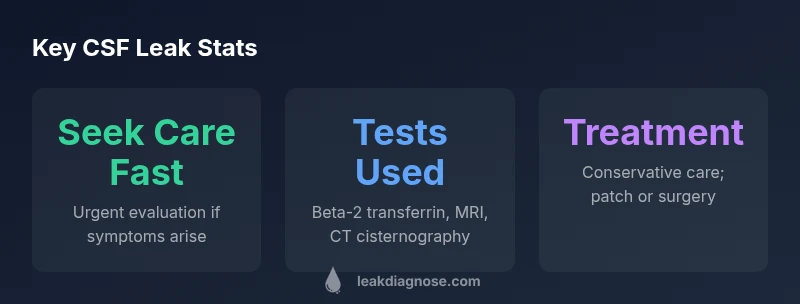
| Diagnosis tests | Beta-2 transferrin in discharge; MRI/CT/Cisternography | Targeted imaging to locate leak site |
| Causes | Spontaneous, trauma, iatrogenic | Medical history guides assessment |
| Treatment | Conservative care or patch/surgical repair | Follow-up imaging to confirm healing |
Questions & Answers
What exactly is a CSF leak and why is it dangerous?
A CSF leak is the escape of cerebrospinal fluid from its normal containment around the brain and spinal cord. It can lead to headaches, infections like meningitis, and other complications if not treated.
A CSF leak is when spinal fluid leaks out; it can be dangerous if not checked by a doctor.
What tests confirm a CSF leak?
The beta-2 transferrin test is highly specific for CSF. Imaging such as MRI or CT cisternography helps locate the leak site and guide treatment.
Doctors use a special test for CSF in drainage and imaging to find where the leak is.
Can a CSF leak heal on its own?
Some leaks resolve with conservative care, but many require targeted treatment to seal the leak and prevent infections. Monitoring and follow-up are important.
Sometimes leaks close on their own, but many times they need medical treatment.
What are red flags requiring emergency care?
Sudden severe headache, fever, confusion, seizures, or new neurological symptoms with drainage should prompt urgent care.
If you suddenly get a severe headache or fever with drainage, seek help right away.
What treatment options exist for CSF leaks?
Options include conservative care, epidural blood patches, and surgical repair, depending on the leak's location and cause.
Treatments range from conservative care to patching or surgery, based on the leak.
“Timely evaluation and precise localization of a CSF leak are critical to preventing serious complications. Most patients recover well with appropriate treatment.”
Main Points
- Act fast for suspected CSF leaks
- Use beta-2 transferrin testing to confirm CSF on drainage
- Seek urgent care to reduce risk of meningitis
- Early treatment improves outcomes and may prevent recurrence
- Follow medical guidance and attend all follow-up appointments