What Was Leaked in the Signal Chat: A Privacy-Focused Analysis
Explore what was leaked in the Signal chat, how leaks happen, and practical steps to protect conversations. Learn about end-to-end encryption, device hygiene, and best-practice privacy measures for homeowners and DIY enthusiasts.


There is no public, verifiable 'leak' of Signal messages; Signal uses end-to-end encryption for message content, so leaks are typically due to metadata exposure, device compromise, or user-backed data. The most reliable statements come from security researchers and vendor documentation. In discussions about what was leaked in the Signal chat, leaks usually involve backups, misconfigurations, or social engineering that bypasses protections. This article examines the nuance and outlines practical protections to minimize risk.
Context and scope of messaging privacy around Signal chats
Discussions about privacy in instant messaging often circle back to the central question: what was leaked in the signal chat? For homeowners and DIY enthusiasts, the concern is less about the encryption technology in isolation and more about how real-world usage, device access, and backup practices can expose information. According to Leak Diagnosis, Signal’s architecture prioritizes content privacy through end-to-end encryption, but no system is immune to missteps. This section outlines the practical boundaries of privacy in everyday use, including what can and cannot be assumed about leak risks, and what readers should look for when evaluating claims about Signal chats. By grounding this analysis in typical user behavior and common attack vectors, we separate sensational claims from actionable guidance. We also frame expectations for readers who want to reduce risk while maintaining functional communication. Taylor-made examples show how ordinary household activity—sharing family schedules, repair notes, or sensitive photos—can intersect with privacy realities in meaningful ways, without assuming breach of core protections.
What leaks mean in the context of chat apps
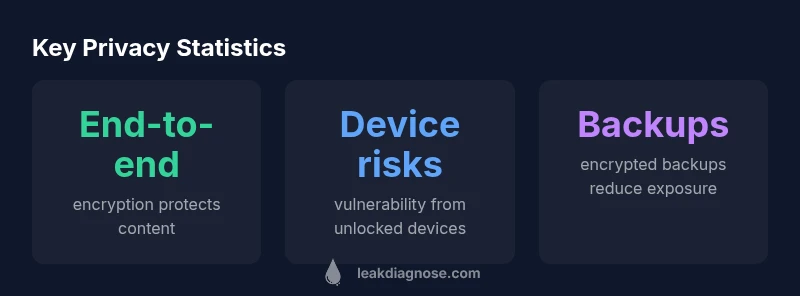
In the realm of chat apps, a "leak" does not always imply that the content of messages was captured by a third party. Instead, leaks often refer to exposed metadata (who talked to whom, when, and for how long), unencrypted backups, or access gained through compromised devices. Signal’s design focuses on encrypting content end-to-end, which means content is largely unreadable to intermediaries. However, metadata exposure, backup configurations, or device compromise can still reveal contextual details. When homeowners ask about what was leaked in the signal chat, the practical takeaway is that privacy is a multi-layered defense: encryption protects data in transit, but endpoints and storage points remain potential risk surfaces. This section also covers how policy, user behavior, and device settings influence practical privacy outcomes.
Signal protections and their limits in practice
Signal protects message content with strong cryptography, and it minimizes data retention on servers. Yet, real-world privacy depends on more than encryption alone. Device security, OS-level permissions, and user configuration (for example, cloud backups or synchronized devices) shape privacy risk. In the Signal ecosystem, the main leakage vectors are often device theft, password reuse, or backup exposure rather than the cryptographic channel itself. For homeowners, this means a holistic approach matters: secure your devices, disable unnecessary backups, and limit what you store in chats. When evaluated alongside metadata considerations and cross-device behavior, these factors define practical risk levels for what was leaked in the signal chat.
Hypothetical case studies and cautionary examples
To illustrate, consider anonymized scenarios that people commonly encounter. Case A involves a homeowner who left a phone unlocked and unattended, allowing a neighbor to view recent conversations. Case B concerns a family member who enabled cloud backups without encryption or with weak protections, increasing exposure risk if the cloud account is compromised. Case C demonstrates the consequences of sharing sensitive planning information via chat while in a shared space. These cases show how even robust encryption cannot compensate for physical access, weak account hygiene, or misconfigured backups. The goal is not to sensationalize but to illuminate practical steps that reduce risk in typical household environments.
How leaks occur: human factors, device access, and backups
Human factors drive a large portion of leakage risk in everyday use. Password reuse, weak device passcodes, and leaving devices unattended increase chances that someone can access chat histories or metadata. Device synchronization across multiple platforms can create additional exposure points if any linked device is compromised. Backup configurations are another common sink for leaks: backups stored in the cloud or on removable media can become a vector if the backup data is not adequately protected. Finally, social engineering remains a persistent risk: even the strongest encryption cannot prevent a phishing attempt from revealing access credentials or security questions. Understanding these mechanisms helps homeowners implement targeted safeguards and reduce the likelihood of leak scenarios.
Best practices to protect sensitive information in chat apps
- Harden device security: use strong, unique passwords, enable biometric unlock where available, and keep devices updated.
- Minimize backups: turn off cloud backups for chats or enable end-to-end encrypted backups where supported.
- Manage sessions: review active devices regularly and revoke access for devices you no longer use.
- Be cautious with content: avoid sharing highly sensitive data in chats unless necessary and consider alternative channels for sensitive material.
- Verify contacts: enable safety checks and verify key fingerprints when possible to prevent man-in-the-middle risks.
- Teach family members: create a simple household privacy plan that covers screen visibility, screen time, and device handling.
- Monitor metadata exposure: be mindful of when and with whom you share information and how long it remains accessible.
- Prepare for outages: have a plan for secure note-taking outside messaging apps when privacy is critical.
What to do if you suspect a leak: practical steps and resources
If you suspect a leak or unauthorized access, act quickly. First, secure the device (lock it, sign out from other sessions, change passwords). Review and tighten backup settings, disable unnecessary cloud backups, and enable encryption if available. Document what occurred and where data might have flowed (e.g., backup locations, linked devices). Consult reputable sources on privacy best practices and local regulations. Consider formal assessments or privacy-focused utilities that help identify exposure risks in your environment. In all cases, avoid sharing highly sensitive details in chat while you investigate and implement protective measures.
Looking ahead: trends in messaging privacy and responsible sharing
Privacy in instant messaging continues to evolve as devices proliferate and user behavior shifts. Expect greater emphasis on device-level security, safer backup options, and more transparent metadata controls. For homeowners, this translates to practical steps you can take today and a recognition that privacy is a moving target requiring ongoing attention. The broader trend is toward better user education, standardized security practices across platforms, and clearer guidance for households navigating privacy when coordinating chores, repairs, and family plans. As research and policy evolve, stakeholders—consumers, platforms, and regulators—will increasingly converge on common-sense privacy practices that balance convenience with robust protection.
Table: Core privacy mechanics in modern chat apps
| Aspect | Description | Privacy Impact |
|---|---|---|
| End-to-end encryption | Protects message content from interceptors | High |
| Metadata exposure | Details about who/when/for how long | Medium |
| Backups | Potential exposure if backups aren’t encrypted | Medium |
| Multi-device syncing | Additional vectors if devices are compromised | High |
Questions & Answers
Is Signal completely private?
No system is completely private in all contexts. Signal protects message content with end-to-end encryption, but privacy risks remain from device access, backups, and user behavior. Understanding these boundaries helps you make informed privacy choices.
Signal protects message content, but privacy isn’t absolute. Pay attention to device security and backup settings.
What counts as a leak in chat apps?
A leak refers to exposure of data that should be private, such as unencrypted backups, metadata about chats, or access gained via compromised devices. Content may be protected, but surrounding information can still leak.
Leaks include exposed backups or metadata, not just message text.
Can metadata reveal who I talk to?
Yes, metadata can reveal contact partners and communication patterns, even when message content remains encrypted. This information can be sensitive and is a common privacy concern.
Metadata can show who you chat with and when, even if messages are private.
How do I tell if my messages were accessed?
Indicators include unexpected device activity, unfamiliar login alerts, or backup changes. Regularly review devices and backup settings, and enable alerts where available.
Look for new devices, odd login alerts, or backup changes.
What should I do after a suspected leak?
Secure devices, revoke sessions, update passwords, and review backup protocols. Collect facts about the incident to guide further privacy steps and, if needed, consult privacy resources.
Secure your devices and review backups right away.
Does deleting messages prevent leaks?
Deleting messages from a device reduces local copies but may not erase backups or metadata that already exist. Always assess backup settings and stored copies.
Deleting messages helps, but backups and metadata can still pose risks.
“Encryption is a powerful barrier, but true privacy depends on user practices and vigilant device hygiene.”
Main Points
- Protect content with end-to-end encryption as a baseline
- Limit exposure by securing devices and managing backups
- Review multi-device access and session activity regularly
- Be cautious with sharing sensitive information in group chats