TCG Pocket Leak: Quick Troubleshooting Guide for Collectors
Discover fast, safe steps to diagnose and fix a tcg pocket leak at home. This Leak Diagnosis guide covers quick checks, DIY fixes, and when to call a pro.


A moisture intrusion in a tcg pocket leak is most often caused by moisture seeping through worn binder pockets or from condensation near a humid gaming area. Start with dry, sealed storage: wipe down surfaces, move cards to a new, labeled sleeve, and increase ventilation. If leaks persist, inspect the binder, sleeves, and nearby drink containers for sources.
Why a tcg pocket leak happens
Moisture issues in hobby storage are more common than many players realize. A tcg pocket leak often starts slowly, with dampness creeping into binder pockets or sleeves due to everyday conditions. In a home, the most frequent culprits are high room humidity, temperature swings, and spills from nearby drinks. Early signs can be subtle: a faint musty scent, a damp-to-the-touch feel on inner sleeves, or slight staining around pocket seams. Recognizing these cues allows you to react quickly to prevent damage to your prized cards. The goal is to interrupt moisture pathways before adhesives loosen, inks haze, or card surfaces warp. By acting fast and keeping storage dry, you protect both your investment and your playing experience.
Inexpensive, poorly constructed pockets or sleeves can worsen leaks. If a pocket breathes or a seam splits, moisture can wick in during a humid day or after a spill. Condensation can form on cold surfaces and migrate to warmer pockets, especially if a shelf or binder is near a window or humid room. A tcg pocket leak may not always be dramatic; small damp spots can spread slowly, compromising gloss and color. Treat every damp hint as a leak risk and address it before mold appears. Simple habits—storing in cool, dry spaces, using water-resistant sleeves, and replacing torn pockets—go a long way toward long-term card health.
What to check first
Begin with quick, low-effort checks that you can do in under 15 minutes. Look for obvious moisture sources around the gaming area: are there open water bottles, spills, or damp fabrics nearby? Inspect the pockets and sleeves of the binder for tears, pinholes, or water stains. Check the room’s humidity and ventilation—if the air feels muggy, consider opening a window or turning on a dehumidifier for a short period. Separate damp-looking cards from the rest and give them a closer look for stickiness, odor, or haze. Finally, review your storage setup: are pockets sealed and sleeves fully covering the cards? A rapid triage like this often reveals the main leak source and prevents unnecessary handling of undamaged cards.
Common sources in a gaming setup
A tcg pocket leak can originate from multiple household habits. The most common are drinks placed near gaming gear that spill or sweat condensation on cold surfaces, such as metal card trays or metal game boxes. Humidity-rich environments, like rooms without dehumidification, can cause damp pockets to form over days or weeks. Worn or low-quality pockets/pouches tend to seep moisture when exposed to humidity swings. Even routine cleaning with damp cloths left to air-dry near the cards can introduce moisture if the cloth isn’t fully dry. Finally, improper storage—like stacking heavy items on top of card binders or exposing them to direct sunlight—can degrade materials and create moisture pathways over time.
How to isolate the leak and prevent spread
If you observe a tcg pocket leak, isolate affected cards immediately. Move damp or stained cards into dry, labeled sleeves and a clean binder, away from the rest of your collection. Use silica gel packs around storage areas to absorb residual moisture, but never pour liquids on the storage area. Seal and store the dry cards separately for a day or two to ensure they stay dry before reintegrating into your main collection. Clean any affected surfaces with a dry microfibre cloth and keep the area well-ventilated. For ongoing prevention, maintain a stable indoor humidity (ideally below 50-60%), avoid drinks near storage, and replace compromised pockets and sleeves promptly.
Practical fixes you can implement today
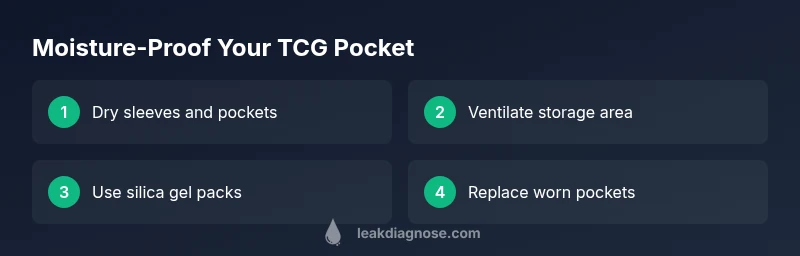
Today’s quick fixes are simple and low-cost. Start by transferring any damp cards to dry sleeves and a fresh binder. Replace damaged pockets or sleeves with water-resistant options. Improve ventilation in the room where you game—open a window, use a fan, or deploy a dehumidifier if moisture is persistent. Place silica gel packs around storage areas, and keep the binder shielded from direct sunlight. If the leak source isn’t eliminated after these steps, inspect the binder’s spine for gaps and replace worn pockets with higher-quality, moisture-resistant materials. Finally, establish a routine: weekly quick checks of humidity, monthly inspection of pockets, and annual replacement of aging sleeves.
Safety and ongoing prevention notes
Always prioritize safe handling when dealing with damp materials. Do not use heat sources to dry cards, which can warp them, and avoid exposing cards to solvents or cleaners that could degrade card stock. Wear gloves if you suspect mold and wash hands after handling damp materials. Prevention matters most: a stable climate, proper storage, and regular inspection drastically reduce recurrence. If you notice persistent moisture or mold growth, stop handling the affected items and seek professional help to prevent health risks and further damage.
Steps
Estimated time: 45-60 minutes
- 1
Assess the storage area
Survey the gaming space for moisture sources. Note any spills, damp fabrics, or water bottles within arm’s reach of your TCg pocket setup. Take photos of the setup to reference later.
Tip: Document layout before moving items. - 2
Isolate affected cards
Carefully remove damp-looking cards from the group and place them into dry sleeves in a clean, dry area. Label the sleeves to keep track of which cards were affected.
Tip: Work over a dry towel to catch drips. - 3
Dry and inspect sleeves
Check each sleeve for damp patches, stickiness, or fogging. If you see moisture inside the sleeve, replace it immediately and dry the card surface with a lint-free cloth.
Tip: Only replace sleeves that are fully dry. - 4
Check and replace pockets
Inspect binder pockets and spine pockets for wear or tearing. Replace compromised pockets with moisture-resistant options to seal out humidity.
Tip: Choose pockets with better moisture resistance for longevity. - 5
Address the humidity source
Increase ventilation in the room, use a dehumidifier if needed, and ensure drinks stay away from the storage zone. Keep a consistent temperature to reduce condensation risk.
Tip: Maintain a stable climate during storage. - 6
Test and monitor
Reassemble the collection and monitor for any new dampness over the next several days. If moisture returns, review storage materials and consider professional advice.
Tip: Set a weekly quick check reminder. - 7
Document and prevent
Record what worked and what didn’t, and implement a regular maintenance routine for future prevention.
Tip: Create a quick one-page moisture checklist.
Diagnosis: Visible moisture or staining inside a tcg pocket binder or sleeves
Possible Causes
- highCondensation from high room humidity or temperature swings
- highDirect liquid exposure from drinks or spills near the gaming area
- mediumDamaged or poor-quality pockets/sleeves allowing moisture ingress
Fixes
- easyMove affected cards to dry, sealed sleeves and replace damaged pockets
- easyImprove room humidity with ventilation or dehumidifier, and use water-resistant storage
- mediumReplace compromised binder pockets and sleeves; consider moisture barriers
Questions & Answers
What is a tcg pocket leak?
A tcg pocket leak refers to moisture intrusion inside a binder pocket or card sleeve, which can cause staining, warping, or mold. It’s usually caused by humidity, spills, or degraded materials.
A moisture issue in a card binder that can damage your cards; it’s usually humidity or spills causing it.
Can I fix a tcg pocket leak myself?
Yes, many leaks can be managed with quick DIY steps: dry the area, replace damaged sleeves, and improve ventilation. If moisture returns or you see mold, stop and seek professional help.
Yes, you can usually fix it at home with drying, replacement sleeves, and better ventilation.
What materials do I need to fix a tcg pocket leak?
You’ll need dry workspace, replacement sleeves, moisture-resistant pockets, silica gel packs for humidity control, and a clean cloth for drying. Avoid heat sources for drying cards.
A dry space, replacement sleeves and pockets, and moisture absorbers like silica gel will help a lot.
How can I prevent moisture in card storage long-term?
Maintain a cool, dry climate, keep drinks away from storage, use moisture-absorbing packs, and regularly inspect sleeves for wear. Continuous upkeep reduces recurring leaks.
Keep a dry climate, away drinks, and check sleeves regularly to prevent leaks.
When should I seek professional help?
If the leak persists after DIY fixes or you notice mold growth, seek professional assistance to prevent health risks and further card damage.
If moisture keeps returning or you see mold, get a pro involved.
Watch Video
Main Points
- Identify the moisture source quickly
- Move damp cards to dry sleeves immediately
- Replace compromised pockets and improve ventilation
- Control room humidity to prevent future leaks
- Establish a routine checks to sustain dry storage