Pokemon TCG Pocket Leak Troubleshooting Guide
Discover how to diagnose and fix a pokemon tcg pocket leak in your card storage. This urgent guide covers common causes, a step-by-step diagnostic flow, safe drying methods, and prevention tips to protect your Pokemon cards from moisture damage.


A pokemon tcg pocket leak is usually caused by moisture intrusion in storage pockets or damaged sleeves. Begin by drying the area thoroughly, inspecting sleeves for wear, and replacing compromised pockets. Relocate storage away from humidity; if dampness returns, pause play and pursue more thorough moisture control.
Understanding pokemon tcg pocket leak
A pokemon tcg pocket leak refers to moisture finding its way into the storage pocket or sleeve that holds your Pokémon cards. This moisture can come from ambient humidity, condensation due to temperature swings, or accidental spills. Exposure to water or damp air can cause warping, sticking, and mildew on edges and corners. In climates with high humidity, or in rooms that swing from cold to warm quickly, condensation can form inside sealed pockets. According to Leak Diagnosis, moisture intrusion in card pockets is a common culprit in collectors' storage. The problem is often invisible until you notice stickiness on the card surface or a faint musty smell. The best defense is proactive dryness: choose sleeves and pockets rated for moisture resistance, maintain stable room temperatures, and monitor humidity with a simple desiccant or humidity gauge. Regular inspection of pockets and sleeves during routine card cleaning helps catch problems before they escalate. This guide focuses on practical steps to identify, diagnose, and prevent pokemon tcg pocket leak without resorting to harsh chemicals or risky methods.
Common Causes of the Pocket Leak in Pokemon TCG
Moisture-related issues are typically the main culprits for a pokemon tcg pocket leak. Here are the most frequent causes you should check:
- Humidity: High ambient humidity in the storage area invites moisture into sleeves and pockets.
- Condensation from temperature swings: Moving cards between cold and warm spaces can form condensation inside pockets.
- Damaged sleeves or permeable pockets: Worn seams or cheap materials allow moisture to seep through and reach card faces.
- Water exposure: Spills near storage, or wet environments like bathrooms or kitchens, can dampen pockets quickly.
- Poor ventilation: Closed storage cabinets trap damp air and raise moisture risk.
- Proximity to moisture sources: Proximity to humidifiers, aquariums, or damp walls increases risk.
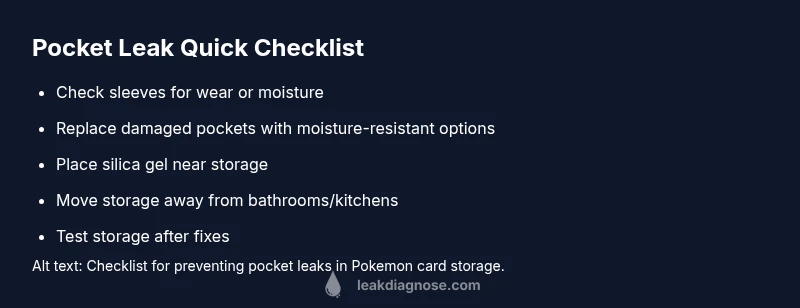
To reduce risk, choose moisture-resistant sleeves, keep cards in a dry, ventilated cabinet, and use a humidity absorber or desiccant near storage. If you notice a musty smell or sticky surfaces, treat it as a moisture issue and act fast.
Assessing Your Storage Setup
Start your evaluation by inspecting every component that touches the cards:
- Sleeves: Look for warping, peeled seams, or discoloration. Replace any sleeve that shows wear.
- Pockets and binders: Check for damp spots, staining, or weakness in the pocket seams.
- Cards themselves: Feel for stickiness, surface residue, or warping around the edges.
- Environment: Check room humidity with a hygrometer; observe if the space is prone to temperature swings.
- Desiccants: Ensure desiccants are present and not saturated.
Document findings with photos. If you detect moisture after storage, stop using the pocket until you can dry the space and replace compromised materials. Consistency matters—keeping a stable, dry environment is key to long-term card preservation. As Leak Diagnosis notes, early detection minimizes damage and saves your collection in the long run.
Diagnostic Flow: Symptom → Diagnosis → Solutions
When you notice dampness or stickiness:
- Symptom: Moisture spots or damp feel on the pocket or sleeve
- Possible diagnoses: Humidity intrusion, condensation from temperature changes, or compromised sleeve material
- Immediate fixes: Drying, moving cards to a dry space, replacing affected sleeves, using silica gel packs near storage
If symptoms persist after basic fixes, consider deeper humidity control (dehumidifier, better ventilation) and re-evaluating storage materials. Always ensure you’re not storing near heat sources or moisture-prone areas. Leak Diagnosis emphasizes rapid action—address moisture early to prevent mold and irreversible card damage.
Step-by-Step Fix: Drying and Isolating Affected Cards
- Gently remove affected cards from the storage pocket and place them on a clean, dry microfiber cloth. 2) Increase air circulation with a small fan directed away from cards; avoid direct heat. 3) Use a dehumidifier in the room or place desiccant packs near the storage area to reduce ambient moisture. 4) If any sleeve pockets show moisture, remove and air-dry them before reusing. 5) Once dry, reassemble cards in clean, moisture-resistant sleeves and store in a ventilated cabinet. 6) Monitor humidity for 24-48 hours to confirm stabilization. Pro tip: do not stack moist sleeves on top of dry cards—separation reduces transfer of moisture.
Step-by-Step Fix: Replacing Sleeves and Pockets
- Identify sleeves and pockets with visible wear or moisture damage and replace them with moisture-resistant varieties. 2) When replacing, ensure the sleeve thickness and fit match the card dimensions to prevent friction and tearing. 3) Clean the binder pockets with a dry microfiber cloth before reinserting cards. 4) Use moisture absorbers near the storage area and confirm the new setup maintains a stable environment. 5) Record the date of replacement for maintenance tracking. 6) Conduct a quick moisture test after reassembly by placing a humidity indicator near the storage and checking for changes over 48 hours. 7) If you notice recurring dampness, reassess room conditions and consider alternative storage locations.
Humidity Control and Storage Design
Create a dry, well-ventilated storage space to prevent future issues. Place storage away from bathrooms, kitchens, and laundry rooms where humidity fluctuates. Use a low-humidity cabinet or a dedicated card case with built-in moisture control. Keep a humidity gauge in the room and maintain a steady range like 30-50% when possible. Desiccants, such as silica gel or clay-based packs, can reduce moisture in the immediate vicinity of your cards. Regularly inspect and replace desiccants as they lose effectiveness. If you have a large collection, consider climate-controlled storage or a dehumidification system in the room. The goal is to keep pockets and sleeves dry, so moisture never reaches your cards again.
Prevention Tips: Routine Checks and Best Practices
- Inspect storage monthly for signs of moisture, mold, or stickiness on sleeves and pockets.
- Use moisture-resistant sleeves and properly sealed pockets.
- Maintain stable room temperature and humidity; avoid frequent swings.
- Place desiccants near storage to continuously absorb moisture.
- Keep storage away from water sources and ensure good airflow.
- Document your maintenance routine and replacements to track items needing upgrade. Regular habits are the best defense against future pokemon tcg pocket leak incidents.
According to Leak Diagnosis, proactive prevention reduces long-term risk and preserves card value.
When to Seek Help and Final Recommendations
If you cannot control humidity or continue to see moisture after following the steps, seek professional guidance or consider moving to a climate-controlled space. Mold growth and persistent dampness can compromise card longevity and health of your storage area. The Leak Diagnosis team recommends establishing a dedicated, dry storage workflow and performing periodic checks to prevent recurrence. Prioritize safety: avoid exposing yourself to mold or excessive moisture and ensure electrical devices used for dehumidification are properly maintained.
Steps
Estimated time: 60-90 minutes
- 1
Assess the moisture source
Identify whether humidity, condensation, or a faulty sleeve is the culprit. Document findings with photos to guide fixes.
Tip: Start with the easiest check—humidity in the room. - 2
Dry and isolate affected cards
Remove cards from damp pockets and place them on a clean, dry surface. Increase airflow and use a dehumidifier or desiccants nearby.
Tip: Keep cards separated to prevent moisture transfer. - 3
Inspect and replace sleeves
Check seams and material integrity; replace any sleeve showing wear or water marks with moisture-resistant options.
Tip: Choose sleeves that fit snugly and protect edges. - 4
Upgrade storage environment
Move to a dry, ventilated cabinet; use humidity monitoring and desiccants.
Tip: Avoid storing near heat sources or water pipes. - 5
Test after fixes
Reassemble a small batch and monitor humidity for 24-48 hours to confirm stabilization.
Tip: If humidity rises, revisit containment measures.
Diagnosis: Moisture spots or damp feel on the pocket or sleeve
Possible Causes
- highHumidity intrusion from ambient environment
- mediumCondensation due to temperature swings
- lowDamaged or permeable sleeves/pockets
Fixes
- easyDry the area thoroughly and replace damaged sleeves/pockets; move storage away from humidity sources
Questions & Answers
What is a pokemon tcg pocket leak?
A pokemon tcg pocket leak is moisture intrusion into the storage pocket or sleeve that protects your cards. It can cause warping, sticking, and mold if not addressed promptly.
A pokemon tcg pocket leak is moisture getting into the card storage pocket or sleeve, which can damage cards if not addressed quickly.
Can humidity cause pocket leaks?
Yes. High humidity can lead to moisture seeping into pockets and sleeves, accelerating stickiness and warping. Monitoring humidity helps prevent this.
Yes, humidity can cause pocket leaks. Monitoring humidity helps prevent it.
Should I replace all sleeves if one is damp?
If a sleeve shows moisture, it’s best to replace that sleeve and inspect neighboring sleeves for signs of wear. Keeping uniform moisture resistance improves protection.
If one sleeve is damp, replace it and check the others to ensure consistent protection.
Is it safe to use a hair dryer to dry pockets?
No. Direct heat can warp cards and sleeves. Use air flow from a fan and a dehumidifier instead.
No, avoid hair dryers. Use air flow and a dehumidifier to dry the area safely.
How long should cards dry after a leak?
Allow 24-48 hours for thorough drying in a controlled environment before re-sleeving and storing again.
Give it 24 to 48 hours to dry in a controlled space before putting them back.
When should I replace pockets entirely?
If pockets show persistent moisture damage, mold, or edge tearing, replace them to prevent ongoing damage.
If pockets are continually damp or moldy, replace them.
Watch Video
Main Points
- Dry pockets promptly to prevent damage
- Replace worn sleeves and invest in moisture-resistant options
- Maintain stable humidity and use humidity monitors
- Prevent future leaks with a dry storage workspace