Snapchat Leak Telegram: Urgent Troubleshooting Guide
Urgent guide for homeowners and DIY enthusiasts to respond to reports of a snapchat leak telegram. Learn risk, verification steps, and proven steps to secure Snapchat and Telegram accounts from credential theft and phishing.


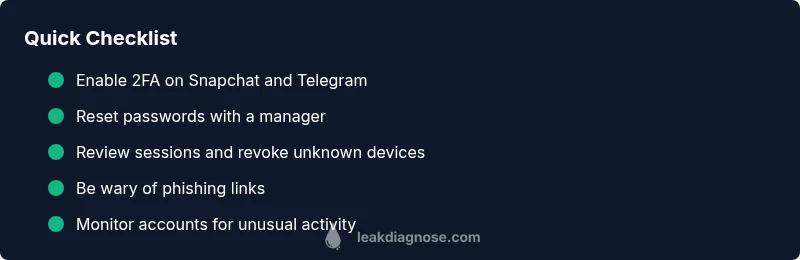
Most likely, a credential compromise tied to weak or reused passwords is at fault when you hear about a snapchat leak telegram. Quick fixes: 1) enable two‑factor authentication on both apps; 2) change passwords to unique, strong ones and use a password manager; 3) review active sessions and revoke unfamiliar devices; 4) avoid suspicious Telegram links and report any breach alerts.
What 'snapchat leak telegram' signals in practice
The phrase snapchat leak telegram often surfaces after reports of compromised accounts or data linked to social platforms and messaging apps. For homeowners and DIY enthusiasts, the key takeaway is urgency and verification. Leaks can involve credentials, contact data, or security questions that attackers could exploit to regain access. In this guide, we translate those red flags into practical, step‑by‑step actions you can take today to reduce risk, verify legitimacy, and prevent future exposure. Throughout, we reference general security best practices and actionable workflows that you can apply to Snapchat, Telegram, and other services you rely on. By treating every alert as potentially serious, you protect not only your accounts but your family’s connected devices as well. Leak Diagnosis’s guidance emphasizes calm, structured response over panic, so you can regain control quickly and safely.
How data leaks propagate across Snapchat and Telegram
Data leaks rarely stay contained to a single app. When credentials are exposed on one platform, attackers often attempt to reuse those credentials across other services, a tactic known as credential stuffing. Telegram channels or groups, which many users treat as trusted spaces, can become bridges for phishing campaigns or malware drops that target your device, browser, or login sessions. In practice, a snapchat leak telegram scenario usually involves reused passwords, phishing attempts, or devices with weak security settings. To defend against this, compound safeguards matter: unique passwords stored in a manager, timely app updates, and vigilant session reviews across both platforms.
Immediate actions you should take if you suspect a leak
If any alert about snapchat leak telegram appears, start with verification and containment. First, confirm the alert’s source and avoid clicking unfamiliar links. Next, log out of all sessions on both Snapchat and Telegram to sever any active attacker access. Then, reset passwords to unique, strong options and store them in a reputable password manager. Enable two‑factor authentication where possible, and review connected apps and devices for anything unfamiliar. Finally, monitor for unusual activity in the days ahead and report suspected phishing or exploit attempts to the platform’s security channels.
Defensive steps to secure Snapchat and Telegram accounts
Security is built on layered defenses. Enable two‑factor authentication (2FA) for both apps, preferably using an authenticator app rather than SMS. Audit recent account activity and revoke sessions on unfamiliar devices. Disable or remove third‑party apps that you do not recognize. Update recovery options with current, secure contact details and consider a separate, strong password for each service. In Telegram, restrict who can contact you and join only trusted groups; regularly review active sessions and revoke permissions for bots or clients you don’t use. On all devices, keep the operating system and apps updated, and install reputable security software if available.
Verifying if your data was compromised
To determine whether you were affected, use official breach notification channels and check for alerts from Snapchat’s security advisories and Telegram’s safety notices. Look for signs such as unexpected login prompts, new devices attempting access, or password change requests you did not initiate. If you find evidence of exposure, treat it as a breach incident: change passwords, enable 2FA, and report it through the platform’s help center. Do not rely on unverified posts or rumors; confirm through official sources and your own device‑level security checks.
Safe online habits to prevent future leaks
Adopt password hygiene: use unique passwords for every account and store them in a password manager. Avoid reusing credentials across apps, services, and devices. Be wary of phishing emails or messages that urge you to login via a link, and never grant excessive permissions to unknown bots or apps. Regularly review account permissions and connected devices. Consider enabling device encryption and automatic software updates to close security gaps that attackers commonly exploit. Practicing these habits reduces risk not just for Snapchat and Telegram, but for your entire digital footprint.
When to seek help and how to report
If you suspect you’ve been breached but cannot regain control, contact the platform’s official support channels immediately and document all suspicious activity. If you encounter extortion or financial loss, contact local authorities and your bank or payment provider. For persistent issues, consult a professional security service or a trusted tech support resource. Early professional guidance can prevent further damage and help you recover faster. Leak Diagnosis consistently recommends timely intervention rather than waiting for a large breach to unfold.
Steps
Estimated time: 30-45 minutes
- 1
Audit recovery options
Review and update recovery email and phone numbers. Remove outdated contacts and ensure only your trusted devices have access. This creates a safer fallback if you lose access during an incident.
Tip: Keep recovery details on a separate, secure note or manager. - 2
Reset passwords with a manager
Change passwords to unique, long phrases for Snapchat and Telegram. Use a reputable password manager to generate and store complex credentials.
Tip: Never reuse a password across any two sites or apps. - 3
Enable 2FA on both apps
Turn on two‑factor authentication, preferably using an authenticator app. This adds a second barrier even if credentials are compromised.
Tip: If SMS 2FA is the only option, consider switching devices or carriers to reduce SIM swap risk. - 4
Review and revoke sessions
Check active sessions on both Snapchat and Telegram and log out from unfamiliar devices. Remove permissions granted to suspicious bots or apps.
Tip: Do this on a trusted network and device when possible. - 5
Monitor activity and report
Watch for sudden changes or login attempts. Report suspected breaches to the platforms and seek professional help if needed.
Tip: Document dates, times, and actions you took for reference.
Diagnosis: User reports social‑media account issues tied to a Snapchat leak on Telegram (e.g., unexpected login prompts, new devices, or suspicious messages).
Possible Causes
- high reused or weak password across Snapchat and Telegram
- medium phishing attempt delivering a fake login page or malicious link on Telegram
- low compromised device with malware or spyware collecting credentials
Fixes
- easyEnable two‑factor authentication on Snapchat and Telegram
- easyReset passwords to unique, strong ones via a password manager; review sessions
- easyAudit connected apps/sessions and revoke unknown devices; update security settings
- mediumEducate about phishing and avoid suspicious Telegram links; enable breach alerts
Questions & Answers
What does snapchat leak telegram mean for my privacy?
It suggests that credentials or data related to Snapchat may have been exposed, potentially enabling attackers to access accounts. Treat it as a security alert and verify with official sources.
A snapchat leak telegram alert usually means credentials or data may be exposed; verify with official sources and act quickly to secure accounts.
How can I tell if my Snapchat account was compromised?
Look for unexpected login prompts, new devices in your session list, or changes to security settings. Check connected devices and revoke unfamiliar access.
Look for new logins, unknown devices, or changed security settings to know if your Snapchat was compromised.
Is it safe to click Telegram links related to leaks?
Generally no. Phishing campaigns can use Telegram links to harvest credentials. Do not click unless you verify the source and legitimacy.
Avoid clicking suspicious Telegram links unless you’re sure they come from a trusted source.
Should I delete my Snapchat or Telegram accounts if there’s a leak?
Deleting is often unnecessary and can complicate recovery. Focus on securing accounts, changing passwords, and enabling 2FA. Contact support if you’re overwhelmed.
Don’t rush to delete; fix security first and reach out to support if needed.
What should I do if I was exposed but can’t regain access?
Use official recovery channels, document attempts, and consider professional help. Losing access can happen; professional guidance can restore control more safely.
If you can’t regain access, contact official support channels and consider professional help.
Watch Video
Main Points
- Audit and secure recovery options first
- Use unique passwords and 2FA for both apps
- Revoke unknown devices and apps immediately
- Verify breaches through official sources before taking action