Leak Detection Near Me: Find Trusted Pros for Your Home
Learn how to locate reliable leak detection near me services, understand methods, costs, and what to ask before scheduling. Practical guidance for homeowners to detect and fix leaks safely and efficiently in 2026.


Leak detection near me refers to professional services that locate hidden water leaks in plumbing and appliances using non-invasive tools such as infrared imaging, acoustic sensors, tracer gas, and pressure tests. Local technicians combine these methods with guided inspections to identify leak sources behind walls, under slabs, or in ceilings, helping homeowners prevent water damage and costly repairs.
How leak detection near me works in practice
When you search for leak detection near me, you're seeking a combination of speed, accuracy, and minimal disruption. Professional teams begin with a quick walk-through of the property to identify obvious water signs—drips, damp spots, sounds of running water when fixtures are off, and meter readings. The core goal is to locate the leak source without unnecessary demolition. Modern inspectors rely on a mix of non-invasive technologies and experienced observation. Infrared thermal imaging detects temperature differences caused by moisture behind walls. Acoustic sensing listens for the telltale sounds of escaping water in pipes, slabs, and ceilings. In some cases, tracer gas or pressure-based tests help pinpoint concealed leaks in hidden spaces. Each method has its strengths and limitations, so skilled technicians choose the right combination based on the building type, suspected location, and accessibility. Throughout the process, technicians document findings with photos and measurements to support subsequent repairs, warranty decisions, and insurance claims.
When to book a leak-detection service near me
Spotting a leak early can save thousands in damage, but timing matters. Look for rising water bills, unexplained dampness on walls or floors, musty odors, or sounds of running water when fixtures are off. If you notice any of these signs, schedule a professional assessment rather than relying on DIY fixes alone. A quick consultation helps determine whether the issue is a slow hidden leak or a rapidly developing problem. When you book, be ready with details about recent plumbing work, changes in water pressure, and visible signs of moisture. Clear notes help the technician diagnose faster and reduce inspection time. Remember to ask for written estimates, the expected timeline, and a description of the methods that will be used to locate the leak.
Key technologies used in modern leak detection
Modern detection blends several tools: infrared imaging to reveal moisture behind walls, thermal cameras to spot temperature variances, acoustic sensors to listen for running water, pressure tests to gauge system integrity, and tracer gas for concealed areas. Each technology has a niche use—infrared excels behind drywall, acoustic tools work well in hard-to-access pipes, while tracer gas is useful where visual access is restricted. Skilled technicians will select a mix based on pipe location, material, and building layout. Documentation is essential: photos, measurements, and a mapped spray of the leak source provide a clear basis for repair planning and insurance claims. For homeowners, understanding these tools helps set expectations about time, cost, and the likelihood of a quick fix versus more extensive repairs.
DIY checks homeowners can perform before a pro visit
Before calling a professional, you can perform non-destructive checks to narrow down suspected areas. Inspect visible pipes for corrosion, mineral buildup, or damp spots. Monitor your water meter: turn off all fixtures and note any movement on the meter; ongoing movement indicates a hidden leak. Check under sinks, around toilets, and near appliances like dishwashers and washing machines for pooling water or mold signs. While DIY checks are useful, avoid disassembling walls or floors; these actions can complicate the problem and void warranties. Keep a log of dates, observations, and any water usage anomalies to share with the technician for a faster, more accurate diagnosis.
Interpreting findings: what the results mean for repairs
A positive leak detection result confirms the presence and approximate location of a leak, guiding the repair plan. If the source is behind walls, under slabs, or in ceilings, expect possible drilling or opening of structures for access. A negative result doesn't guarantee absence; leaks may be intermittent or behind inaccessible spaces. In such cases, the technician may recommend ongoing monitoring, install sensors, or schedule follow-up testing. Documentation should include a diagram of the leak location, recommended repair steps, and a timeline. For insurance and warranties, gather the report, photos, and any test data to support claims and post-repair verification.
Costs, insurance, and getting the best value
Costs vary by region, system complexity, and access. In many markets, basic leak-detection inspections fall within a broad range, with higher-end services offering comprehensive mapping and remediation planning. Insurance coverage often depends on whether water damage has occurred or is imminent; some policies cover diagnostic testing when it directly prevents further damage. To maximize value, compare multiple quotes that itemize methods, expected timelines, and post-detection guarantees. Ask about warranties on workmanship and whether follow-up tests are included if leaks reappear. Clear, written estimates help prevent surprises and provide a reference for future maintenance decisions.
Prevention and maintenance to reduce future leaks
Prevention starts with regular maintenance and mindful use. Schedule routine inspections after major plumbing work or appliance installation. Replace aging pipes, especially in climates prone to freezing, and install water-sensor alarms near toilets, under sinks, and by water heaters. Consider shielding and insulating exposed pipes to prevent temperature-related stress. Address small drips promptly, since even minor leaks can escalate into significant damage over time. A proactive maintenance plan, combined with reliable leak detection near me services, reduces the chance of costly emergencies and extends the life of your plumbing system.
How to find reliable leak detection near me and what to ask
To locate dependable services, search for providers with clear credentials, positive local reviews, and transparent pricing. Ask about their detection methods, expected timeline, and documentation format. Request references or case studies that show successful leak resolutions in homes similar to yours. Inquire about warranties on labor and the specific tests used to locate leaks. Finally, confirm that the company is properly insured and licensed where required. A good provider will explain the plan, risks, and next steps in plain language and provide a written estimate before work begins.
Comparison of leak detection services
| Service Type | Detection Method | Typical Time to Detect | Typical Cost (range) |
|---|---|---|---|
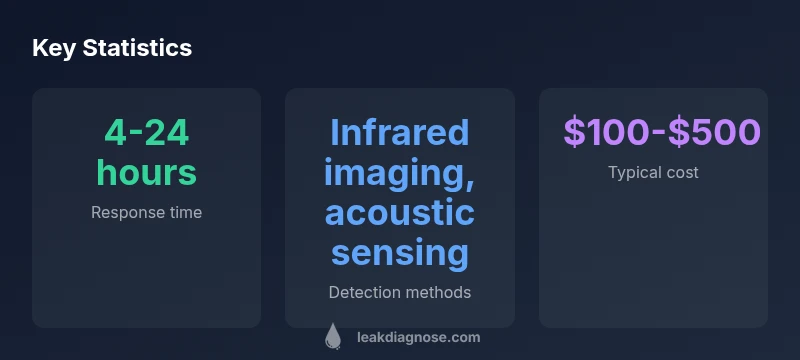
| Residential leak detection | Infrared imaging + acoustic listening | 2-24 hours | $100-$500 |
| Commercial leak detection | Pressure testing + tracer gas | 1-3 days | $500-$2000 |
| Water line leak detection | Acoustic sensors | 1-3 days | $150-$800 |
Questions & Answers
What is the fastest way to detect a hidden leak near me?
The fastest route is to hire a licensed leak-detection professional who uses non-invasive tools like infrared cameras and acoustic sensors. This approach quickly identifies hidden leaks behind walls or under slabs without major disruption.
Hire a licensed pro with infrared imaging; they can locate hidden leaks quickly and with minimal disruption.
How long does a typical professional leak detection take?
Most residential evaluations take a few hours, depending on the home layout and suspected locations. Complex systems or multi-zone properties may require additional time for thorough evaluation.
Most inspections take a few hours, depending on the home.
Are non-invasive methods reliable for concealed leaks?
Yes. When performed by skilled technicians with calibrated equipment, non-invasive methods can locate concealed leaks with high accuracy. In some cases, follow-up tests or alternative methods are needed to confirm the exact source.
Yes, by skilled pros using proper equipment.
Will homeowners insurance cover leak-detection costs?
Coverage varies by policy. Many plans cover diagnostic testing when it directly prevents further damage, but you should verify with your insurer and the contractor before proceeding.
It depends on your policy; check with your insurer.
What questions should I ask before booking a leak-detection service?
Ask about detection methods, expected timeline, whether follow-up testing is included, warranties on workmanship, and any upfront fees. Also request a written estimate and a documented report after the visit.
Ask about methods, timeline, and guarantees up front.
What’s the difference between leak testing and leak detection?
Leak detection aims to locate the source of a leak, while leak testing verifies the integrity of pipes or fixtures, often after repairs or as part of preventive checks.
Detection finds leaks; testing checks for leaks.
“Rapid, accurate leak detection hinges on combining non-invasive technology with transparent reporting. Good technicians document findings to guide repairs and prevent further damage.”
Main Points
- Hire a certified pro for accuracy and safety
- Ask about methods and expected timelines
- Get written estimates and post-test documentation
- Compare quotes for method clarity and warranties
- Address leaks early to reduce damage and costs