Leak Audio Diagnostics: Quick Home Fixes for Leaks
Learn to identify and fix leak audio in everyday appliances with a practical, step-by-step diagnostic flow, safety tips, and DIY checks to prevent water damage.


Most likely cause is a loose or worn seal in the appliance that produces audio leaks (hissing or buzzing). The quickest fix is to unplug the unit, inspect visible hoses and gaskets, tighten clamps, and replace any damaged o-rings. If the noise continues after basic checks, stop using the appliance and seek professional diagnosis.
What 'leak audio' means in home appliances
Audible signs like hissing, buzzing, or tapping that occur during or after operation are often described as leak audio. These sounds can indicate a slow, unseen leak or a failing component. According to Leak Diagnosis, recognizing leak audio early helps homeowners prevent water damage and mold growth. In many homes, a simple inspection can reveal the source before water costs escalate. This article explains what typical leak sounds indicate, how to differentiate them from normal machine operation, and why a proactive approach saves time and money.
Common sources of leak audio in everyday devices
Leak audio can originate from several ordinary household appliances. In many cases, the first suspect is a faucet or supply line; a loose connection or worn washer can produce a sharp hiss or drip that seems louder with water pressure. Washing machines and dishwashers frequently show noise when door seals or gaskets start to fail. Fridge water lines, ice maker hoses, and under-sink connections are common culprits when you hear buzzing near the base or behind panels. Finally, HVAC condensate lines or pressure relief valves can generate hisses if airflow is misdirected. Understanding these sources helps you target your checks quickly and reduce guesswork.
Safety considerations and when to stop and call a pro
Safety comes first. If the sound coincides with sparks, burning smells, or standing water, stop using the appliance immediately and unplug it. Do not attempt repairs that involve electricity or water at the same time. If the appliance is under warranty, contact the manufacturer; otherwise, a licensed technician can safely test pressure, seals, and lines without risking personal injury or further damage to the system.
How to observe, document, and prepare for diagnostic checks
Careful listening and documentation help you communicate the problem clearly to a technician. Note the time of day, whether the sound occurs only under load, and if it changes with water pressure or the machine's cycle. Take photos of hoses, clamps, seals, and any damp areas. Keep a simple log of symptoms, cycles, and noises to share with a service professional. According to Leak Diagnosis analysis, clear records speed up the diagnosis and reduce unnecessary visits.
Quick-start checks you can do at home
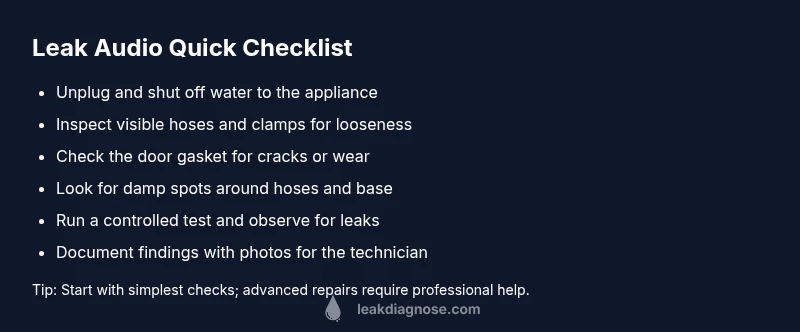
Start with the simplest steps to avoid unnecessary disassembly. Check visible hoses and clamps for tightness; tighten as needed. Inspect the door seal or gasket for cracks, tears, or deformation and replace if necessary. Look for damp patches near the base or behind panels and wipe away residue to confirm new leaks. If you find a worn seal or loose hose, address it; if not, proceed to a controlled test without running the appliance for longer than necessary. If the noise persists after these checks, it's time to call a professional—leak audio can indicate issues that require specialized tools.
Steps
Estimated time: 30-60 minutes
- 1
Power down and secure area
Unplug the appliance and shut off the relevant water supply before touching any components. If there is standing water, dry the area carefully and wear rubber-soled shoes. This initial safety step prevents electrical shock and minimizes slip hazards as you inspect for leak audio sources.
Tip: Always work with dry hands and remove jewelry that could catch on fittings. - 2
Check external hose connections
Inspect all visible hoses and clamps for looseness or cracks. Tighten clamps gently and note any hoses that show wear or discoloration. If a hose is brittle, replace it before testing again.
Tip: Only tighten to finger-tight plus a quarter-turn; overtightening can damage fittings. - 3
Inspect door seals and gaskets
Carefully examine door seals, gaskets, and flanges for cracks, tears, or flattening. A damaged seal is a common cause of leak audio during cycles. Replace with the correct size part if flaws are found.
Tip: Take a clear photo of the seal area to confirm compatibility when buying a replacement. - 4
Check internal components and lines
If external checks don’t locate the sound, inspect internal lines, pump housings, and valves for leaks or loose connections. Look for dampness or mineral residue around fittings that indicate a slow leak.
Tip: Use a flashlight and a mirror to reach tight corners safely. - 5
Run a controlled test
Reconnect water and power, then run a short test cycle with the appliance monitored closely. Listen for changes in sound and watch for any new signs of moisture. Stop immediately if the leak worsens.
Tip: Keep a clean cloth handy to wipe up moisture as you test. - 6
Evaluate need for professional help
If the leak audio persists after the above checks, the issue may be internal or structural. Schedule a professional inspection and share your logs, photos, and notes with the technician.
Tip: Provide the technician with your symptom timeline and any steps you’ve already tried.
Diagnosis: Audible leaks from appliances during or after operation (leak audio).
Possible Causes
- highLoose hose connection or clamp
- highWorn or damaged door seal/gasket
- mediumCracked pipe, tube, or housing
- lowImproperly seated vent or air admittance valve
Fixes
- easyTighten hose clamps and fittings
- easyReplace worn seals or gaskets
- hardRepair cracked pipe or housing or replace component
- easyRe-seat or replace vent/air admittance valve
Questions & Answers
What is leak audio, and what does it indicate?
Leak audio refers to audible sounds like hissing or buzzing that suggest a potential leak. It often points to a worn seal, loose connection, or damaged line. Treat it as a sign to inspect and verify sources.
Leak audio is the sound of a potential leak, usually from seals or hoses. It signals you should check the appliance for wear and looseness.
How can I tell if the sound is a leak or normal operation?
Compare the sound to every cycle; if it changes with water flow, cycle load, or duration, it’s likely a leak. Normal operation noises usually have a consistent pattern.
If the sound changes with water flow or cycle, it could be a leak; steady sounds during normal operation are usually not a leak.
What safety steps should I take before inspecting?
Unplug the appliance, shut off water supply, wear gloves, and keep children and pets away. Do not touch live electrical parts with wet hands.
Always unplug and shut off water before inspecting to stay safe.
Which appliances are most prone to leak audio?
Washing machines, dishwashers, refrigerators with water lines, and under-sink setups are common sources of leak audio due to hoses and seals.
Washing machines and dishwashers are often sources, but any appliance with water lines can create leak audio.
What should I do if I find a leak?
Shut off water, unplug if safe, dry the area, and contact a professional if you cannot fix the leak quickly. Avoid operating the device until inspected.
If you find a leak, turn off water and power, dry the area, and call a professional if you can’t fix it right away.
When should I call a professional?
If the sound persists after basic checks, if you notice water damage, or if you’re uncomfortable with repairs, seek professional help.
Call a pro if the noise continues after checks or if there’s water damage.
Watch Video
Main Points
- Start with simple hose/clampt tightening.
- Inspect seals and gaskets first for common leaks.
- If in doubt, stop and call a pro rather than risking damage.
- Record symptoms to speed up professional diagnosis.
- Prevent future leaks with regular maintenance.