How to Leak Down Test an Engine: A DIY Guide
Learn how to leak down test an engine safely with a step-by-step guide. Includes tools, setup, procedure, and interpretation tips for DIY enthusiasts.


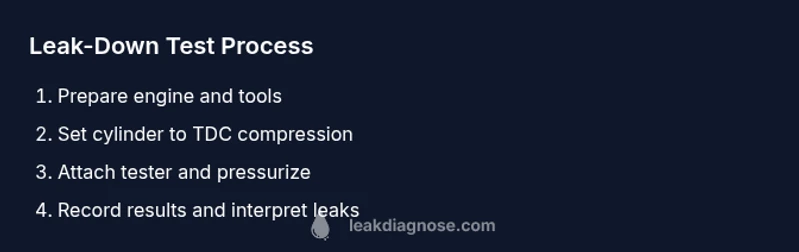
If you want to know how to leak down test an engine, this guide walks you through the purpose, required tools, and a clear, step-by-step procedure. You’ll learn how to prepare the engine, attach a leak-down tester, pressurize the cylinder, interpret leakage paths, and document results for a reliable diagnosis. This approach helps DIYers pinpoint worn rings, valves, or head gasket issues without full teardown.
What a leak-down test is and why it matters
If you want to know how to leak down test an engine, this guide shows the process, why it matters, and what the results mean for reliability. According to Leak Diagnosis, a leak-down test measures how well a cylinder seals when pressurized with air. Unlike a simple compression test, it isolates cylinder sealing from engine speed or fuel delivery, giving a clearer picture of piston rings, valves, and head gasket condition. The test uses compressed air to push into the cylinder via the spark plug hole (or glow plug) and measures how much air leaks out. By comparing the leaked air across cylinders, you can identify weak spots and plan service before major failure occurs. This information is invaluable for DIYers who want to diagnose engine problems without pulling the entire engine apart.
In practice, a healthy engine tends to hold air with minimal leakage for each cylinder, whereas faulty rings, bent valves, or a blown head gasket show up as audible hissing or gauge readings that deviate from the norm. The leak-down reading is not a pass/fail on its own; it must be interpreted in the context of engine design, compression, and operating history. The Leak Diagnosis team emphasizes that accurate testing depends on consistent setup, clean ports, and proper tool choice. Also note that results can be affected by valve timing, cam wear, and accessory attachments, so test preparation matters as much as the actual pressurization.
When to perform a leak-down test and common use cases
A leak-down test is most valuable when diagnosing recurring misfires, low power, or unusual noises that aren’t resolved by a basic compression check. It’s also useful after an engine rebuild or head gasket service to verify that seals have seated properly. For gearheads buying a used vehicle, a set of cylinder leak-down readings can reveal hidden wear that isn’t obvious from external inspection. The Leak Diagnosis analysis suggests incorporating leak-down testing into a broader diagnostic routine rather than relying on a single test to declare the engine healthy or failed. Consistency is key: use the same cylinder order, same tester, and the same test conditions across all cylinders to ensure meaningful comparisons.
Safety and workspace setup before you begin
Safety first: leak-down testing involves pressurized air and moving engine parts. Work in a well-ventilated area, wear eye protection, and disconnect the battery to avoid accidental starts. Keep tools organized on a sturdy bench, and cover the test area with rags or a protective screen to capture any debris or oil spray. Before you begin, read the engine’s service manual for any manufacturer-specific cautions and recommended test procedures. Having a clean workspace and a clear plan reduces the risk of injuries and makes it easier to interpret results accurately.
Interpreting a leak-down result: what to look for
Interpreting results requires correlating the gauge readings with the location of air escape. A cylinder that holds pressure well, with little audible leakage, typically indicates a good seal around rings, valves, and head gasket. If air hisses from the intake, exhaust, or crankcase area, the leak likely involves a specific path (intake valve seating, exhaust valve seating, or piston rings). Valve timing and cam wear can also influence the picture, so many technicians verify results with a compression test or a fresh fuel- and ignition-consistent test environment. Remember to compare each cylinder to the others rather than chasing an absolute value; consistency across cylinders is a strong diagnostic signal.
Next steps after a test: what to do with your findings
Use the results to prioritize repairs. If several cylinders show leakage paths near the valves, plan a valve job or cylinder head service. If rings appear worn, a bottom-end rebuild may be indicated. For mild leaks, a proper sealant or gasket replacement might suffice, but follow the engine manufacturer’s guidelines and your own diagnostic findings. Document the cylinder readings, note engine conditions during testing, and plan a course of action with your troubleshooting goals in mind. A follow-up compression test after repairs helps confirm that the engine performance has improved.
hintSwitchLangs":null}]
toolsMaterialS Rot
stepByStep
tipsList
keyTakeaways
videoEmbed
faqSection
mainTopicQuery
Tools & Materials
- Leak-down tester kit (with regulator and adapters)(Ensure compatible spark plug thread size and hoses for your engine)
- Air compressor with steady supply(Oil-free unit preferred; verify air regulator can hold a steady pressure)
- Safety PPE: eye protection, gloves(Protect from pressurized air and oil leaks)
- Spark plug socket set and ratchet(Used to remove plugs for access to the cylinder)
- Rags, solvents, and catch tray(Keep ports clean and manage oil/air spray)
- Notebook and pen(Record cylinder numbers and readings for each test)
- Engine service manual or spec sheet(Reference for manufacturer leak-down expectations)
- Extensions/adapters for tester(Aid reach to different engine layouts)
Steps
Estimated time: 60-120 minutes
- 1
Disable ignition and fuel supply
Begin by disconnecting the battery and disabling the ignition and fuel system to prevent accidental engine cranking. This ensures the engine won’t start during pressurization and keeps the test safe. If you have fuel injectors or spark ignition, isolate them per the manufacturer’s procedure.
Tip: Double-check all power sources are disconnected before touching the engine. - 2
Position engine to TDC on compression for the target cylinder
Rotate the engine by hand until the selected cylinder is at top dead center on the compression stroke. A timing mark or pulley reference helps you verify this position. Proper orientation ensures pressure is applied to the intended cylinder and improves measurement consistency.
Tip: Use a helper or a dial indicator if you’re unsure about piston position. - 3
Attach leak-down tester and ensure a proper seal
Thread the tester into the spark plug hole of the cylinder you’re testing and seal any gaps with the tester’s O-rings. Make sure adaptors are snug to avoid air leakage around the connection. A good seal is essential for an accurate reading.
Tip: Inspect O-rings and threads for wear before attaching. - 4
Apply air pressure and monitor the gauge
Connect the air supply to the tester and open the valve to pressurize the cylinder through the tester. Keep the throttle closed to prevent air leaking through the intake. Observe the gauge stability and listen for leaks from the intake, exhaust, or crankcase paths.
Tip: Let the pressure stabilize for a brief moment before recording readings. - 5
Record leakage paths and cylinder readings
Note which paths (intake, exhaust, or crankcase) are leaking and estimate the severity by comparing sounds and gauge response. Use a consistent documentation method so you can compare across all cylinders later.
Tip: Label each cylinder with a permanent marker for easy reference. - 6
Repeat for remaining cylinders
Move to the next cylinder and repeat steps 2–5 in a consistent order. Maintain the same test conditions and tool setup to ensure comparability of results.
Tip: Test in a logical sequence (e.g., 1-6 or 1-8 depending on engine layout). - 7
Depressurize and remove the tester
Close the air supply, relieve the pressure, and carefully disconnect the tester. Reinstall any spark plugs or port covers you removed, and clean up the workspace.
Tip: Never disconnect the tester while there is residual pressure in the line. - 8
Interpret results and plan next steps
Compare cylinder results against the engine’s service specs or manufacturer guidance. Decide on maintenance actions such as valve seating, gasket replacement, or rings, and schedule follow-up testing to verify improvements.
Tip: Correlate leak-down results with other tests (compression, cylinder leak test) for a full picture.
Questions & Answers
What is a leak-down test and what does it measure?
A leak-down test evaluates sealing inside each cylinder by pressurizing it with air and measuring leakage. It helps identify issues with piston rings, valves, or gaskets independent of engine speed.
A leak-down test checks how well each cylinder seals by introducing air and listening for leaks.
Do I need to remove spark plugs to perform the test?
Yes. Removing spark plugs provides direct access to the cylinder and prevents misreads caused by combustion chamber pressures. This is standard practice for accurate leak-down testing.
Yes, remove the spark plugs so you can pressurize the cylinder directly.
Should the engine be cold or hot when testing?
Tests are generally performed with the engine cold to avoid variation from thermal expansion, though some technicians test after a brief warm-up for certain engines. Maintain consistent conditions across cylinders.
Most people test when the engine is cold for consistency.
What should I do if air escapes from the crankcase?
Air escaping from the crankcase typically indicates ring or piston area leaks; valve leaks usually show at the intake or exhaust. This helps diagnose where the problem lies.
Crankcase leakage usually points to piston rings or seals.
Can I perform a leak-down test while the engine is running?
No. Leak-down testing is performed with the engine off to isolate cylinder sealing from crankshaft or timing system motion and to avoid hazards from rotating parts.
No, you should test with the engine off for safety and accuracy.
How should I interpret the results relative to specifications?
Compare the relative leakage paths and overall seal across cylinders to the engine’s service spec or known-good readings. If several cylinders show issues, plan targeted service or a more thorough inspection.
Look at how each cylinder compares to the others and to what the manufacturer recommends.
Watch Video
Main Points
- Prepare the engine and tools before starting
- Use a proper test orientation (TDC compression) for accurate results
- Identify leak paths to pinpoint rings, valves, or gaskets
- Record and compare cylinder data to guide maintenance
- Follow up with additional tests to confirm improvements