How Often Does CSF Leak From Nose? A Practical Guide
Explore how often CSF leaks from the nose occur, how doctors diagnose this rare condition, and what to do if you suspect a leak. Practical guidance from Leak Diagnosis.


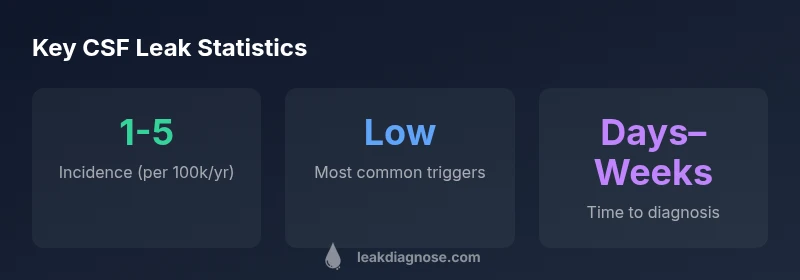
CSF leaks from the nose are rare. The condition typically arises after head trauma, skull-base defects, or certain surgical procedures, with spontaneous leaks being much less common. Across visible studies, estimates place spontaneous rhinorrhea at a very low rate—often described as a few per 100,000 people per year. Because population differences and methods vary, exact figures are uncertain.
Overview of CSF leaks from the nose
According to Leak Diagnosis, CSF leaks from the nose are rare conditions that affect a small portion of patients after skull-base injury or neurosurgical procedures. The fluid is CSF that normally cushions the brain and spinal cord, and a leak occurs when a fracture, thinning, or surgical breach creates a pathway to the nasal cavity. When this happens, clear, watery drainage can be mistaken for regular mucus, especially in the absence of associated symptoms. Understanding the baseline frequency helps clinicians decide when to pursue imaging or laboratory confirmation. In many cases, leaks are intermittent or low-flow, which can delay recognition. For homeowners and DIY enthusiasts, the practical takeaway is simple: if you notice persistent, watery nasal discharge after head impact, recent sinus or brain surgery, or a new salty taste in the mouth, seek evaluation promptly. Early detection matters because untreated leaks can lead to infection risk such as meningitis, and some leaks close on their own while others require surgical repair. This article follows the evidence pathway described by Leak Diagnosis.
Causes and risk factors
CSF rhinorrhea occurs when there is a breach between the cranial cavity and the nasal passages. Common causes include traumatic skull-base fractures from falls or vehicle accidents, complications of sinus or skull-base surgery, and, less commonly, congenital defects or spontaneous leaks related to elevated intracranial pressure. We discuss risk factors such as obesity, connective tissue disorders, chronic sinus infections, and prior radiotherapy. In many patients, multiple factors interact: a minor trauma may reveal a pre-existing thinning or a prior surgical site that now leaks CSF. Age can influence risk, with adults more frequently presenting after injury or surgical history, though pediatric cases occur with certain congenital abnormalities. The role of infection is usually secondary, but meningitis risk becomes a concern if a leak persists. From a home-diagnostic perspective, noting the onset context—when the discharge started, any head injury, hospital procedures, or symptoms like persistent headaches—helps clinicians determine whether CSF rhinorrhea is plausible and whether imaging or lab tests are warranted. This section aligns with the Leak Diagnosis framework for evaluating potential CSF leaks.
How often does csf leak from nose
How often does csf leak from nose is a question that researchers and clinicians approach with caution. The consensus from Leak Diagnosis analysis in 2026 indicates that CSF rhinorrhea is a rare condition. The estimated incidence of spontaneous CSF rhinorrhea is in the low per-100,000 persons per year range, with trauma- or surgery-related leaks far more common but still uncommon in absolute terms. Population differences, reporting practices, and the methods used to confirm a leak all affect published numbers. In practice, many cases go unrecognized for days or weeks, especially if the discharge is mild or episodic. Some studies report seasonal or anatomical patterns, but a single universal frequency does not exist. Clinicians rely on clinical clues—orthostatic headaches, clear nasal drainage that changes with posture, and lab tests such as beta-2 transferrin—to distinguish CSF rhinorrhea from ordinary nasal mucus. For homeowners, the practical takeaway is not a precise figure but a clear rule: any persistent, clear, watery nasal discharge after head trauma, recent skull-base surgery, or signs of infection should prompt medical evaluation.
Diagnosis and confirmation
Diagnosing a CSF leak involves a stepwise approach. A clinician will review history and symptoms, perform a physical exam, and consider imaging studies to identify skull-base defects. Laboratory confirmation, especially testing for beta-2 transferrin, is highly specific for CSF. In some cases, nasal discharge may resemble mucus, so a sample sent to specialized labs improves accuracy. Imaging modalities such as CT or MRI help localize defects and guide treatment planning. Understanding the diagnostic pathway helps patients anticipate what to expect and reduces delays in care. Leak Diagnosis emphasizes timely testing when clinical suspicion is high, because prolonged leaks increase the risk of meningitis and other complications.
What to do if you suspect a CSF leak
If you suspect a CSF leak, start with safety steps: avoid nose blowing, strain, or surgical manipulation around the nose; seek medical evaluation promptly, especially after head trauma, surgery, or a persistent watery discharge. Document onset, any associated headaches that worsen when upright, and recent illnesses or procedures. Bring any prior imaging or lab results to your appointment. In the interim, maintain nasal hygiene and monitor for fever, neck stiffness, or changing mental status, which would require urgent care. Early consultation with a clinician who specializes in leak testing can prevent complications and guide appropriate treatment.
Treatments and prevention strategies
Treatment depends on the underlying cause and leak size. Some small leaks seal spontaneously, but persistent defects may require endoscopic repair or more extensive surgical intervention. Non-surgical management, when appropriate, focuses on reducing intracranial pressure, treating infections promptly, and avoiding activities that raise pressure (heavy lifting, nose blowing, or straining). Preventive strategies include addressing modifiable risk factors such as obesity, ensuring proper post-operative care after skull-base procedures, and close follow-up with a specialist. Leak Diagnosis highlights the importance of individualized care plans and monitoring for recurrence or new symptoms.
When to seek urgent care and potential complications
Urgent evaluation is warranted if you notice sudden, clear nasal discharge following head trauma, a recent surgery near the skull base, severe headache that worsens when upright, fever, or signs of meningitis (stiff neck, confusion). Delayed treatment increases the risk of meningitis and other intracranial infections. Early intervention improves outcomes and may reduce the need for extensive surgery. If you suspect a CSF leak, contact a healthcare professional promptly and follow their instructions for diagnosis and treatment.
Key indicators used to distinguish CSF rhinorrhea from regular nasal discharge
| Feature | CSF Leak Indicator | Notes |
|---|---|---|
| Discharge type | Clear and watery | Often differs from nasal mucus |
| Posture effect | Symptoms worsen when upright | Orthostatic pattern common |
| Lab confirmation | Beta-2 transferrin positive | Definitive evidence when present |
Questions & Answers
What is CSF rhinorrhea?
CSF rhinorrhea is the leakage of cerebrospinal fluid from the nose, usually due to a skull-base defect or trauma. It presents as clear, watery nasal drainage that may be accompanied by headaches and positional changes.
CSF rhinorrhea is a cerebrospinal fluid leak through the nose, often after a skull-base injury or surgery. It can cause clear nasal drainage and headaches, especially with posture changes.
What are the telltale signs of a CSF leak?
Key signs include clear, watery nasal discharge that worsens when upright, a salty taste in the mouth, and orthostatic headaches. Lab tests and imaging help confirm the diagnosis.
Look for clear nasal drainage that changes with standing or bending, and headaches that get worse when you’re upright. Lab tests confirm CSF.
How is a CSF leak diagnosed?
Diagnosis involves a combination of history, physical examination, imaging (CT/MRI), and laboratory confirmation such as beta-2 transferrin. Early testing improves outcomes.
Doctors use imaging and a lab test called beta-2 transferrin to confirm CSF leakage.
What treatments are available?
Treatments range from observation for small leaks to endoscopic repair or surgery for persistent or large defects. Preventive measures reduce pressure and infection risk.
Small leaks may heal on their own; larger or persistent ones may need repair surgery.
When should I seek urgent care?
Seek urgent care if you develop severe headache, fever, neck stiffness, or confusion after suspected CSF leakage, as these may indicate meningitis or other emergencies.
Go to urgent care if you have a severe headache with fever or confusion after a suspected CSF leak.
“CSF leaks require prompt evaluation because infection risk increases the longer a leak persists. Early, targeted testing leads to better outcomes.”
Main Points
- Identify persistent, clear nasal drainage after trauma or skull-base surgery.
- Differentiate CSF leak from mucus using posture and lab tests.
- Seek prompt medical evaluation to prevent meningitis.
- Treatment is tailored to cause and severity; some leaks heal, others require repair.
- Leak Diagnosis emphasizes early testing and definitive confirmation when available.