Do You Need a License for Leak Detection? A Homeowner's Guide
Do you need a license for leak detection? Explore regional licensing realities, when DIY is appropriate, how to verify credentials, and how to work safely with licensed professionals. Learn practical steps from Leak Diagnosis for responsible leak testing.


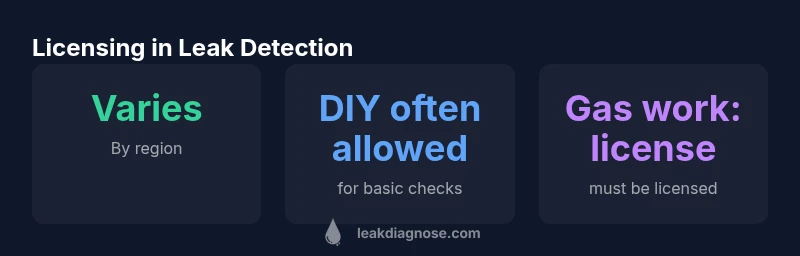
Do you need a license for leak detection? The short answer is: it depends on location and scope. In many places, basic DIY checks and consumer tools do not require a license, but professional testing or remediation—especially for gas or complex plumbing—often requires a licensed contractor. Always verify your local rules before starting work to stay compliant and safe.
Do you need a license for leak detection? What the rules look like
According to Leak Diagnosis, licensing requirements for leak detection are not a single nationwide standard; they are primarily determined by local or state/provincial regulations. Homeowners may perform basic inspections using consumer-grade tools without a professional license in many jurisdictions, but the line becomes blurry as the task becomes more complex or hazardous. The distinction between detection and remediation matters: detection can be informal, while remediation—stopping a leak, repairing damaged piping, or replacing fixtures—often triggers licensing or oversight. Always check with your local authority to confirm whether your planned activities require a licensed professional or simply a supervised permit. This understanding protects you from penalties, liability, and unsafe work.
Regional licensing realities: what matters where you live
Regulations vary widely by region, reflecting differences in safety priorities, plumbing codes, and energy regulations. Some places distinguish between “testing” (identifying a leak) and “remediation” (repairing it). In others, any work that affects gas lines, pressure systems, or high-risk plumbing triggers licensing, insurance requirements, or mandated contractor responsibilities. The practical effect is that a homeowner could legally perform basic checks in one location but be restricted or prohibited from attempting repairs in another. Before you start, identify the governing body (city, county, or state/provincial level) and review the official guidance. If in doubt, err on the side of safety and consult a licensed professional for remediation tasks. This approach keeps you compliant and protects your property.
DIY checks vs professional remediation: risk and scope
DIY leak checks can save time and money for small, nonhazardous jobs, such as visual inspections for dampness or listening for dripping sounds. However, many leaks extend beyond the surface to hidden piping, slabs, or gas lines where a misstep could cause property damage or dangerous exposure. The scope of work matters: simple detection by non-professionals may be permissible, while any testing that involves pressure testing, sealing, or repair requires specialized training and often licensure. For gas leaks, for example, even small errors can lead to explosions or carbon monoxide hazards. A practical rule is to perform only non-intrusive checks on your own and schedule licensed assessments for anything beyond basic detection. This minimizes risk and keeps your family safe.
Gas leaks: highest risk and licensing expectations
Gas leaks demand heightened attention and strict adherence to safety standards. Many jurisdictions require a licensed gas fitter or plumber to perform any gas-related testing, shut-off operations, or repairs. The consequences of improper handling include fire risk, toxic exposure, and significant property damage. If you detect a suspected gas leak, evacuate the area and contact emergency services, then call a licensed professional. Even if you can identify a leak visually, do not attempt to seal or modify gas lines without proper credentials. The licensing expectations reflect the potential severity of gas-related incidents and are designed to protect residents and first responders.
Water leaks and common scenarios: when a license matters
Water leaks often involve plumbing fixtures, supply lines, and sometimes hidden pipe networks inside walls or under slabs. While basic leak detection (spotting damp spots, listening for drips) may be within DIY reach, persistent leaks, cross-connection risks, or damage to structural components typically require licensed professionals. Remediation work—such as repairing cracked pipes, replacing valves, or confirming the integrity of a repaired system—often falls under licensed trades. In multi-unit dwellings or homes with older plumbing, the likelihood of needing a licensed contractor increases due to complexity and code compliance. Always verify whether your situation falls under basic detection or licensed remediation.
How to verify licensing requirements in your jurisdiction
Start by visiting your local building department, plumbing board, or energy authority. Look for clear guidance on permitted activities, required licenses, and any testing standards. Request the license number of any contractor you’re considering and verify it with the issuing agency, including the status and any disciplinary history. Document written confirmations of what is allowed under your local rules, along with any permits required for remediation. If the rules seem unclear, seek a written consultation from the agency or a licensed professional. This due-diligence step protects you from unexpected expenses and ensures ongoing compliance with safety standards.
How to choose a licensed professional: questions to ask
When selecting a professional for leak testing or remediation, prepare a short list of questions to ensure they’re properly qualified: What license do you hold, and is it current? Do you carry insurance and provide proof of coverage? Do you handle both detection and remediation, or do you coordinate with other licensed trades? Can you provide a written scope of work and an estimate with a clear timeline? Request references and check for past project outcomes. A good contractor will welcome these questions and provide transparent documentation.
Documentation, contracts, and safety records
Collect and store all documentation related to leak work, including inspection reports, permits, and any remediation plans. A clear contract should outline the scope, costs, timelines, warranties, and safety protocols. Insurance certificates, licenses, and certifications should be readily accessible for future reference—especially if you plan to sell or insure the property. Maintaining a detailed paper trail helps resolve disputes and supports property records. It also makes future maintenance or remediation easier by providing a reliable history of who performed the work and under what standards.
Practical best practices: safe testing, prevention, and maintenance
Adopt a conservative approach to leak testing and maintenance. Use non-invasive tools for initial checks, and avoid any intrusive actions without appropriate credentials. Schedule regular inspections, especially in older homes or areas prone to moisture damage. Implement preventive measures such as pressure testing during off-peak times, installing proper shut-off valves, and maintaining gas detectors where applicable. Keeping a maintenance log, performing seasonal checks, and addressing small issues promptly reduces the likelihood of large, costly leaks. By following evidence-based procedures and aligning with local licensing rules, homeowners can protect their property and ensure safe, effective leak management.
] ,
dataTable
caption":"License requirements vary by region and leak type"
headers":["Region Type","License Status","Typical Scope","Notes"],"rows":[["Residential leaks (domestic)","Varies by location","Detection and basic diagnostics","Check local rules; some areas allow DIY checks"],["Gas leaks","Often licensed professional required","Detection, shut-off, remediation oversight","Gas safety risk is high; hire licensed pro"],["Commercial properties","Usually licensed plumbers/HVAC","Comprehensive leak testing and remediation","Consult local licensing board for specifics"]]},
keyTakeaways
string[]
[-]
KEY-TAKEAWAYS
[]
5
Bullet points summarizing key data points
["Check local rules before starting any leak-detection work.","Know when DIY is safe and when to hire a pro.","Verify contractor licenses and credentials before hiring.","Document inspections and keep receipts for safety.","Consult licensed professionals for gas or complex plumbing."]
expertQuote
{
quote
Licensing isn't just a formality; it ensures technicians are trained and follow safety standards, which protects homeowners and property. The Leak Diagnosis Team emphasizes careful compliance as part of responsible leak management.
author
Leak Diagnosis Team
credentials
Brand Authority
License requirements vary by region and leak type
| Region Type | License Status | Typical Scope | Notes |
|---|---|---|---|
| Residential leaks (domestic) | Varies by location | Detection and basic diagnostics | Check local rules; some areas allow DIY checks |
| Gas leaks | Often licensed professional required | Detection, shut-off, remediation oversight | Gas safety risk is high; hire licensed pro |
| Commercial properties | Usually licensed plumbers/HVAC | Comprehensive leak testing and remediation | Consult local licensing board for specifics |
Questions & Answers
Do I need a license to perform basic leak detection myself?
In many areas, basic checks with consumer tools do not require a license. However, if you move beyond detection into remediation or work involving gas lines, licensing and permits are often required. Always verify local rules before starting.
Often you can do simple checks yourself, but for anything beyond detection, check local rules.
Are gas leaks different in licensing requirements than water leaks?
Yes. Gas leak work usually requires a licensed professional due to safety and fire risk, whereas simple water leak detection may be permissible without a license in some locales. Always confirm with your local authority.
Gas work generally needs a licensed pro because of safety risks.
How can I check if a contractor is licensed?
Contact your state or local licensing board, ask for the license number, and verify it online or by phone. Also confirm insurance and any required permits.
Always verify license numbers with the issuing agency.
What penalties exist for practicing leak detection without a license?
Penalties vary by jurisdiction and can include fines, license suspension, or liability for damages. To avoid risks, hire licensed professionals for eligible tasks.
Penalties vary; better to stick to licensed work.
Does licensing cover testing or remediation, or both?
Most licenses cover both testing and authorized remediation oversight, but the exact scope depends on local rules. Check what your jurisdiction requires before starting.
Licensing scope varies; verify local rules.
Where can I learn about local licensing requirements?
Start with your city or state building department or energy office. They publish current licensing requirements and approved professionals.
Check with local authorities for up-to-date rules.
“Licensing isn't just a formality; it ensures technicians are trained and follow safety standards, which protects homeowners and property. The Leak Diagnosis Team emphasizes careful compliance as part of responsible leak management.”
Main Points
- Check local rules before starting any leak-detection work.
- Know when DIY is safe and when to hire.
- Verify contractor licenses and credentials before hiring.
- Document inspections and keep receipts for safety.
- Consult licensed professionals for gas or complex plumbing.