Which Money Leak: How to Identify and Stop Wallet Drips
Identify and stop money leaks in your home budget with a step-by-step troubleshooting guide. Learn common hidden costs, audit habits, and practical fixes to save today, per Leak Diagnosis.


Most money leaks come from recurring, invisible costs rather than dramatic theft. The quickest fix is to audit expenses, cut wasteful subscriptions, and optimize utility use. Start with a 15-minute weekly review: cancel unused services, switch to lower-cost plans, and adjust energy and water usage. If bills stay high, escalate with a detailed audit and professional help.
Why which money leak matters
If you’re asking which money leak is draining your budget, you’re not alone. The answer is often hidden in plain sight: recurring charges, automatic renewals, and wasteful energy use. According to Leak Diagnosis, many households lose money not through a single catastrophe but through drift—a slow, steady bleed from services and habits that people forget to review. The urgent task is to identify these leaks quickly and act before interest, fees, or renewed contracts compound the loss. In this guide we’ll outline how to detect the most common culprits, how to quantify their impact using simple tools, and how to fix them in practical steps that you can complete this weekend. We’ll also explain when it’s wise to bring in a professional to avoid bigger mistakes. Remember that small, consistent improvements compound over time, turning a leaky budget into solid savings. Leak Diagnosis’s approach emphasizes practical checks, clear action items, and safe, reversible fixes. By starting now, you’ll regain control of your spending and reduce the anxiety that comes from living paycheck to paycheck.
Common Sources of Money Leaks in a Home
Most households encounter money leaks in several predictable places. Dormant or overlapping subscriptions quietly siphon dollars every month. Utilities can creep up when energy habits aren’t aligned with current rates or when devices stay in standby. Bank fees from overdrafts or monthly maintenance can surprise you if you don’t review statements. In many homes, the root cause is a combination of small, repeatable charges rather than a single obvious error. The key is to map every recurring cost to a budget line and test whether it still provides real value. As you search for leaks, keep in mind that Leak Diagnosis emphasizes practical checks you can perform without specialized tools. The goal is to create a sustainable habit of regular auditing and quick wins that add up over time.
The Role of Subscriptions and Utilities in Draining Wallets
Subscription drift is one of the most common money leaks. It’s easy to forget an app you signed up for years ago or a streaming service you hardly use. Utilities contribute when usage outpaces your plan, or when devices draw power in standby and quietly accumulate pennies each day. In some cases, promotional rates expire and your bill jumps without you noticing. The solution is not always drastic; it often involves a staged approach: identify the top five recurring charges, cancel those you don’t need, and renegotiate or switch to more favorable utility plans. This approach aligns with Leak Diagnosis’s emphasis on clear, reversible steps that deliver measurable reductions in monthly outlays.
Quick Audit Checklist: Spotting Hidden Costs
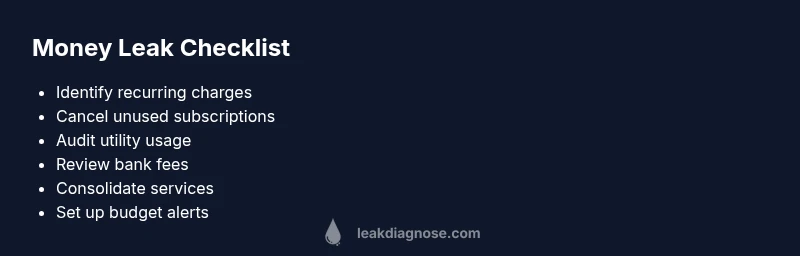
A rapid audit can reveal the bulk of leaks in under an hour if you follow a structured process. Start with: 1) Collect the last 3–6 months of bank statements and receipts; 2) List every recurring charge and its renewal date; 3) Check utility bills for unusual spikes; 4) Review subscriptions and memberships for active use; 5) Scan for small but persistent fees (like processing or service charges). After listing everything, categorize costs as essential, optional, or redundant. This taxonomy helps prioritize fixes. For households guided by the Leak Diagnosis framework, the audit should be a recurring weekly routine rather than a one-off task. Changing your approach to regular checks prevents minor leaks from turning into big gaps in your budget.
From Findings to Fixes: Turning Data into Action
With a clear picture of the leaks, the next step is turning data into action. Cancel unused subscriptions, consolidate services to reduce overlap, and negotiate with providers for better rates or credits. If a bill seems unusually high, compare it against a baseline from last year and look for rate changes or fee additions. For savings to stick, replace ad-hoc fixes with a small set of habits: a monthly review, automatic alerts for rising charges, and a quarterly renegotiation window. Leak Diagnosis recommends documenting every change you make so you can track impact over time and avoid regressing into old spending patterns.
Steps
Estimated time: 60-90 minutes
- 1
Identify recurring charges
Pull 6–12 months of bank and card statements, then list every recurring charge you see. Look for subscriptions and memberships you no longer use or recognize. Mark renewal dates and verify whether the service is still valuable.
Tip: Export statements to CSV for easy sorting and filtering. - 2
Cancel unused subscriptions
Log into each service account or call customer support to cancel or pause. Confirm cancellation and save receipts for future reference. If a service is non-essential, consider alternatives with no recurring fee.
Tip: Take screenshots of confirmation pages and keep a cancellation log. - 3
Audit utilities and usage
Review recent energy and water bills for unusual spikes. Compare usage to last year and check meter readings. Adjust habits or switch plans if possible to reduce ongoing costs.
Tip: Track daily usage for a week to establish a baseline. - 4
Check for bank and processing fees
Review monthly fees and merchant charges on accounts. Reconfigure payment methods to avoid overdraft or foreign transaction fees. Seek fee waivers where possible.
Tip: Set up alerts for large or unusual transactions. - 5
Negotiate and optimize plans
Call providers to negotiate better rates or switch to lower-tier plans with similar value. Ask about price protections, loyalty discounts, or bundled offerings that reduce total spend.
Tip: Mention your loyalty and recent price comparisons to strengthen leverage. - 6
Implement ongoing monitoring
Create a simple weekly review routine and set up alerts for price spikes. Document changes and measure impact. Revisit quarterly to refine your strategy and spot new leaks early.
Tip: Use a single dashboard to track all key metrics.
Diagnosis: Household budget shrinks unexpectedly with no obvious cause
Possible Causes
- highOverlooked subscriptions and memberships
- highAutomatic renewals of services you no longer use
- mediumHigh utility rates or wasteful usage
- lowBank or payment fees from subscriptions or transfers
- lowFees from outdated plans or obsolete devices
Fixes
- easyAudit monthly charges and cancel unused subscriptions
- easyReview renewal dates and opt out of auto-renew where possible
- mediumCompare utility providers and adjust plans or usage habits
- easySet budget alerts and track spending weekly
- mediumConsolidate services to reduce overlapping charges
Questions & Answers
What counts as a money leak in a household budget?
Money leaks are recurring costs or wasteful habits that drain cash over time. Examples include unused subscriptions, automatic renewals, and inefficient energy or water use. The goal is to identify and eliminate these leaks before they compound.
Money leaks are the recurring costs that quietly drain your budget, like unused subscriptions and energy waste.
How can I identify money leaks quickly?
Start with a 15-minute audit: pull recent statements, list every recurring charge, and review utility bills for spikes. Then categorize charges as essential, optional, or redundant to prioritize fixes.
Do a quick 15-minute audit to spot recurring charges and spikes.
Is it safe to cancel subscriptions on my own?
Yes. You can cancel most subscriptions from your account page or by contacting customer service. Ensure you do not remove essential services and verify cancellation confirmation.
Yes, you can usually cancel subscriptions yourself from your account.
How often should I audit my budget for leaks?
Aim for a monthly budget audit with a deeper quarterly review. Regularity helps you catch new leaks early and keeps your spending aligned with goals.
Review your budget every month, with a deeper look each quarter.
What tools help with detecting money leaks?
Budget apps, bank alerts, and expense-tracking spreadsheets help identify leaks and track progress. Use one central tool to avoid scattered data.
Budget apps and alerts are great for spotting leaks.
When should I hire a professional?
If you suspect fraud, encounter complex or hidden charges you can’t resolve, or if leaks persist after self-audit, consider professional help.
If you can’t fix it yourself, a professional can help.
Watch Video
Main Points
- Audit monthly charges to spot leaks.
- Cancel unused services and renegotiate plans.
- Consolidate utilities and monitor usage.
- Set routine reminders to review budgets.
- Document changes to track savings over time.