Where to Put Stop Leak: Safe DIY Placement Guide
Learn where to apply stop-leak products for minor plumbing leaks, how to choose the right type, and step-by-step prep and application tips for safe, effective results. Includes safety notes and professional guidance from Leak Diagnosis.


You can strategically apply stop-leak products to seal minor leaks in hot and cold water lines, fittings, and threaded joints. Start by identifying the leak source, clean the area, and choose the appropriate product (liquid, paste, or powder). Follow manufacturer directions, test after application, and monitor for any changes. Safety first: avoid using on pressurized lines beyond what the product allows.
Where Stop Leak Belongs in Plumbing Systems
According to Leak Diagnosis, selecting the right placement for stop-leak products is critical to effectiveness and to avoid unintended consequences. Stop-leak formulas are designed to travel with the water and seal small drips at joints, threaded connections, and minor seam leaks. They come as liquids, pastes, or powders and are meant for temporary relief while you plan a proper repair. Before applying, you should understand the leak source, the pipe material, and the system pressure. This knowledge helps you choose the right product and apply it only where it will work without causing downstream issues. In many homes, small drips from compression fittings, valve stems, or threaded joints are common targets for stop-leak products when a full replacement isn’t immediately feasible. Note that not every leak is a good candidate for stop-leak, and misuse can complicate future repairs. The goal is to reduce water loss without masking a larger problem.
From a safety standpoint, always read the product label for compatibility with hot water, cold water, PVC, copper, or steel pipe, and verify that the product is suitable for potable water if the affected line serves a faucet or appliance. If you’re unsure about the leak’s source or the pipe material, pause and consult a professional. This cautious approach protects your plumbing and your home's water quality. By understanding these basics, you’ll know when and where to apply stop-leak effectively and when to seek a more permanent fix.
Types of Stop-Leak Products and How to Select
Stop-leak products vary in formulation and intended use. Liquid formulations flow into leaks and react to form a seal, while pastes and powders provide a thicker barrier at the leak site. Some products are designed for specific materials, such as copper or steel threaded joints; others are universal but still require compatibility checks for PVC and plastic components. When selecting a product, consider the following: the leak location (pipe, fitting, or valve), the material of the pipe, whether the line carries hot water, and whether the line serves potable water. Read the label for caution statements and cure times. If the leak is in a high-pressure line or a critical appliance, a temporary seal may buy time, but plan for a permanent repair to avoid introducing contaminants or causing pressure-related damage. Leak Diagnosis analysis shows a growing emphasis on proper prep and compatibility checks as a prerequisite to successful application. Always test a small area first and never exceed the product’s stated limits.
In most homes, a small, slow drip from a fitting or valve is a reasonable candidate for stop-leak treatment. However, a larger continuous leak or one from a ruptured pipe requires immediate shutoff, proper drainage, and professional service. While stop-leak can provide temporary relief, it should not replace a repair that eliminates the source of the leak. Being mindful of the above will help you choose a product and use it correctly to reduce water waste and protect your home’s plumbing.
Prep Work Before Applying Stop-Leak
Preparation is critical to the success of stop-leak application. Start by turning off the water supply to the affected line if safe and feasible, relieve pressure, and drain the line to a small amount of residual moisture. Clear the area around the leak so you can see the source clearly and access it with your chosen application tool. Clean, dry surfaces are essential because moisture, dirt, or corrosion can prevent a proper seal and cause the product to fail. Gather your tools and materials in advance, such as the stop-leak product itself, rags, gloves, and a flashlight to illuminate the leak. If you’re dealing with hot water, allow the area to cool before handling to prevent burns. Finally, read and follow the product’s directions for number of applications, cure time, and post-application testing. The goal is to create a clean, dry surface that will bond effectively while you plan a more permanent repair if needed.
Placement by Scenario: Copper, PVC, and Threaded Fittings
Placement strategies differ by pipe type and joint design. For copper or metal threaded fittings, apply the product directly to the leak site after drying and removing any corrosion. For PVC or plastic pipe, ensure the product is compatible with plastics and follow the manufacturer’s instructions carefully to avoid chemical damage. In threaded joints, sealant tape can be used in conjunction with the stop-leak product if the label permits, as this helps prevent backflow around the seal. For small valve leaks, consider applying the product near the valve seat rather than on the valve stem itself. Always respect the product’s maximum exposure limits, and never apply to a crack that implies a structural failure. A cautious approach—identifying the exact source and limiting application to the affected area—yields the best result with minimal side effects.
Post-Application Checks and Maintenance
After applying stop-leak, allow the prescribed cure time and then gradually restore water supply to test for leaks. Start with a small burst of water and monitor the joint under normal pressure. Inspect for any changes in flow, sounds, or dampness over the next 24 hours. If the leak returns or worsens, stop using that line and perform a more thorough repair. Keep a maintenance log noting date, product used, and observed results to help you plan a permanent fix. If you rely on stop-leak products regularly, you may want to reassess the overall plumbing integrity and consider upgrading fittings, replacing worn components, or consulting a licensed plumber.
From a safety perspective, never rely on stop-leak as a substitute for a proper repair. It’s best used as a temporary measure to limit damage while you arrange a lasting solution.
Common Mistakes and Safety Considerations
A common error is using stop-leak on high-pressure lines or on leaks that indicate a serious pipe failure. Another mistake is applying the wrong product type for the pipe material or using a product that is not compatible with potable water. Always check the label for compatibility with hot water, cold water, and the pipe material. Wearing gloves and eye protection protects you from splashes, and keeping the area well-ventilated is prudent for solvent-based formulas. Do not mix different stop-leak products, and never use a product on a surface that isn’t clean and dry. If you observe corrosion, rust, or a burst pipe, shut off the water supply and call a professional immediately.
When to Call a Professional vs DIY
Not every leak is suitable for stop-leak treatment. If you have a large or persistent leak, or if you’re unsure of the leak source, it’s safer to call a licensed plumber. Stop-leak is a temporary measure; a professional can assess the system for corrosion, pinhole leaks, or structural damage and suggest a durable repair. For leaks in gas lines, radiators, or heating systems, emergency response and professional service are often required. If a stop-leak product is needed along with a repair plan, a pro can ensure the proper product selection and correct installation, preserving system integrity and water quality.
Tools & Materials
- Stop-leak product(Choose a formulation compatible with your pipe material; follow label directions for hot/cold water use and potable water compatibility.)
- Adjustable wrench(Useful for tightening fittings or loosening a cap to access the leak site.)
- PTFE thread seal tape(Wrap 2-3 times clockwise around threads before applying stop-leak, if the label permits.)
- Rags or paper towels(For drying surfaces and wiping excess product.)
- Protective gloves(Avoid skin contact with chemical formulations.)
- Flashlight(Inspect hard-to-see leak areas; a bright light improves accuracy.)
- Bucket or basin(Catch drips when testing after application.)
Steps
Estimated time: 45-75 minutes
- 1
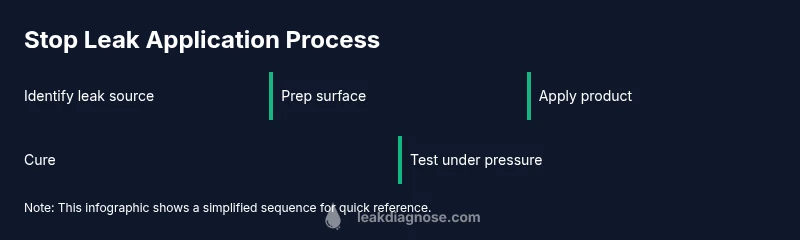
Identify leak source
Carefully locate the exact source of the leak and confirm the type of joint or surface. This prevents applying the product where it won’t seal.
Tip: Use a dry, bright area and clean any visible residue to clearly see the leak origin. - 2
Shut off water and relieve pressure
If feasible, turn off the water supply to the affected line and drain the line to minimal residual water. This reduces the risk of a sudden spray during application.
Tip: If the leak is on a main line, shut off the supply at the main valve and use a bucket to catch drips. - 3
Prep the surface
Dry and clean the area around the leak. Remove corrosion or mineral buildup that could prevent a good seal.
Tip: Wipe with a clean cloth and allow the surface to dry completely before applying the product. - 4
Apply stop-leak product
Follow the product label to apply the recommended amount directly to the leak site or into the joint as directed. Do not apply excess that could flow into appliances.
Tip: Apply slowly and watch for seepage; adjust quantity if you see pooling. - 5
Cure and test
Let the product cure for the specified time, then gradually restore water and monitor the area for several minutes to detect any continuation of the leak.
Tip: Test under low pressure first before full restoration. - 6
Inspect and adjust
If leaks persist, recheck alignment, cleanliness, and compatibility; a second application might be needed, or switch to a more permanent fix.
Tip: Document results for future reference and planned maintenance. - 7
Plan a permanent repair
Treat stop-leak as a temporary measure while you arrange a permanent repair—replacement of faulty fittings, worn seals, or pipe sections as needed.
Tip: If you’re unsure, consult a professional to avoid accidental damage.
Questions & Answers
Can stop-leak fix a major or ongoing leak?
Stop-leak is intended for minor leaks and drips. A major leak or a continuous flow usually requires immediate shutoff and a professional repair to prevent water damage and further pipe wear.
Stop-leak is for small drips; major leaks require shutting off water and professional repair.
Is stop-leak safe to use on PVC pipes?
Check the product label for PVC compatibility. Some formulas are designed for metal fittings only; using an incompatible product can damage plastics and worsen the leak.
Always verify compatibility with PVC before use.
Will stop-leak affect drinking water quality?
Most stop-leak products are formulated for potable water in small amounts, but it’s best to flush the system after curing and limit usage until you’re sure there’s no residue.
Flush the line after curing and follow label directions to be safe.
Should I turn off the water first?
Yes. Shut off the water supply if you can access the valve safely, then drain the line to reduce pressure while applying the product.
Turn off the water supply if you can, then apply.
Will stop-leak void warranties on appliances or plumbing?
Some manufacturers discourage or void warranties when non-approved products are used. Check your appliance or pipe warranty terms and consider professional installation for compliant coverage.
Check warranty terms and consider professional help for compliance.
How long does stop-leak take to seal a leak?
Cure times vary by product; most require several minutes to hours before full pressure is applied. Always follow the label for the exact cure time.
Follow the product’s cure time and test gradually.
Watch Video
Main Points
- Identify the leak source before applying.
- Choose a product compatible with pipe material and water type.
- Prepping the area improves sealing success.
- Stop-leak is a temporary measure; plan a permanent fix.
- The Leak Diagnosis team recommends professional help if leaks persist.