How to Fix a Single-Handle Bathtub Faucet Leak
A practical, step-by-step guide for homeowners tackling a leak from a single-handle bathtub faucet. Learn diagnosis, parts to replace, safety tips, and a complete repair workflow to stop dripping and prevent future leaks.


To fix a single-handle bathtub faucet leak, shut off the water, relieve pressure, and disassemble the handle to inspect the cartridge or stem. Replace worn parts (cartridge, O-rings, seats), reassemble, and test for leaks. Gather essential tools: basin, adjustable wrench, screwdrivers, replacement cartridge, PTFE tape, plumber’s grease, and towels. If valve type isn’t obvious, consult your faucet’s diagram.
Understanding the anatomy of a single-handle bathtub faucet
A single-handle bathtub faucet typically uses a cartridge or stem inside a valve body to mix hot and cold water and control flow. Over time, moving parts like O-rings, seals, and the cartridge can wear out, leading to drips, leaks around the handle, or a leaky spout. In many homes, leaks originate from wear at the cartridge’s seats or from deteriorated O-rings on the stem. According to Leak Diagnosis, most leaks in these fixtures stem from wear on the cartridge or the associated seals, not from the plumbing connections behind the wall. Knowing this helps you target the right part when you repair. Understanding the inner parts also helps you choose the right replacement kit and avoid unnecessary parts purchases. This section lays the groundwork for a successful DIY fix and helps you decide whether a replacement cartridge or a simpler O-ring swap is appropriate for your model.
Diagnosing the leak types
Leaking faucets can present in several ways: a dripping spout, a handle that slowly returns to a position, or water constantly dripping after the handle is turned off. With a single-handle faucet, a drip from the spout after closing may indicate a worn cartridge or seat. Drips around the handle often point to O-rings or the packing Nut. Before you disassemble anything, observe the pattern: does dripping come from the spout when sunlight hits the stream, or is it present even when the faucet is fully off? This observation helps you pinpoint the likely failure mode and reduces unnecessary disassembly. If the leak is only when the water is on, you’re likely dealing with a cartridge issue rather than a loose nut.
Tools and parts you'll likely need
A well-prepared toolkit makes the repair smoother. Gather the items listed in your toolbox and verify you have compatible replacement parts for your faucet model. Common components include a replacement cartridge or stem kit, O-rings, seat washers, and sometimes a bonnet nut. Having a mirror and good lighting helps you see recessed components. It’s also wise to have a basin or towel to catch water and a clean workspace to prevent lost screws. Label any parts you remove so you can reassemble in the correct order. A tidy workspace saves time and reduces the risk of reusing the wrong pieces.
Why leaks happen: Common causes
Despite the wide variety of bathtub faucets, the most frequent culprits are worn cartridges, degraded O-rings, or damaged seats. Calcium buildup can also interfere with cartridge movement, causing uneven operation and leaks. In some cases, the valve seat can corrode and fail to seal properly, allowing water to seep from the spout even when the handle is off. Debris from mineral buildup can cause pitting on metal seats, necessitating replacement. Regular use and water quality influence wear rates, so even newer fixtures may develop leaks sooner if mineral-rich water persists.
How to identify the correct cartridge type
Not all single-handle faucets use the same cartridge. Some models rely on ceramic-disc cartridges, others on brass cartridges, and a few on older stem-style cartridges. The key is to determine your faucet’s model and cartridge type before purchasing parts. Start by removing the handle to expose the cartridge or stem. If the label on the cartridge is obscured, you can often identify the type by the shape of the stem and the number of ports. Take careful photos of the assembly from multiple angles before disassembly, so you have a reference when you shop for replacements. Matching the correct cartridge ensures a proper seal and smooth operation.
Step-by-step overview of the repair plan
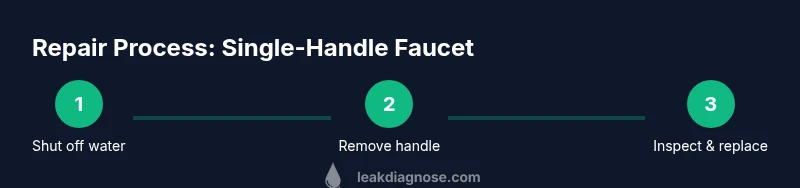
A logical repair plan reduces trial-and-error time. Start with turning off the water supply, drain the line, and inspect the handle mechanism. Then disassemble cautiously, check the cartridge and seals, replace worn parts, and reassemble in reverse order. Finally, restore water and perform leak testing. If you notice headwinds like stubborn corrosion or a damaged valve seat, you may need to replace the entire valve body or consult a pro. This plan keeps your repair organized and minimizes headaches.
Replacing the cartridge or seals
When you replace the cartridge, ensure you purchase the exact model or a compatible universal cartridge by measuring the stem’s diameter and cartridge height. For O-rings and seals, choose sizes that closely match your original parts. After removal, inspect seats for wear and replace if pitted or cracked. Lube the new O-rings with plumber’s grease or silicone-based lubricant to ensure a smooth seal and easier installation. If the fixture is older and has corrosion on metal threads, wrap threads with PTFE tape to prevent leaks at the connection. Always wipe away excess lubricant to avoid attracting dirt.
Reassembly and testing for leaks
Reassemble the faucet in the reverse order of disassembly, taking care not to overtighten screws or bonnet nuts. Turn the water back on slowly and check for leaks around the handle, cartridge, and connection points. If water leaks from the handle once you tighten the set screw, recheck the handle alignment and ensure the screw is snug without overtightening. A final test—running hot and cold water for several minutes—helps verify a solid seal and smooth operation. If you still notice leaks, there may be an internal issue such as a damaged valve seat or stem; consider professional service.
Safety, maintenance, and prevention
Safety matters when working around water and tools. Always turn off water at the supply valves before beginning, wear eye protection, and keep the workspace dry to prevent slips. After repair, consider periodic checks—at least every six months—for worn O-rings or cartridge movement. If you have hard water with mineral buildup, you may need to clean components periodically to prevent sticking. A routine inspection catches problems early, reducing the chance of more expensive repairs later on.
AUTHORITY SOURCES
- EPA WaterSense: https://www.epa.gov/watersense
- Energy.gov: https://www.energy.gov/
- University Extension resources (example): https://extension.oregonstate.edu/
Note: Always verify that the replacement cartridge matches your faucet model, and consult manufacturer guidelines when possible.
Ready-to-checklist after repair
- Verify all fasteners are snug but not over-tightened.
- Confirm water supply valves are fully open and check for leaks.
- Run hot and cold water for several minutes to verify smooth operation and sealing.
- Inspect for towel-dried moisture around the base, escutcheon, and handle.
- If leaks persist, re-check cartridge fitment or consult a plumber.
Next steps and ongoing care
The Leak Diagnosis team emphasizes a careful diagnosis, precise part matching, and proper lubrication to achieve a lasting fix. After repairs, keep a small maintenance log and watch for changes in performance. If a replacement cartridge fails prematurely, re-check for debris and confirm the seat is intact. Regular checks help prevent repeat leaks and extend faucet life.
Tools & Materials
- Adjustable wrench(Adjustable jaw to fit common faucet nuts)
- Flat-head screwdriver(For set screws on square stems)
- Phillips screwdriver(Handles screws for escutcheon or trim)
- Cartridge or stem replacement kit(Match model and cartridge type)
- O-ring kit(Assorted sizes to match the faucet)
- PTFE tape(Wrap threads to seal valve connections)
- Plumber’s grease or silicone-based lubricant(Lubricate O-rings and seals)
- Basin or bucket(Catch water during disassembly)
- Towels or rags(Dry workspace and soak spills)
- Safety glasses(Eye protection during removal)
- Penetrating oil(Loosen stubborn nuts or stems)
- Camera/phone for photos(Document disassembly sequence)
Steps
Estimated time: 60-120 minutes
- 1
Shut off water supply
Locate the shut-off valves for the tub faucet (usually under the tub or behind access panels). Turn both hot and cold valves clockwise until closed. Then open the faucet to relieve pressure and drain residual water.
Tip: Keep a towel under the area to catch any remaining water. - 2
Remove the handle
Use the appropriate screwdriver to remove the handle screws or decorative cap. Gently pull the handle away from the valve to expose the cartridge or stem.
Tip: If the handle is stubborn, apply a bit of penetrating oil around the base and wait a few minutes. - 3
Expose the cartridge or stem
Carefully remove any trim escutcheon and bonnet nut to access the cartridge or stem. Avoid prying with metal tools that could scratch the finish.
Tip: Take a photo of the assembly before removal to guide reassembly. - 4
Inspect cartridge or stem
Check for cracks, wear on O-rings, and seats. If the cartridge moves roughly or shows signs of wear, plan to replace it.
Tip: If you can’t identify the cartridge, bring the old part to the hardware store for guidance. - 5
Remove worn parts
Carefully lift out the cartridge or stem and remove worn O-rings and seats. Clean the valve body to remove mineral buildup.
Tip: Do not force parts through tight spaces; if it’s stuck, apply gentle pressure and pause. - 6
Install replacement parts
Install the new cartridge or stem, O-rings, and seats in the correct order. Apply a thin coat of plumber’s grease to O-rings.
Tip: Lubricating O-rings helps prevent pinching during installation. - 7
Reassemble the faucet
Reattach the bonnet nut, escutcheon, and handle. Tighten screws snugly without overtightening, which can crack parts.
Tip: Comment: align parts so the handle sits flush. - 8
Restore water and test
Slowly reopen the water supply valves and run hot and cold water. Observe the fixture for leaks around the handle and spout.
Tip: Test for both hot and cold to ensure proper mixing. - 9
Evaluate and finalize
If drips persist, recheck seals and consider a complete valve replacement or professional service. Restore the finish and clean up the area.
Tip: Document the process for future reference and warranty claims.
Questions & Answers
What is a single-handle bathtub faucet?
A single-handle bathtub faucet uses one lever to control both water temperature and flow. Inside, a cartridge or stem blends hot and cold water. Leaks arise from worn seals, O-rings, or a failing cartridge.
A single-handle faucet uses one lever to mix hot and cold water. Leaks usually come from worn seals or a bad cartridge, which means you’ll likely need to replace those parts.
How do I know if I need cartridge or stem replacement?
If the leak comes from the handle area, O-rings or seals are often to blame. If water leaks from the spout when off, the cartridge may be worn. Inspect the exposed cartridge or stem after removing the handle to determine the correct replacement.
If water leaks from the spout when the handle is off, you likely need a cartridge replacement. Handle leaks usually point to O-rings or seals.
Can I fix a leak without replacing parts?
Some leaks stem from simple worn O-rings or seals that can be swapped without replacing the entire cartridge. If the cartridge is worn or damaged, replacement is typically the most reliable fix.
Sometimes you can swap O-rings, but if the cartridge is worn, replacement is usually the best fix.
Is it safe to apply plumber’s grease on faucet parts?
Yes. Use a silicone-based or water-safe plumber’s grease on O-rings and seals to improve lubrication and seal integrity. Avoid petroleum-based products that can degrade rubber.
Yes, a silicone-based grease is fine on O-rings and seals and helps your fix last longer.
How long does a typical faucet repair take?
Most fixes take about 60 to 120 minutes, depending on access to the valve and the availability of the right cartridge. Cleaner access saves time.
Most repairs take about one to two hours, depending on access and part availability.
What if leaks persist after replacement?
If a leak remains after replacement, recheck the seat for wear, confirm proper cartridge seating, or consider replacing the valve body or seeking professional help.
If it still leaks, double-check the seat and cartridge seating or call a plumber.
Should I replace the whole faucet or just cartridges?
Cartridge replacement is cheaper and often resolves leaks if the valve is still sound. If the faucet is old or corroded, replacing the entire faucet may be more cost-effective in the long run.
Cartridge replacement is cheaper if the valve is still good; replace the faucet if it’s old or corroded.
Do I need professional help for a bathtub valve?
If you’re unsure about the valve type or encounter corrosion, seeking a licensed plumber prevents further damage and ensures a proper seal.
If you’re unsure or see corrosion, call a professional for a safe, lasting fix.
Watch Video
Main Points
- Identify the leak source before disassembly.
- Replace worn cartridge or O-rings to stop most leaks.
- Seal threads with PTFE tape and lubricate seals for reliability.
- Test with both hot and cold water after repair.
- If leaks persist, consider professional help.