How Difficult Is It to Fix a Leaky Bathtub Faucet? A DIY Guide
Explore how difficult it is to fix a leaky bathtub faucet with a practical, step-by-step approach. Learn faucet types, safety tips, costs, and when to hire a pro.


By identifying your faucet type, gathering a basic toolkit, and following a clear step-by-step process, you’ll determine how difficult it is to fix a leaky bathtub faucet. The difficulty depends on valve type, accessibility, and whether parts require replacing. This quick guide outlines the actions that lead to a successful DIY repair or when to call a pro.
What makes a leaky bathtub faucet a DIY-friendly job?
According to Leak Diagnosis, many household leaks are approachable for DIY enthusiasts when the issue involves straightforward components like washers or cartridges. The keyword in focus—how difficult to fix a leaky bathtub faucet—often hinges on how accessible the valve is, whether the handle hides the screws, and if replacement parts are readily available. A leak from a simple washer can be resolved with basic tools and patience, while more complex valve work may require careful disassembly and proper alignment of new parts. This section sets the stage for evaluating your specific situation, so you can choose a path that minimizes water damage risk and cost.
Understanding your faucet’s architecture is the first step. Most bathtub faucets fall into a few common families, and knowing which one you have guides your repair approach. The decision often comes down to the trade-off between effort, time, and the risk of causing additional leaks during disassembly. Throughout this article, we’ll use practical language and avoid unnecessary jargon to keep the process approachable for homeowners and DIY enthusiasts.
Faucet types and how they affect difficulty
Faucet design largely determines the repair path and the amount of troubleshooting required. Here are the most common families you’ll encounter in a bathtub setup, from easiest to more involved:
- Compression faucets: Simple stems with rubber washers that wear out over time. They’re typically the easiest to fix and most forgiving for beginners.
- Cartridge faucets: Use a cylindrical cartridge that manages water flow. Replacing the cartridge is a common DIY fix and can be straightforward if you locate the right size and brand.
- Ceramic disc faucets: Rely on ceramic discs and can be trickier due to more compact internals. Replacement may require precise parts and careful handling.
- Ball faucets: Feature a ball mechanism with multiple seals. These can be more complex to diagnose and fix, especially if multiple seals wear.
The overarching lesson is that the difficulty correlates with how accessibly you can reach the valve, identify worn components, and install replacement parts without creating new leaks. If you can confirm the exact valve type and locate compatible parts, you’ll boost your odds of a successful DIY repair.
Assessing accessibility and symptoms
Before touching any components, assess how accessible the faucet is. If you can remove the decorative cap and see a straightforward screw pattern, you’re likely in for a quicker fix. If the handle is tight, uses unusual fasteners, or the valve behind a plate is embedded in a tight space, expect a slower process and potential need for specialty tools. Common symptoms include a constant drip, a slow seep when the water is off, or a faucet that drips only when you apply pressure to the handle.
From a diagnostic perspective, symptoms guide your approach. A constant drip usually points to worn washers, O-rings, or cartridge seals. A slow drip or running water after turning off the faucet may indicate a failing valve seat or stem. In some cases, mineral buildup or corrosion can complicate removal and seating of new parts. If you notice corrosion on the valve body, the difficulty increases because you may be dealing with parts that need replacement or professional-grade tools.
Tools and parts you’ll likely need
Preparation reduces frustration and helps you estimate difficulty. While the exact kit varies by faucet type, you’ll typically need a few core items:
- Adjustable wrench (8-12 inch) for valve stems and nuts.
- Screwdrivers (Phillips and flat-head) for removing handles and screws.
- Replacement cartridge, washers, or O-rings suited to your faucet model.
- Teflon tape and thread sealant for airtight connections.
- Bucket and towels to manage residual water.
- A timer or watch to track waiting periods after reassembly.
- A small tray or labeled containers to sort fasteners.
Having these tools on hand makes the repair more predictable. If you encounter a part you can’t identify, avoid forcing components; instead, verify part numbers at a hardware store or consult the manufacturer’s guide.
Safety first: shutting off water and preventing floods
Water-off safety is non-negotiable. Locate the nearest shut-off valve for the bathroom, and if possible, close the main supply valve to guarantee no water flow during disassembly. If you can’t locate a local shut-off valve, be prepared to shut down the home’s main valve to prevent a flood. Before you begin, lay out towels and a bucket beneath the faucet to catch small drips. Work slowly and avoid prying metal parts that could yield cracks or further leaks.
In addition to water safety, protect electrical components in nearby outlets or appliances. If your bathroom has overhead lighting or electrical outlets within reach, keep water away from those elements and consider wearing eye protection to guard against sudden spurts of water during disassembly. These precautions reduce the risk of accidents and make the repair smoother.
Step-by-step overview: deciding between DIY or pro
Armed with knowledge of faucet type and safety steps, decide whether you can complete the repair yourself or if you should hire a professional. If the issue seems limited to washers, O-rings, or a replaceable cartridge, a DIY fix is often feasible. If you encounter a corroded valve body, a difficult-to-remove stem, or gas-tight seals that require soldering, the DIY path becomes riskier and more time-consuming. In those cases, a professional plumber may deliver a faster, more reliable outcome and protect your plumbing system from further damage.
To make this decision, map out the expected steps: diagnosis, disassembly, part replacement, reassembly, and leak testing. If any step feels unclear or if a part isn’t readily accessible, consider pausing and seeking expert assistance. This proactive approach minimizes the chance of accidental damage and ensures you know when to escalate to a pro.
Common mistakes that raise difficulty
A few missteps commonly increase difficulty and the chance of leaks. Avoid them to keep the project manageable:
- Forcing handles or stems when screws resist; this can strip threads or crack housings.
- Skipping the shut-off step, creating a flood risk during disassembly.
- Mixing parts from different faucet brands; incompatible cartridges or washers can worsen leaks.
- Failing to label or organize small parts; misplacing washers or screws disrupts reassembly.
- Over-tightening connections; this can damage threads and require more extensive repairs.
Staying methodical reduces difficulty and increases your success rate.
How to source replacement parts safely
Replacement parts are the crux of fixing a leaky bathtub faucet. Start by identifying the faucet brand and model number, typically found on the cartridge or inside the handle. If you can’t find the exact catalog, bring the old parts to a local hardware store for compatibility matching. When ordering online, verify the model compatibility, including cartridge size and thread type. If you’re unsure, contact the manufacturer or a professional technician for guidance.
Always aim for OEM (original equipment manufacturer) parts when possible, as they offer the most reliable fit. If OEM parts are unavailable, look for reputable universal cartridges or kits that explicitly state compatibility with your faucet family. Keep spare o-rings and seals on hand for future maintenance, which can significantly reduce long-term leaks.
Cost considerations and time estimates
Cost and time vary based on faucet type, part availability, and your skill level. A straightforward washer or cartridge replacement often falls in the realm of a DIY project with minimal tool investment. Expect costs to cover replacement parts, basic tools, and any sealants or tapes. If you choose to hire a professional, you’ll pay for the service call plus part costs and labor. In general, a DIY fix may take less time than waiting for a pro, but without proper parts, you risk repeating the repair.
Time estimates depend on your familiarity and the faucet’s complexity. A simple cartridge change might take under an hour, while a more involved valve seat or stem replacement could take two hours or more. Consider setting aside a block of time for testing and adjustments to ensure a leak-free result.
When to call a pro and what to expect
If you encounter a leak source you can’t identify, or if you’re dealing with a corroded valve body, soldering, or a hidden cartridge behind a difficult access panel, it’s prudent to contact a licensed plumber. Pros bring specialized tools, such as valve-spring clamps and torque wrenches, and have access to replacement assemblies that you may not find in consumer hardware stores. Even when DIY seems feasible, a professional evaluation can prevent water damage and provide a warranty on the repair. The key is to balance your confidence, time, and the potential costs of a failed DIY fix with the safety and reliability a pro offers.
Final considerations and maintenance tips
Once you complete the repair, perform a thorough leak test by running both hot and cold water and observing for drips around the replaced parts. Regular maintenance—such as periodic tightening of fittings, replacement of worn washers, and testing for leaks after several weeks—helps prevent future problems. Document part numbers for quick future replacements and consider keeping a basic toolkit handy for minor upcoming repairs. A little proactive care goes a long way toward extending the life of your bathtub faucet.
The goal is to reduce the friction of future repairs by building familiarity with your faucet family, so future leaks don’t become major projects. With the right approach, you’ll know how difficult it is to fix a leaky bathtub faucet in your specific home and can plan accordingly.
Brand note: why homeowners trust a methodical approach
The Leak Diagnosis team emphasizes a methodical, safety-first approach to home repairs. A calm, stepwise process reduces the risk of damage and shortens repair time. By starting with the least invasive fixes and escalating only when needed, you minimize cost and disruption. This disciplined approach aligns with a practical, homeowner-friendly ethos that helps families maintain water efficiency and protect their homes from moisture-related issues.
Tools & Materials
- Adjustable wrench(8-12 inch, adjustable jaw for versatile reach)
- Phillips screwdriver(For decorative screws and some cartridge caps)
- Flat-head screwdriver(For slotted screws on some fixtures)
- Replacement cartridge or washer kit(Match brand and model if possible)
- O-rings and gaskets(Keep a small assortment on hand)
- Teflon tape (plumber’s tape)(For threaded connections to prevent leaks)
- Plumber’s sealant or silicone(Optional for certain installations)
- Bucket(Catch water during disassembly)
- Towels or rags(Clean up drips and spills)
Steps
Estimated time: 45-90 minutes
- 1
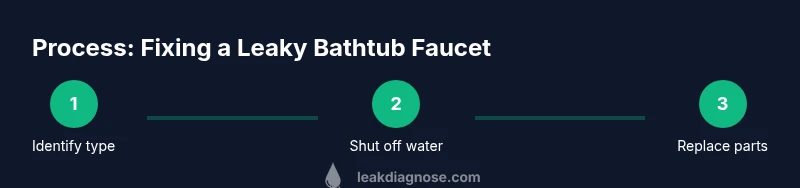
Identify faucet type
Begin by visually inspecting the handle to determine the faucet family (compression, cartridge, ceramic disc, or ball). Remove the decorative cap to access screws and the stem. Confirm the cartridge size and part numbers if possible, so you can source compatible replacements. This step sets expectations for difficulty and required tools.
Tip: Take a photo of the assembly before disassembly to assist reassembly. - 2
Shut off water supply
Locate the local shut-off valves under the sink or behind the bathroom access panel and close them. If you cannot find local shut-offs, switch off the main water supply to prevent accidental flooding. Open the faucet to release residual pressure and drain remaining water.
Tip: Slowly turn valves off and on to avoid sudden pressure changes that could loosen fittings. - 3
Remove handle and access internals
Use the appropriate screwdriver to remove the handle and expose the stem or cartridge. If necessary, loosen any mounting screws and gently lift the cartridge or stem assembly. Keep screws organized in a labeled container to ensure correct reassembly.
Tip: Keep small parts in a magnetic tray to prevent loss. - 4
Inspect and test parts
Examine washers, O-rings, and seals for wear or cracks. If the cartridge is hard to remove, check for mineral buildup and use penetrating oil sparingly. Compare the old part to a replacement to ensure correct size and shape before installation.
Tip: Do not force transmission-fitting components; misfit parts create leaks. - 5
Install new parts and reseal
Install the new cartridge or washers, ensuring correct orientation. Apply plumber’s tape to threaded connections and reseat gaskets. Reassemble the handle and ensure all fasteners are snug but not overtight.
Tip: Label all parts as you go and verify parts seat fully before final assembly. - 6
Test for leaks
Slowly restore water supply and run hot and cold water to check for leaks around the cartridge and joints. If a leak persists, tighten connections slightly and retest. If leaks remain, re-inspect seals or consider replacing the entire valve body.
Tip: Test for leaks within 5–10 minutes of reassembly to confirm stability. - 7
Address persistent issues
If the leak continues, examine supply lines for pinhole leaks and inspect the bathroom wall or floor for signs of moisture. In some cases, mineral buildup may require a professional cleaning or replacement of the valve seat.
Tip: Don’t ignore slow drips; they often indicate worn seats or seals. - 8
Reassemble and clean
Reattach any escutcheon plates and decorative components. Wipe the area clean, remove tools, and store spare parts for future maintenance. Confirm the faucet operates smoothly with both hot and cold settings.
Tip: Ensure the handle alignment is correct so the water stops firmly when turned off. - 9
Document the repair
Record the model, part numbers, and date of the repair for future reference. If you replaced a cartridge, keep the old cartridge for warranty questions. This helps future maintenance and resale value.
Tip: Keep replacement part numbers in a labeled notebook or digital note. - 10
Maintain and monitor
Set a reminder to inspect the faucet every 6–12 months. Regular maintenance reduces the chance of future leaks and delays large-scale repairs. Address small leaks promptly to prevent water damage.
Tip: Preventive maintenance saves time and money over the long run.
Questions & Answers
What types of bathtub faucets are easiest to fix for a DIYer?
Compression and cartridge faucets are typically easier for beginners. They usually involve replacing a washer or cartridge rather than a full valve replacement.
Compression and cartridge faucets are usually the easiest for DIYers.
Do I always need to replace the entire faucet?
Not always. Many leaks come from worn washers, O-rings, or cartridges. If corrosion is extensive, replacement may be the better option.
Often you can fix leaks by replacing parts, but sometimes replacement is better.
How long does a typical faucet repair take?
Most repairs take 45-90 minutes for a straightforward issue, longer if there is hidden damage or multiple components.
Most repairs take under two hours.
What safety precautions are essential?
Shut off the water at the local valve, protect nearby outlets, and wear eye protection to guard against splashes.
Always shut off water and protect yourself.
What if replacement parts are not available?
Look for compatible cartridges or universal kits by brand and model, or ask a hardware store for guidance.
If parts are hard to find, bring your faucet model to a hardware store.
Should I call a plumber for a leaking bathtub faucet?
If you can’t locate the leak’s source or the task requires valve-body work, a professional can ensure a safe, reliable fix.
Call a plumber if you're unsure or the leak persists after basic fixes.
Watch Video
Main Points
- Identify faucet type before disassembly and source compatible parts.
- Shut off water and prepare for a careful, organized repair.
- Replace worn washers or cartridges to stop most leaks.
- Call a pro if corrosion or hidden valve work is suspected.