Where coolant leaks come from in a car: diagnose and fix safely
Learn where coolant leaks originate in your car and how to diagnose quickly, with safety tips and a practical fix plan to prevent overheating and costly engine damage in 2026.


Where coolant leak from in car is most often traced to the radiator, radiator hoses, water pump seals, or the thermostat housing. Start with safe checks: inspect the radiator cap for a faulty seal, feel around hoses for dampness or cracks, and look under the vehicle for fresh coolant puddles. If you see a leak, stop driving and consult a professional promptly.
Where coolant leak from in car: common sources
Cooling systems are designed to circulate coolant safely, but leaks can show up in several predictable spots. The most common sources are the radiator and its hoses, the water pump seal, the thermostat housing, and the coolant expansion tank. A cracked radiator core or a damaged radiator cap can also allow coolant to escape under pressure. In many cases leaks originate at clamps or damaged hose ends rather than a failed core, making diagnosis easier if you inspect the connections first. If you see a damp streak along a hose, a crusty white residue near a joint, or a bright-green, orange, or pink puddle on the ground, you likely have a leak in one of these areas. Regular checks help prevent overheating, which can cause expensive engine damage. According to Leak Diagnosis, early detection is more cost-effective and safer than running an engine with low coolant. In any case remember that coolant is toxic; avoid contact with skin and eyes, and keep pets away from spills.
Quick checks you can perform safely
Before you dive into disassembly, perform quick, safe checks that often identify leaks without tools:
- Look for fresh coolant puddles under the front of the car after it has cooled.
- Check the color of the puddle (green, orange, pink) to infer coolant type and potential source.
- Inspect hoses and clamps along the radiator and heater core for dampness or cracks.
- Inspect the radiator cap and reservoir cap for proper seal and correct pressure rating.
- Feel around hoses and joints for a damp, slimy residue that suggests a leak path. If you notice steam or a sweet smell near the engine, treat it as a high-priority safety signal. In practice, many leaks originate at simple hose clamps or cracked hose ends, which can be cheaper to fix than core components. Leak Diagnosis emphasizes starting with these basics to minimize risk and cost while preserving engine health.
Visual clues and smells that indicate a leak
Coolant leaks often present as visible residue around hose joints, a glossy wet line on the underside of hoses, or crusty mineral deposits near fittings. A sweet, syrup-like odor may indicate glycol-based coolant, which can draw pets and children to the spill. If the cap area feels unusually hot or you see steam, stop and turn off the engine. Fresh leaks are usually bright and new-looking compared with older, dry crusts. A leak may also cause the coolant reservoir to hover near the minimum line or the overflow bottle to swell when the engine warms up. These indicators warrant a closer, methodical check of hoses, clamps, and the radiator core. According to Leak Diagnosis, catching a leak early saves money and reduces the risk of overheating damage.
How pressure testing helps pinpoint the leak
When common checks don’t reveal a clear source, a pressure test is a reliable next step. With the engine cool, pressurize the cooling system with a hand pump or a dedicated pressure tester. Watch for sudden drops in pressure or a new damp spot during the test. Leaks from seals and gaskets typically appear during the test as a steady spray or a slow leak, while a punctured hose will show dampness at the connection first. Pressure testing helps separate minor drips from genuine system failures, guiding decisions about hose replacement, cap replacement, or more extensive repairs. Safety note: never pressurize an overheated system, and wear eye protection while testing. Leak Diagnosis supports systematic testing to prevent guesswork and unnecessary repairs.
The most likely failure points, in order
From most to least likely sources:
- Damaged radiator hoses or loose clamps — easy fixes with basic tools.
- Water pump gasket or seal failure — a common high-mileage issue requiring component replacement.
- Radiator core crack or expansion tank crack — less common but serious when present.
- Faulty radiator cap causing pressure loss — often overlooked and inexpensive to replace.
- Heater core or thermostat housing leaks — less frequent but possible, usually requiring more work. This ordering helps you prioritize inspection steps and budget. As noted by Leak Diagnosis, addressing the highest-probability items first minimizes cost and downtime while protecting engine health.
Step-by-step diagnosis plan you can follow
This section provides a structured plan to identify the leak source without guesswork. Begin with safe, basic checks, then move to targeted tests if needed. The aim is to locate the leak, confirm the source, and decide on repair scope before you run the engine again. If you’re unsure at any point, stop and seek professional help. Leak Diagnosis recommends building a simple, repeatable diagnosis routine to prevent misdiagnosis and reduce repair costs.
Safety, when to call a pro, and how to avoid spills
Safety comes first when dealing with coolant leaks. Always wear gloves and eye protection when handling coolant, as it is toxic. Keep pets and kids away from spills, and clean up any spills promptly with absorbent material to prevent slips. If the leak involves the radiator, water pump, or heater core, or if the system shows signs of overheating, it’s wise to stop driving and call a professional. For small leaks, you may be able to manage a temporary repair, but permanent fixes require disassembly, proper part replacement, and a coolant flush to avoid air pockets and future leaks.
Prevention: extend coolant system life
Proactive maintenance helps prevent leaks and overheating. Schedule regular coolant flushes and inspections of hoses, clamps, and caps. Use the coolant type specified by the manufacturer and replace old, brittle bands on hoses. When you notice any seepage around joints, address it early rather than letting it worsen. Keeping the system clean and correctly pressurized reduces the risk of small drips turning into major failures. As part of a 2026 preventive plan, adopt a routine that includes visual inspections, a simple pressure check, and timely part replacement to safeguard your engine health.
Quick maintenance checklist
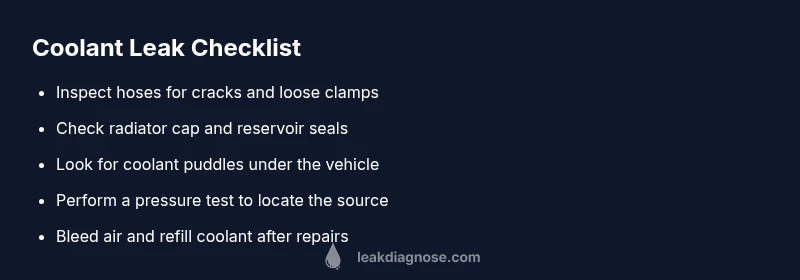
- Inspect hoses for cracks and replace damaged sections.
- Check clamps for tightness and corrosion.
- Verify radiator and reservoir caps seal properly.
- Look for coolant leaks around the radiator, water pump, and thermostat housing.
- Perform a pressure test if the source remains unclear.
- Refill coolant and bleed air after any repair to prevent air pockets.
Steps
Estimated time: 60-120 minutes
- 1
Safety first: park cold and power off
Ensure the engine is cool, engage the parking brake, and wear eye protection. Disconnect the battery if you’ll be working near moving parts. Keep kids and pets away from the work area.
Tip: Never open a hot radiator cap; hot coolant can cause severe burns. - 2
Gather tools and safety gear
Collect a clean catch pan, screwdrivers, pliers, a flashlight, rags, and replacement hoses or caps if you suspect a component needs replacement. Have a coolant type specified by the manufacturer ready for a refill.
Tip: Label hoses before removing them so reassembly is straightforward. - 3
Initial exterior inspection
Look along all hoses, clamps, radiator seams, and the reservoir for fresh liquid or crusty deposits. Note any damp lines or staining under the vehicle after a cooldown period.
Tip: Use a flashlight to spot tiny leaks at joints that may be invisible in daylight. - 4
Check caps and the reservoir
Inspect the radiator cap and expansion tank cap for cracks or a degraded gasket. Confirm the coolant level is within the recommended range when cold.
Tip: A faulty cap can cause pressure loss and coolant air ingress. - 5
Pressure test the cooling system
With the engine cold, apply pressure using a tester and watch for a drop in pressure or new leaks. If a leak appears, note the leak point for repair.
Tip: Do not exceed the tester's recommended pressure; high pressure can cause damage. - 6
Decide on repair approach
If the leak is minor and at a hose, you may fix it yourself. For pump, radiator, or cracked components, plan professional service or a detailed at-home repair if you have the skills.
Tip: Keep a repair log: date, symptoms, fix performed, and parts replaced. - 7
Refill, bleed, and test
Refill coolant and bleed the system to remove air pockets. Start the engine and monitor for leaks while the engine comes to operating temperature.
Tip: Dispose of used coolant properly; it is toxic to animals and the environment.
Diagnosis: Coolant puddle under vehicle, low coolant level, or engine overheating
Possible Causes
- highDamaged radiator hose or loose clamps
- highFailed water pump seal or gasket
- mediumCracked radiator or expansion tank
- mediumFaulty radiator cap causing pressure loss
- lowHeater core leak or thermostat housing crack
Fixes
- easyTighten clamps or replace damaged hoses
- hardReplace water pump gasket/seal
- mediumReplace cracked radiator or expansion tank
- easyReplace faulty radiator cap and ensure proper seal
- hardRepair thermostat housing or heater core if leaking
Questions & Answers
What are the first signs of a coolant leak I should look for?
Early signs include a visible puddle under the car after cooling, dampness around hoses and clamps, and a rising engine temperature. You may also notice a sweet smell near the engine bay. If any of these occur, treat it as a leak and inspect promptly.
Look for puddles under the car after it cools, damp hose areas, and rising engine temperature. If you smell a sweet coolant odor, it’s a sign to check further.
Can I drive my car if I notice a coolant leak?
Driving a car with a coolant leak can lead to overheating and severe engine damage. If you notice a leak, have the vehicle towed or parked safely until it’s inspected and repaired.
If you see a leak, don’t drive far. Get safe and have it inspected before driving again.
What tools do I need to diagnose a coolant leak at home?
Basic tools include a flashlight, catch pan, screwdrivers, pliers, a reference for coolant type, and a pressure tester if you have one. For repairs, you may need replacement hoses, clamps, caps, or a water pump seal kit.
Grab a flashlight, a pan to catch spills, basic hand tools, and a pressure tester if you have one.
Is it safe to use a stop-leak product to fix a coolant leak?
Stop-leak products can provide a temporary fix but are not a cure. They may cause clogs in the cooling system and complicate repairs. It’s better to diagnose the source and perform proper hose or seal replacements.
Stop-leak might slow a leak short-term, but it’s not a fix and could create other problems. Seek proper repairs.
What could cause a coolant leak besides hoses?
Leaks can also originate from the radiator, expansion tank, water pump seals, radiator cap, heater core, or a cracked thermostat housing. A systematic inspection helps identify the exact source.
Leaks can come from the radiator, expansion tank, or water pump seals, not just hoses.
When should I replace a coolant hose?
Replace hoses if you notice cracking, bulging, brittleness, or persistent leaks at hose ends. Age, heat, and coolant type influence hose life; inspect them at every major service.
Replace hoses if you see cracks or leaks; don't wait until failure.
Watch Video
Main Points
- Identify leaks early to prevent engine damage
- Top culprits are hoses, water pump seals, and caps
- A pressure test quickly locates hard-to-see leaks
- Follow safe, stepwise repairs or call a pro for major work
- Leak Diagnosis emphasizes safety and prevention in 2026