Water Pump Car Leak Troubleshooting: DIY Guide
Learn how to diagnose and fix a water pump car leak safely. This guide covers symptoms, safe checks, step-by-step repair, and prevention tips for homeowners tackling coolant leaks.


Most likely cause is a failing water pump seal or gasket, or a worn pump shaft. The quick fix: inspect the pump area for coolant seepage, replace the water pump or gasket if the weep hole shows coolant, and tighten or replace failing hoses. If overheating or continued coolant loss occurs, stop driving and seek professional help.
Understanding the water pump car leak
A water pump car leak is a symptom of trouble in the engine's cooling system. The water pump circulates coolant through the engine to regulate temperature and prevent overheating. When the pump, gasket, or related seals fail, coolant can leak from the housing or weep hole, or you may notice puddles under the front of the vehicle. According to Leak Diagnosis, these leaks are commonly misdiagnosed, which can delay a proper repair and lead to engine damage if left unchecked. In most cars, the pump is driven by a belt and sits at the front of the engine, making it a high-priority area for quick visual inspection. Understanding the water pump car leak helps you triage safely and decide when to call a professional.
Common signs and symptoms of a water pump leak
Look for visible coolant seepage around the pump housing, a damp front crank pulley area, or staining along the lower radiator hose. A sweet-smelling mist near the grille or a consistently dropping coolant level are strong indicators. If you notice overheating, fluctuating temperature readings, or the low coolant warning light comes on, these can point to a failing water pump or gasket. Alternately, a noisy pump bearings can precede a leak, and a loose or damaged drive belt can mimic pump failure. Documenting the leak with photos and noting the coolant color helps distinguish it from other sources like hoses or radiators. Remember, the cooling system holds pressurized fluid, so small leaks can become big problems quickly.
Safety first: hazards of working on a hot cooling system
Never open the radiator cap or pressure-cap when the engine is hot. Hot coolant can erupt and cause burns. Wear protective gloves and eye protection, and work in a well-ventilated area. Coolant is toxic if ingested or exposed to skin; clean spills immediately and dispose of used coolant at a proper recycling facility. Before any disassembly, disconnect the battery to avoid short circuits and ensure the engine cannot start unexpectedly. If you are unsure, prioritize safety and call for professional assistance rather than risking personal injury.
Safe initial checks you can perform under the hood
With the engine cool, inspect the water pump area for signs of seepage around the gasket and weep hole. Check the drive belt for cracks or looseness, and inspect adjacent hoses for cracks, bulges, or swelling clamps. If a loose clamp is found on the hoses connected to the pump, reseat or replace it. Look for staining on the pump housing, and clean the area to observe fresh leaks during a controlled test drive. Keep a diagnostic log and note any changes in temperature or coolant level.
Diagnostic flow: symptom → diagnosis → solutions
Symptom: visible coolant leak near the front of the engine or cooling system pressure loss. Diagnosis: rule out hose leaks and radiator issues first; if the leak persists at the pump area or weep hole, suspect the water pump or gasket. Solutions: tighten or replace clamps for hoses, replace the water pump or its gasket, refill coolant, and bleed air from the system. If the leak is along a radiator seam or a degraded hose, address those first. If you cannot locate the source, consider a dye test to confirm the pump as the culprit.
STEP-BY-STEP: Most common fix (detailed repair plan)
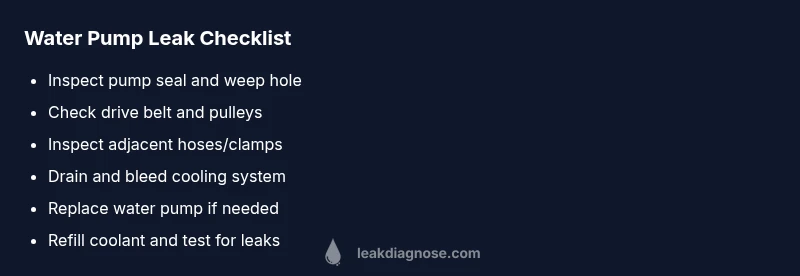
- Safety prep: Allow the engine to cool, disconnect the battery, and set the vehicle on level ground with the parking brake engaged. Gather tools, coolant compatible with your vehicle, and a catch pan. 2) Depressurize and drain: Place a pan beneath the radiator drain or lower hose, open the drain plug, and collect coolant. 3) Access the water pump: Remove components as needed (belts, pulleys, and timing cover if required) to access the water pump. 4) Inspect and remove: Remove the old water pump, inspect the gasket or O-ring, and check for damage to the mating surface. 5) Install: Clean mating surfaces, install a new gasket or O-ring, and fit the pump snugly. 6) Reassemble: Reinstall timing cover, pulleys, and belts, ensuring proper tension. 7) Refill and bleed: Refill coolant to the proper level, bleed the air from the system, and test for leaks. 8) Test drive and verify: Start the engine, monitor temperature, and look for leaks during a short test drive. If leaks persist, revisit steps or seek professional help. Tip: take photos during disassembly to restore hoses and routing correctly.
Prevention and maintenance to avoid future leaks
Regular coolant flushes per manufacturer recommendations help prevent corrosion that can lead to pump failure. Use the correct coolant type and a 50/50 mix with distilled water unless your manual specifies otherwise. Inspect the belt, tensioner, and pump pulley every 6–12 months, especially in older vehicles. Address small leaks early with proper clamps and hoses to avoid bigger issues. Keep the reservoir at the recommended level and monitor the coolant color for signs of contamination.
When to call a professional and how to choose a repair shop
If you observe ongoing overheating, rapid coolant loss, or cannot access the pump safely, stop driving and contact a professional. A certified mechanic can confirm the diagnosis with dye testing and pressure testing and ensure the cooling system is properly purged of air after service. When selecting a shop, ask about dye testing capabilities, torque specs for the pump bolts, and whether they perform a coolant system pressure test after replacement.
Steps
Estimated time: 3-6 hours
- 1
Ensure safety and prep
Park on a level surface, allow the engine to cool completely, and disconnect the negative battery. Gather tools, a catch pan, and the correct coolant. This avoids burns and spills while you work.
Tip: Keep a reference photo of hose routing to prevent misconnection during reassembly. - 2
Depressurize and drain coolant
Place the catch pan under the radiator drain and open the drain valve (or lower hose) to drain coolant. Collect used coolant and store it for proper disposal. This lowers pressure and reduces splash when you remove the pump.
Tip: Do not open the radiator cap while the system is hot; wait until it cools. - 3
Access the water pump
Remove obstructing components such as belts, pulleys, and possibly the timing cover to reach the water pump. Take care with serpentine belts and note routing for reinstallation.
Tip: Take a clear photo of belt routing before removal. - 4
Remove the old pump and inspect surfaces
Disconnect the pump, remove the gasket, and inspect the mounting surface for corrosion or damage. A warped surface can cause another leak after replacement.
Tip: If the surface is corroded, clean or replace the mating surface before installing the new pump. - 5
Install the new pump and gasket
Position the new gasket or O-ring, mount the water pump with correct torque on bolts, and ensure even seating. Reinstall any timing components if removed.
Tip: Hand-tighten bolts first, then torque to spec in a star pattern to avoid warping. - 6
Reassemble and test the system
Reinstall belts, refill coolant, and bleed air using a method appropriate for your vehicle. Start the engine and monitor for leaks while the system reaches operating temperature.
Tip: Burp the cooling system slowly to avoid air pockets that can cause overheating. - 7
Verify repair and safety
Perform a brief road test and check for leaks. Inspect hoses and clamps again after a short drive. If the leak returns, re-examine pump installation or consider a pump replacement by a professional.
Tip: Keep receipts and document parts used for future maintenance.
Diagnosis: Visible coolant leak under the front of the engine or overheating warning light after driving
Possible Causes
- highLeaking water pump seal or gasket
- highDamaged water pump shaft bearing
- mediumLeaking hoses or clamps around the water pump
- lowRadiator cap or reservoir malfunction causing pressure loss
Fixes
- hardReplace water pump gasket/seal or the entire water pump assembly
- easyTighten or replace leaking hoses and clamps near the pump
- easyBleed air and refill coolant after pump replacement
- mediumConduct a dye test to confirm the leak source if unclear
Questions & Answers
What are the most common signs of a water pump leak in a car?
Common signs include visible seepage around the pump area, a damp front lower engine area, a dropping coolant level, and overheating symptoms. If you notice these, inspect the water pump and related hoses promptly.
Look for seepage around the pump and overheating; inspect the pump and hoses as soon as you see coolant loss.
Can I drive my car if I notice a water pump leak?
No. Driving with a leaking water pump can lead to engine overheating and severe damage. If you suspect a leak, limit driving and arrange professional service or roadside assistance.
No—it's risky to drive a car with a suspected water pump leak; get it checked today.
How long does water pump replacement typically take?
Replacement time varies by vehicle and access. In many cases, a skilled mechanic completes it in 2 to 4 hours, but some cars require more extensive disassembly.
It often takes a couple of hours for a typical car, but it can be longer depending on the model.
How can I tell if the leak is from hoses rather than the pump?
If the seepage is along hoses, clamps, or the hose ends away from the pump, the leak is likely from hoses. A dye test can help confirm the exact source if uncertain.
Check for dampness along hoses and clamps; a dye test can pinpoint the source if needed.
Should I replace the timing belt when replacing the water pump?
Many modern engines use the same timing belt to drive the water pump. If the belt is old or due for replacement, it’s common practice to replace both during the same service.
Often, yes—if the belt is due for replacement, do it together with the pump.
Is a dye test necessary to confirm the leak source?
A dye test is a reliable way to locate a leak when the source isn’t obvious. It’s commonly used when visual inspection can’t pinpoint the exact spot.
A dye test helps confirm the leak source when it’s not clear.
Watch Video
Main Points
- Identify coolant leaks early to prevent engine damage
- Prioritize safety and proper depressurization before work
- Bleed air and reuse correct coolant after repair
- If unsure, consult a professional to avoid costly mistakes