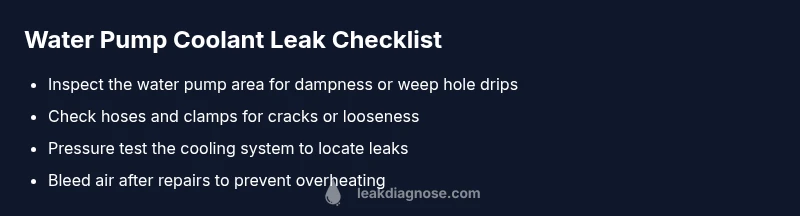
Water Pump Coolant Leak: Urgent Troubleshooting Guide for Cars
Urgent, practical guide to diagnose and fix a water pump coolant leak in your vehicle. Learn safety steps, step-by-step checks, and when to call a professional for pump replacement.


Likely cause: a coolant leak from the water pump gasket or bearing seal. Quick fix: stop driving, let the engine cool, inspect for wet spots around the pump, and top up coolant if the reservoir is accessible and safe. Do not run the engine with a leak; arrange professional service if you notice overheating or steam.
Overview of the water pump coolant leak
A water pump coolant leak is a warning sign that your vehicle's cooling system is not circulating coolant as it should. The water pump moves coolant through the engine, radiator, and heater core. A leak here can lead to low coolant levels, engine overheating, and potential damage to head gaskets if ignored. Common locations include the pump housing, gasket between pump and engine block, and the small weep hole that serves as a leak indicator. If you notice dampness around the pump face or along nearby hoses, you may be dealing with a water pump coolant leak. Early detection is key to avoiding costly repairs and dangerous overheating.
Beyond the pump itself, look for signs like sweet-smelling coolant, steam, or puddles beneath the front of the engine. Addressing a leak promptly minimizes the risk of overheats and extensive repairs. Your goal is to identify whether the water pump or adjacent components are failing and then pursue a safe, effective fix.
Safety first: immediate steps when you notice a leak
Safety is non-negotiable when facing a coolant leak. Coolant is toxic and can cause burns if hot. If the engine is hot, do not open the radiator cap; wait for it to cool completely. Park on level ground, set the parking brake, and turn off the engine. If you can do so safely, place a warning triangle and wear gloves and eye protection. Check the coolant reservoir level only when cool, and if needed, top up with the manufacturer-recommended coolant mixture. Do not drive with a known leak; overheating can occur rapidly. If you observe steam, a strong odor, or a continually rising temperature gauge, seek roadside assistance immediately.
Common causes of a water pump coolant leak
The most frequent culprits are worn or damaged water pump gaskets and seals, which allow coolant to escape at the pump flange. A cracked pump housing or a failing weep hole can also create leaks. Worn or damaged hoses connected to the pump, loose clamps, or mis-seated radiator caps contribute to leaks and pressure imbalances. Age, heat cycles, and timing belt wear in some engines stress the pump and its seals, accelerating failure. In some cases, the cooling system is leaking due to a broader issue, such as a clogged radiator or blocked flow path, which increases pump stress. Identifying the exact cause requires careful inspection and testing.
Visual inspection: where to look for signs of a leak
Begin with a clean engine bay inspection around the water pump area, typically at the front of the engine. Look for dampness, wet stains, or fresh coolant residue on the pump housing and surrounding hoses. Check the weep hole on the pump (a small hole near the pulley) for dripping fluid. Inspect hose clamps for looseness and check the hoses themselves for cracks, bulges, or soft spots. Note the color of the coolant (green, yellow, orange, or pink), which helps identify the type and potential source. If you see dried coolant crust around connections, that’s a sign of slow leakage. A magnifying glass and a flashlight can help you spot fine leaks that aren’t obvious.
Quick tests you can perform (non-destructive)
- Perform a visual pressure check with the cooling system cold or at a safe, low-temperature range, using a proper cap pressure tester if available.
- With the engine off and cold, pressurize the system slightly to see where coolant escapes.
- Inspect the radiator cap and cap gasket for proper seating and integrity.
- Look for drips during a gentle idling test after a cold start; do not attempt a high-speed test on a suspected leak.
- If you have a handheld infrared thermometer, use it to spot temperature differences indicating restricted flow or overheating zones.
Note: Non-destructive tests can point to the pump or hoses but are not a replacement for professional diagnosis if the leak is severe.
Distinguishing a water pump leak from other coolant issues
A water pump leak typically shows dampness near the pump and possibly a weep-hole dribble, while radiator or hose leaks often appear as stains along hoses or at clamps. A faulty radiator cap will usually present with pressure inconsistencies and visible cap damage rather than a clean pump leak. Heater core leaks cause damp interiors and sweet coolant odors in the cabin, which differ from exterior engine bay leaks. Proper diagnosis may require pressure testing and a coolant system bleed procedure to locate the exact origin.
Safe at-home fixes and when to call a professional
If you have basic mechanical skills, you may replace a worn water pump gasket or seal, but many vehicles require specialized tools and timing alignment. Do not attempt extensive pump work in a flooded or non-ventilated area. For most homeowners, the safest step is to stop driving, call roadside assistance, and have the pump and related components replaced by a qualified technician. After the repair, have the cooling system flushed and bled to remove air pockets. Regular inspections by a professional can prevent recurring leaks.
Prevention: keeping your cooling system leak-free
Preventive maintenance is the best defense. Schedule regular coolant flushes according to the manufacturer’s schedule, inspect belts and hoses for wear at every oil change, and replace clamps showing corrosion or looseness. Use the recommended coolant type and maintain proper coolant-to-water ratios. Monitor coolant levels weekly in hot weather and before long trips. Address any early signs of seepage locally and promptly; small leaks are far cheaper to fix than major pump replacements.
Steps
Estimated time: 60-120 minutes
- 1
Safety first and prep vehicles
Begin by parking on level ground, turning off the engine, and allowing it to cool completely. Disconnect the negative battery cable if you’ll be working near electrical components. Gather gloves, eye protection, and a clean container to catch any residual coolant. Review your vehicle’s service manual for the correct coolant type and bleeding procedure.
Tip: Never open the radiator cap while the engine is hot; pressure can cause scalding steam. - 2
Check coolant levels and identify the entry point
With the engine cool, visually inspect the coolant reservoir and the radiator neck for level and color. Trace any wetness toward the water pump region to see if the leak originates there. If you can safely reach the area, wipe away residue to better observe fresh leaks as you test.
Tip: Take photos of the area before you touch anything; it helps with diagnosis or when showing a shop. - 3
Inspect the water pump area and hoses
Look for signs of seepage around the pump housing, weep hole, and gasket interface with the engine. Check adjoining hoses and clamps for cracks, bulges, or looseness. A clean, dry pump face with a damp or crusty edge usually indicates a leak source.
Tip: A flashlight and mirror can help you see behind belts and pulleys without removing components. - 4
Perform a cooling system pressure test
Use a cooling system pressure tester to pressurize the system to the manufacturer-specified level. Observe for new leaks under pressure; leaks usually worsen when the system is under pressure. If the tester shows no leaks, the issue may be a coolant hose or cap rather than the pump.
Tip: Always follow the tester’s user guide and wear eye protection. - 5
Check the radiator cap and nearby clamps
Inspect the radiator cap for damage, improper seating, or a worn gasket. Tighten or replace clamps that show corrosion or looseness around the pump and hose connections. An imperfect cap can cause pressure loss that mimics a pump leak.
Tip: Use the correct replacement cap rating as per your vehicle manual. - 6
Decide on replacement vs repair
If the pump or gasket is visibly damaged or the weep hole drips steadily, replacement is usually required. In some cases, a gasket-only repair is possible, but many engines require pump replacement due to mounting tolerances and timing belt arrangements.
Tip: If timing belt work is involved, consider professional service to avoid engine damage. - 7
Refill, bleed, and test the system
After any repair, flush and refill the coolant to the recommended level. Bleed air according to the manual to prevent air pockets that cause overheating. Start the engine and monitor temperature and leaks before a road test.
Tip: Keep a close watch on the temperature gauge after the first drive. - 8
Test drive and monitor
Take a short, cautious test drive with a concerned eye on the temperature gauge and the ground under the vehicle for drips. Recheck coolant levels after the test drive and top up if needed. If any doubt remains, seek professional help.
Tip: Document any changes; if the coolant loss recurs, it’s time for a specialist evaluation.
Diagnosis: Vehicle shows coolant leak or overheating and you suspect a water pump coolant leak
Possible Causes
- highWorn water pump gasket or seal
- mediumDamaged water pump housing or weep hole
- lowLoose or degraded radiator cap or clogged hoses causing backpressure
Fixes
- mediumInspect the pump area and replace the gasket/seal if accessible
- hardReplace the water pump and gasket
- easyReplace radiator cap or repair/replace leaking hoses
- mediumFlush and bleed the cooling system after repair
Questions & Answers
What are the most common signs of a water pump coolant leak?
Common signs include coolant puddles near the front of the engine, a damp pump area, white or colored residue, a rising temperature gauge, and steam from the engine bay. If you notice any of these, treat it as urgent.
Look for puddles or dampness near the front of the engine and a rising temperature gauge; these are typical signs of a water pump coolant leak.
Can I drive a car with a suspected water pump coolant leak?
Driving with a suspected leak risks severe overheating and engine damage. If it’s safe, pull over, turn off the engine, and seek roadside assistance. Do not drive long distances to reach a shop.
Do not drive it if you suspect a leak; get it checked right away to avoid engine damage.
Is it safe to top up coolant if I see a leak?
Topping up coolant can buy time, but it’s not a fix. Use the correct coolant type and mix, and avoid overfilling. Address the leak promptly and have a professional inspect the system.
Topping up can help briefly, but you still need a proper repair to stop the leak.
What is the typical replacement process for a water pump?
Replacement usually involves draining the coolant, removing the belt, and installing a new water pump and gasket. Some engines also require timing belt work. This task often requires professional tools and procedures.
Replacing the water pump can be complex and may involve timing belt work; many owners choose a pro.
What safety steps should I take before inspecting the cooling system?
Wait for the engine to cool, wear gloves and eye protection, work in a well-ventilated area, and never open hot caps or hoses. If you’re unsure, don’t proceed—call for help.
Let it cool, wear protection, and avoid opening hot parts; if unsure, seek professional help.
How can I prevent future water pump coolant leaks?
Regular coolant flushes, using the correct coolant type, checking hoses and clamps, and addressing minor leaks early can prevent major pump failures. Regular maintenance saves time and money.
Keep up with coolant maintenance and inspect hoses to reduce future leaks.
Watch Video
Main Points
- Stop driving if you suspect a leak and inspect safely.
- Identify pump area and signs early to avoid head gasket damage.
- Professional help is often required for pump replacement and system bleed.