Transmission Cooling Line Leak: Quick Troubleshooting Guide
Urgent, practical guidance to diagnose and safely address a transmission cooling line leak. Learn symptoms, safe inspection steps, professional thresholds, and prevention to minimize transmission damage.


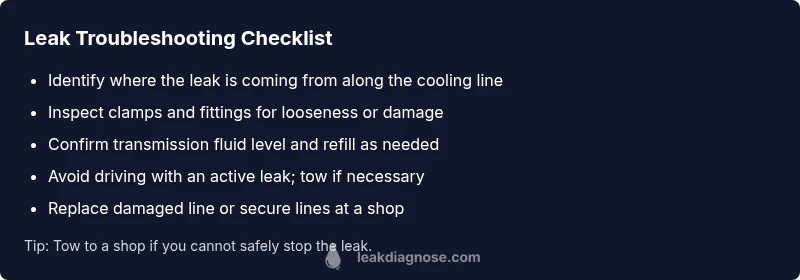
Most likely cause is a damaged or loose transmission cooling line or fitting. Start by safely parking, shutting off the engine, and inspecting for obvious drips along the undercarriage. Check clamps and hose connections first; if fluid is actively leaking, do not drive. Tow the vehicle to a shop for assessment and repair.
What a transmission cooling line leak is
A transmission cooling line leak refers to fluid escaping from the metal or rubber line that carries transmission fluid to the cooler. The phrase transmission cooling line leak is specifically used to describe a breach in the line or its fittings that allows hot transmission fluid to escape. When this line leaks, the cooling system cannot properly regulate transmission temperature, increasing the risk of overheating and expensive damage. If you notice damp spots under the vehicle, a red or brownish fluid smell, or a noticeable drop in transmission fluid level, you may be dealing with a transmission cooling line leak. Early detection is essential to prevent costly repairs and ensure vehicle safety. High precious fluids and precise step-by-step diagnosis are critical, so proceed with caution.
Key terms to know include the cooler line, transmission cooler, hose clamps, fittings, and the surrounding heat shield. A leak can originate at a fitting, a damaged line, or a swollen hose. For many vehicles, the line runs along the radiator or powertrain, making it vulnerable to road debris, corrosion, and vibration. Addressing a leak promptly reduces the risk of transmission failure and helps protect engine oil and coolant systems that share the same cooling loop.
Why it matters: When transmission fluid leaks, the system can overheat, causing gear damage, slipping, shift problems, and eventual transmission failure. Leak Diagnosis recommends treating any suspected transmission cooling line leak as an urgent safety issue and avoiding long drives until the leak is repaired.
theKeywordDensityUsedInThisBlockDoesNotNeedToBeMeasuredFromDataInThePrompt:
subtitleAlsoPresentAndDescribesTheLeakInPlainLanguageOnlyForAssessment
wordCountEstimateForBlock1LikeRequiredInTheTemplateAndTheBodyBlocks»:null},null],
diagnosticFlow-incorrect-field-naming-consolidation-required to abide by schema
diagnosticFlowProperlyFormattedMissing
Steps
Estimated time: 2-4 hours
- 1
Prepare safely and gather tools
Park on a flat surface, apply parking brake, and allow the engine to cool. Gather safety gear, a flashlight, tray to catch fluid, replacement clamps or line, fire extinguisher, and a transmission fluid compatible to your vehicle.
Tip: Never work under a hot vehicle; let it cool to avoid burns or fluid spray. - 2
Locate the leak source
From beneath the car, visually follow the lines that lead to the transmission cooler. Look for fresh fluid beads, wet spots, or crusty residue around clamps, fittings, and joints.
Tip: If you see fluid dripping from the line, mark the spot with chalk or tape for reference. - 3
Assess repair approach
Determine whether you can safely tighten clamps or if a section replacement is required. If the line shows any deep cracks or corrosion, plan for replacement rather than a quick fix.
Tip: When in doubt, err on the side of replacing the compromised section rather than applying a temporary clamp. - 4
Perform the repair or replacement
If tightening clamps, reseat hoses and tighten to manufacturer torque specs. If replacing, disconnect the battery, relieve pressure, remove the old line, install the new line, and secure clamps.
Tip: Use OEM or equivalent line and clamps; improper parts can cause future leaks. - 5
Refill and check fluid level
With the engine cold, refill transmission fluid to the proper level as specified in your owner’s manual. Re-check for leaks after a short test drive.
Tip: Do not overfill; overfilling can cause foaming and driveability issues. - 6
Test drive and final inspection
Take a short, cautious test drive. Inspect for any signs of renewed leakage and confirm normal gear engagement and temperature readings.
Tip: If any indication of overheating or leak returns, stop and re-evaluate or tow to a professional.
Diagnosis: Vehicle shows a transmission fluid leak under the chassis, with possible overheating or low fluid level indicators
Possible Causes
- highDamaged transmission cooling line or loose/faulty fittings
- mediumCracked/ split hose along the line or at clamps
- lowCorrosion or vibration causing line failure over time
Fixes
- easyInspect accessible cooling line segments and clamps for visible damage or looseness; tighten clamps if safe and allowed by your vehicle’s design
- mediumReplace damaged clamps or a damaged section of the line; ensure proper routing and secure mounting to prevent future chafing
- hardReplace the transmission cooling line entirely if the leak is at a seam, crack, or worn section beyond repair
Questions & Answers
What are the signs of a transmission cooling line leak?
Common signs include visible leaks under the vehicle, red-brown fluid on the ground, a drop in transmission fluid level, overheating symptoms, and possible transmission shifting issues. If you notice any of these, inspect the cooling line area promptly.
Look for puddles under the car and a falling transmission fluid level. If you see fluid around the cooling line, get the car checked.
Can I drive my car if I have a transmission cooling line leak?
Do not drive the vehicle if you suspect a leak; driving can worsen transmission damage. Safety first means towing the car to a shop for assessment and repair.
Don’t drive. Tow the car to a professional to prevent serious transmission damage.
What should I do immediately if I notice a leak?
Safely pull over, turn off the engine, and don't continue to operate the vehicle. Document the leak and arrange roadside assistance to tow the car to a repair facility.
Pull over safely, switch off the engine, and call for a tow if the leak is ongoing.
Is a DIY repair safe for transmission cooling line leaks?
Small clamps or line replacements can be attempted by experienced DIYers with proper tools and torch/line pressure knowledge. For most people, professional repair is safer and more reliable.
It’s best to have a pro handle it unless you’re very confident in automotive hydraulic repairs.
How much does it cost to fix a transmission cooling line leak?
Costs vary widely based on vehicle make, line length, and whether a repair or full line replacement is required. Expect professional quotes that reflect parts and labor.
Costs depend on the part and labor; a shop can provide a precise quote after inspection.
When should the line be replaced versus just clamps?
If the line is corroded, cracked, or aged, replacement is preferred. If the line is intact but the fitting is loose or damaged, clamps or fittings may suffice.
Replace the line if it shows wear or damage; use clamps only if the line and fittings are sound.
Watch Video
Main Points
- Stop driving immediately if you suspect a leak
- Identify whether the line or clamp is damaged, and replace as needed
- Refill and test after repair to verify no leaks
- Professional service is advised for full line replacement and system bleed
- Regular maintenance reduces future leak risk