Red Car Fluid Leak: Quick Troubleshooting Guide
Learn to identify and stop a red car fluid leak with a practical, step-by-step plan. Leak Diagnosis guides homeowners through causes and prevention in 2026.


The most likely source of a red car fluid leak is a damaged transmission line, worn hose, or loose clamp. Start with a quick visual check of all red-tinged fluid areas (transmission and power steering lines), then verify fluid level and look for fresh drips. If in doubt, stop driving and call a professional.
Why a red car fluid leak demands urgent action
A red car fluid leak should never be ignored. The color often points to transmission fluid or power steering fluid, both of which are critical for safe operation. A leak under the engine bay or along the firewall can lead to slipping gears, steering difficulty, or overheating if coolant is involved. According to Leak Diagnosis, quick triage can prevent expensive damage and reduce fire risk. Start with immediate safety steps: pull over to a safe spot, turn off the engine, and check for large puddles before touching anything under the hood. Even small drips can indicate a cracked hose, worn seal, or damaged line that could fail suddenly.
Where leaks commonly originate
In most cars, a red-tinged fluid leak points to the transmission system or power steering subsystem. Other possibilities include a coolant leak from a dyed hose or reservoir line if maintenance used red coolant. Look for the leak path: under the transmission pan, along radiator hoses, or around the power steering rack. Early signs include a fluid puddle near the front of the vehicle, a slipping transmission, or difficulty steering. Document the location and color for the next steps with a mechanic.
What red fluids indicate and how to identify them
Red or pink fluids typically indicate transmission fluid or power steering fluid. Transmission fluid is usually thin, slippery, and red when new but darkens with time. Power steering fluid is also red in many brands but may appear orange as it ages. If the liquid has a sweet scent, it may be coolant mixed with dye. Oil leaks are often brown or black and have a distinct oily feel. Use a clean white background to observe color changes.
Safe initial checks you can perform
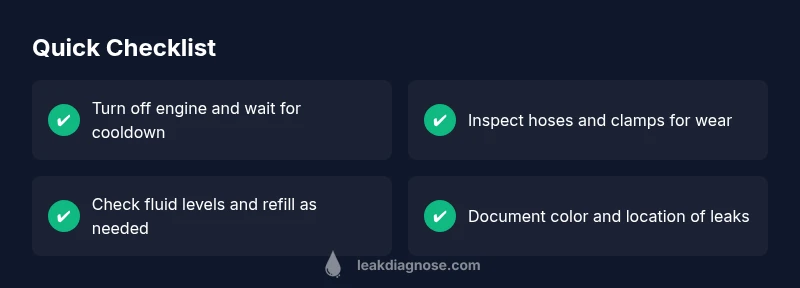
Park on a flat, well-lit surface and turn off the engine. Let the car cool, then inspect visible hoses and clamps for cracks or looseness. Check transmission and engine oil levels with the car on level ground (if accessible). Use a flashlight and a clean white sheet to catch drips and identify color. Do not open hot coolant reservoirs or radiators; allow cooling before handling.
Diagnostic flow: from symptom to diagnosis
Start with the symptom: a puddle of red fluid under the vehicle. Trace the fluid path by following the trail back to its highest point. Prioritize checks in this order: transmission lines and cooler hoses, power steering hoses, coolant hoses, and engine oil lines. If a single leak source is confirmed, focus on that system. If uncertain, escalate to a professional.
Step-by-step fix for the most common cause
- Power off and locate the exact leak source under the car. 2) If a hose or clamp is loose, tighten or replace the clamp; inspect the hose for cracks. 3) Replace worn hose or damaged line and secure with new clamps. 4) Refill the appropriate fluid to the recommended level and bleed the system if required. 5) Start with a careful low-speed test drive and observe for any recurring leaks. 6) Clean the area and monitor the spot over the next 24-48 hours.
Safety, warnings, and when to call a professional
Handling automotive leaks involves risk. Never run the engine if oil, coolant, or fuel may have contaminated a surface. If you notice a bright red puddle, check for transmission fluid or power steering issues, and do not drive long distances. If you see steam, a crack, or a major leak, pull over safely and call roadside assistance or a certified mechanic. Regular maintenance reduces the chance of leaks by catching worn parts early.
Steps
Estimated time: 60-90 minutes
- 1
Power off safely and locate the leak source
Turn off the engine and let the car cool. Use a flashlight to trace the fluid trail from the highest point to the puddle, noting the exact source.
Tip: Never open hot caps; let fluids cool before touching. - 2
Identify the fluid color and viscosity
Wipe a sample on a clean surface and compare color and texture to common automotive fluids to narrow down the likely system.
Tip: Color alone isn’t definitive; use odor and viscosity as guides. - 3
Inspect hoses and clamps
Look for cracks, bulges, or loose clamps along the most probable lines (transmission, power steering, coolant) and tighten or replace as needed.
Tip: Tighten clamps gradually and avoid over-tightening. - 4
Check fluid levels and replenish if needed
With the vehicle on level ground, check transmission and engine oil levels and refill to spec if low. Do not overfill the reservoir.
Tip: Use the manufacturer’s dipstick and fill to the marked level. - 5
Test carefully and monitor
Start the engine for a brief test drive in a safe area and watch the leak area. Recheck after parking for new drips.
Tip: Test in a controlled area; have a fire extinguisher handy. - 6
Plan next steps
If the leak persists or you’re unsure about the source, schedule a professional inspection to prevent damage.
Tip: Document the location and color of the leak for the mechanic.
Diagnosis: A puddle of red fluid beneath the vehicle after parking
Possible Causes
- highDamaged transmission cooler line or hose
- mediumLeaking power steering hose or rack
- lowOverfilled reservoir causing overflow
Fixes
- easyInspect hoses and clamps for cracks; tighten or replace as needed.
- mediumReplace damaged transmission or power steering lines; bleed and refill fluids.
- mediumIdentify and repair coolant or oil lines; confirm system seals are intact.
- hardIf leaks persist or involve multiple systems, consult a professional.
Questions & Answers
What is the most common cause of a red car fluid leak?
Most red fluid leaks stem from transmission or power steering hoses that wear out or loosen clamps. Inspect these areas first.
Most red leaks come from transmission or power steering hoses.
How can I tell if it's transmission fluid or power steering fluid?
Both can be red, but transmission fluid is usually found near the transmission and cooler lines, while power steering fluid trails from the rack area. Check the dipstick if available.
Look for the source near the transmission or steering system to tell them apart.
Is it safe to drive with a leak?
If the leak is minor and you can reach a safe location, you may drive slowly to a repair shop. Do not drive if you lose significant fluid or see smoke.
Only drive short distances to a safe place if you must.
Should I try to seal the leak myself?
DIY sealants are not recommended for most leaks and can complicate repairs. Proper replacement or hose clamps are typically needed.
Sealants are not a reliable fix for car leaks.
When should I call a tow or roadside assistance?
Call tow if the leak is large, fluid is new or you notice steering or braking issues. A professional should inspect before any road trip.
If in doubt, don’t drive; call for roadside help.
What maintenance can prevent leaks?
Regular hose inspections, fluid level checks, and timely replacements of worn components reduce leak risk. Use OEM parts when possible.
Regular checks and replacements prevent leaks.
Watch Video
Main Points
- Turn off engine if you suspect a serious leak
- Identify the fluid by color and viscosity
- Tighten or replace damaged hoses or clamps
- Refill to manufacturer specs only after diagnosis
- Consult a professional for safety-critical leaks