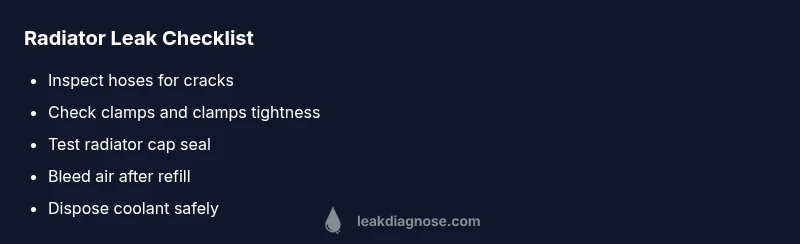
Radiator Fluid Leak Troubleshooting Guide
Urgent guide to diagnose and fix radiator fluid leaks in vehicles. Learn quick checks, diagnostic steps, safety tips, and prevention for homeowners and DIY enthusiasts.


Most radiator fluid leaks start at the hoses, radiator core, or fittings. Quick fixes include checking the overflow reservoir, tightening loose clamps, and cleaning the area to spot the stain. Immediately turn off the engine when you notice puddling, never open the radiator cap when hot, and replace any damaged hoses or clamps. If a significant leak persists, seek professional help promptly.
What is a radiator fluid leak and why it matters
A radiator fluid leak refers to coolant escaping from the cooling system, which can lead to engine overheating, reduced performance, and expensive damage. For car owners and DIY enthusiasts, spotting a radiator fluid leak early can prevent breakdowns and keep your engine running within safe temperatures. Coolant, typically a bright green, orange, or pink fluid, also has a sweet odor that can help you notice a leak. If you notice puddles under the engine bay, a damp hose, or white crust on fittings, treat it as urgent. Always assume the system is pressurized even when the engine is cold, and never ignore a leak near hoses or the radiator core. Addressing it quickly saves money and reduces the risk of overheating, which can warp motors and clog the radiator with debris. In this guide from Leak Diagnosis, you’ll learn how to identify, diagnose, and safely fix radiator fluid leaks, plus prevention tips to avoid repeat issues.
Signs you have a radiator fluid leak you should not ignore
Common indicators include visible coolant puddles under the car, a low coolant warning, sweet-smelling steam from the engine bay, or stained white crust around hoses and clamps. If the heater starts blowing warm air inconsistently or the engine temperature gauge spikes, treat it as a leak risk. After a short drive, check the ground where the car was parked; even small droplets can indicate a developing leak. Remember that leaking coolant is toxic and can cause skin irritation; handle with gloves and wash hands after touching the coolant. For safety, never sniff or taste the liquid. By catching these signs early, you can prevent costly engine damage and keep your cooling system functioning properly.
Common causes of radiator fluid leaks
Leaks come from multiple points in the cooling system. The most frequent culprits are worn or cracked radiator hoses, loose or damaged hose clamps, and a failing radiator cap that can't hold pressure. A cracked radiator tank or corroded fittings can also cause seepage. Heater core leaks and damage around the reservoir neck are other possibilities. Corrosion from old coolant or using the wrong mix can accelerate wear. Regular inspections help you pinpoint the exact location before a minor crack becomes a major failure.
Immediate safety steps if you suspect a leak
- Park on level ground and turn off the engine. Allow the system to cool for at least 15 minutes before inspecting. 2) With the engine cold, carefully check for visible leaks and inspect hoses and clamps. 3) Check the coolant reservoir level; if it’s low, note the color and try to identify whether the color matches your coolant. 4) If overheating has occurred, stop driving and seek professional help. 5) When refilling, use only the coolant type specified by the vehicle manufacturer and never mix incompatible formulations. 6) Clean up any spilled coolant immediately and dispose of it according to local guidelines.
Diagnostic flow: symptom to solution
- Symptom: Visible coolant puddle, sweet odor, or overheating warning.
- Diagnosis: Inspect hoses and clamps, check radiator cap seal, perform a pressure test, and inspect the radiator core for cracks.
- Solutions: Tighten or replace clamps, swap worn hoses, replace the radiator cap, or plan a core repair if a leak is found in the radiator itself. After any repair, bleed the cooling system to remove air pockets and refill to the correct level.
Step-by-step fix for the most common leaks
- Cool the engine completely and gather tools (screwdrivers, pliers, replacement hoses/clamps, coolant).
- Inspect for the exact leak source—hoses and clamps are the typical culprits.
- If a hose is worn or cracked, remove the hose, replace with the correct size, and resecure clamps.
- For a faulty radiator cap, replace the cap and perform a pressure test to confirm the seal holds.
- Refill coolant to the proper level and bleed the system to remove trapped air.
- Run the engine and watch for any signs of continuing leaks; recheck after a short drive. Tip: Always insist on using the vehicle’s specified coolant type. Safety first: allow the engine to cool and wear gloves when handling coolant.
Prevention tips to extend radiator life
- Schedule regular cooling system flushes and use the manufacturer-recommended coolant.
- Inspect hoses, clamps, and the radiator core every season for wear, cracks, or corrosion.
- Ensure the coolant reservoir cap is clean and seals properly.
- Keep an eye on temperature gauges during hot days and avoid towing heavy loads with a struggling engine.
- Clean up spills promptly and dispose of coolant responsibly to prevent environmental damage.
When to seek professional help
If you notice persistent leaks after several DIY fixes, or if the leak appears at the radiator core or heater core, it’s time to call a professional. A trained technician can pressure-test the system, identify hidden leaks, and perform core repairs or radiator replacement safely. Do not drive an overheating vehicle for long distances; overheating can cause severe engine damage.
Steps
Estimated time: 60-120 minutes
- 1
Cool engine and prep tools
Park on level ground and allow the engine to cool completely before starting any inspection. Gather replacement hoses, clamps, coolant, and safety gear.
Tip: Wear gloves and eye protection; coolant is toxic. - 2
Locate the leak source
Visually inspect hoses, clamps, the radiator neck, and the reservoir for dampness or crust. A flashlight helps identify faint leaks.
Tip: Check under the vehicle after it’s cooled to catch drips. - 3
Replace worn components
If a hose is cracked or a clamp is loose, replace and secure. Use clamps that match the hose diameter and torque specs.
Tip: Avoid overtightening, which can damage hoses. - 4
Check radiator cap and bleed air
Replace a faulty cap, then bleed the cooling system to remove air pockets and ensure proper pressure.
Tip: Follow vehicle-specific bleeding procedures in the manual. - 5
Refill and test
Add the correct coolant mix and run the engine with the radiator cap off briefly to purge air, then recheck for leaks.
Tip: Never mix old coolant with new; dispose of old properly. - 6
Road test and monitor
Drive short distances, monitor temperature, and inspect for new leaks after cooling.
Tip: If overheating returns, stop and seek professional help.
Diagnosis: Visible coolant puddle, sweet odor, or overheating warning.
Possible Causes
- highWorn or cracked radiator hoses
- highLoose or damaged hose clamps
- mediumFailing radiator cap or seal
- lowCracked radiator core or tank
- lowHeater core leak
Fixes
- easyTighten clamps or replace worn hoses
- easyReplace radiator cap and test pressure seal
- hardRepair or replace radiator core or tank by professional
- mediumRepair heater core or diagnose related plumbing
Questions & Answers
Why is my radiator leaking coolant?
Coolant leaks are usually caused by worn hoses, loose clamps, a failing radiator cap, or a cracked radiator. Inspect these areas first and replace parts as needed. If the leak persists, a professional should inspect the cooling system.
Coolant leaks often come from hoses, clamps, caps, or a cracked radiator. Start with a visual check and replace worn parts; if it keeps leaking, consult a professional.
Can I fix a radiator leak myself?
Many small leaks from hoses or clamps can be repaired by a handy DIYer with basic tools. More serious leaks in the radiator core or heater core require professional attention. Always ensure the engine is cool before starting any repair.
Some hose or clamp leaks you can fix at home, but cracks in the radiator core need a pro. Always wait for the engine to cool before you start.
Is it safe to drive with a coolant leak?
Driving with a known coolant leak risks overheating and severe engine damage. If you must move the vehicle, do so slowly and only for short distances to a repair shop, then stop if the temperature rises.
No—driving with a leak can overheat the engine. Only move it short distances to a shop if you must, and monitor the temperature closely.
How can I temporarily slow a leak while arranging repairs?
There is no reliable temporary fix for a coolant leak. Do not apply improvised sealants as a permanent solution. Refill coolant and arrange professional service as soon as possible.
There isn't a safe temporary fix for coolant leaks. Refill if necessary and get a professional repair scheduled quickly.
How much does radiator leak repair typically cost?
Repair costs vary by location and part. Expect potential costs for hoses, clamps, caps, or radiator replacement. For a precise estimate, get a diagnostic quote from a qualified mechanic.
Costs depend on what's leaking—from a hose to a radiator core. A quick diagnostic quote from a pro will give you a real number.
How long can I drive after noticing a coolant leak?
Limit driving time after noticing a leak. If the temperature gauge rises or you see steam, stop and seek immediate help. Do not push the engine to operate with an overheating risk.
Limit driving and get it checked. If the gauge climbs or you see steam, stop and call for help.
Watch Video
Main Points
- Identify leaks early to avoid engine damage.
- Carry out basic hose and cap checks safely.
- Bleed and refill coolant correctly after any repair.
- If in doubt, seek professional help promptly.