Fixing a Leak Near Transmission: Quick Guide
Learn to identify, diagnose, and safely address a leak near the transmission. Practical steps, safety tips, and clear guidance on when to call a professional. Stay safe and protect your vehicle.


A leak near transmission is most often caused by a faulty transmission pan gasket or worn seals around the pan, sensors, or cooler lines. The quickest fix is to locate the source, stop driving if fluid is pooling, and have the system inspected for contamination. If the leak is severe, contact a professional immediately.
What a leak near transmission actually means
A leak near transmission signals a potential loss of critical transmission fluid (ATF) and can lead to reduced lubrication, overheating, and eventual transmission damage if ignored. The term covers leaks from the transmission pan gasket, seals around input/output shafts, cooler lines, and valve-body housings. Early signs include a red or dark brown fluid puddle beneath the vehicle, a burning-fluid smell, slipping or rough shifting, and an illuminated transmission warning light. Treat any leak as serious and act quickly to prevent costly repairs. According to Leak Diagnosis, timely identification and safe handling are essential to minimize risk and protect you and your vehicle in 2026.
Key takeaway: a noticeable fluid leak near the transmission is not something to “push through”—it requires prompt assessment and appropriate action.
Common sources of leaks near the transmission and how they fail
Leaks near the transmission can originate from several components, and knowing where to inspect helps prioritize fixes. The most common sources include the transmission pan gasket, pan bolts, valve-body seals, input/output shaft seals, and the transmission cooler lines. A worn or damaged pan gasket often develops due to over-tightened bolts, heat cycles, or road debris. Seals can degrade with age or improper maintenance, allowing ATF to seep along shafts or housings. Cooler lines may crack or disconnect, creating a steady leak that can be mistaken for engine oil. Understanding these common failure points helps you target the fix and avoid unnecessary parts replacement.
Safety first: what to do right now to protect yourself and your vehicle
If you notice fluid under your car, pull over safely on level ground and turn off the engine. Do not continue driving if you see a significant puddle or feel transmission slipping; continuing to drive can cause irreversible damage. Use a flashlight to inspect under the vehicle from a safe position, and avoid opening hot components. Wear gloves and eye protection if you must handle any fluid or parts. Contact a tow service if you cannot safely reach a shop. Leak Diagnosis emphasizes that safety comes first, followed by a careful assessment of the leak source to plan the repair.
How to inspect the leak source safely (step-by-step checks you can do now)
- Check the transmission fluid level when the engine is cold, and note the color and smell of any leaking fluid. Transmission fluid is typically red and has a distinct, petrochemical scent.
- Clean the area around the suspected source with a shop towel, then re-check after a short drive to see where fresh fluid appears.
- Inspect the transmission pan area for staining near the gasket, pan bolts, and the drain plug. Look for oil-like residue and staining along the cooler lines and hose connections.
- Inspect the area around the input and output shaft seals by carefully feeling for dampness along the housing edge. If you see seepage at the seals, that’s a strong indicator of a failed seal.
- If you cannot locate the source with basic checks, document the vehicle’s symptoms (shifting behavior, noises, smell) and schedule a professional inspection. Safety comes first; avoid attempting complex repairs without proper tools and knowledge.
Diagnostic flow: symptom → diagnosis → solutions (visual guide)
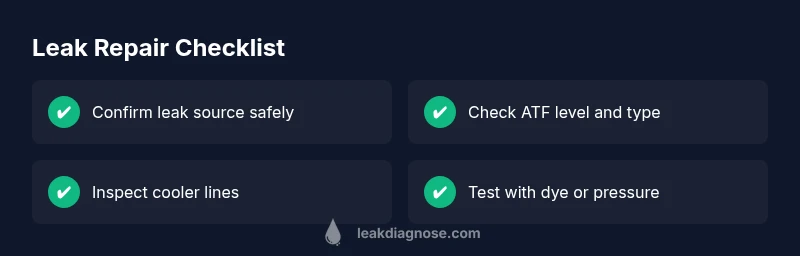
Symptoms often begin with a puddle, color change, and shifting anomalies. A professional will confirm the leak source using a dye test or pressure test. Diagnosis typically points to one of several common culprits: pan gasket, seals, cooler lines, or valve-body seals. Once diagnosed, solutions range from gasket replacement and seal resealing to cooler-line repair and, in rare cases, partial transmission replacement. Always prioritize safety and confirm fluid type and compatibility with your specific transmission model.
Step-by-step: Most common fix for a pan gasket leak (home-friendly guide)
- Gather tools and drain pan, new pan gasket, torque wrench, and gasket sealant if recommended by vehicle manufacturer.
- Raise the vehicle safely and support with jack stands on level ground. Remove the transmission pan bolts gradually to avoid warping, and carefully lower the pan to inspect the gasket.
- Clean the mating surface on the transmission and the pan. Remove old gasket material, inspect bolts for damage, and install a new gasket with the manufacturer’s torque specs.
- Reinstall the pan, tighten bolts evenly in a criss-cross pattern, and refill ATF to the correct level. Check for additional leaks after running the engine and cycling through gears.
- If the initial leak persists, re-inspect the gasket area, verify torque, and consider replacing or resealing the pan if necessary.
- Document your work, dispose of old fluid responsibly, and monitor for any new leaks.
- When in doubt, stop and seek professional help; a pan gasket leak can indicate more serious issues.
Tip: Always use the exact transmission fluid type recommended by the manufacturer and ensure clean tooling to avoid debris ingress.
When to call a professional and what they’ll do for you
If you have a significant leak, limited time, or lack the proper tools, a professional should handle the diagnosis and repair. Transmission specialists can perform dye tests, pressure tests, and precise seal/gasket replacements with the proper torque specs and safety precautions. They can also inspect for damage to the transmission oil cooler and related lines, which, if faulty, require specialized parts and procedures. Expect a diagnostic fee, parts cost, and labor, with the total depending on the vehicle model and leak complexity. Leak Diagnosis recommends seeking a certified technician for persistent leaks or internal transmission concerns.
Prevention tips to avoid future leaks and keep transmission healthy
- Schedule regular transmission fluid service intervals and use the manufacturer-recommended ATF type.
- Inspect undercarriage for road debris and protect vulnerable hoses and lines with heat shields where applicable.
- Check for leaks after major maintenance or towing, and inspect the drain plug, pan bolts, and line connections during routine service.
- Keep the cooling system in good condition to reduce heat stress on seals and gaskets. Periodically inspect cooler lines for cracks or wear.
- Address small leaks promptly; even minor seepage can worsen if ignored. By maintaining a clean, level undercarriage, you’ll spot issues quickly.
Steps
Estimated time: 60-120 minutes
- 1
Confirm leak location safely
Park on level ground and turn off the engine. Use a flashlight to identify the exact source of the leak and gather matching ATF. Do not crawl under the car if it is unstable. If you cannot safely access the area, call for professional help.
Tip: Use chalk outlines to mark the suspected area before cleaning. - 2
Collect evidence and seal temporarily
Place a drain pan or absorbent material under the suspected leak area. Wipe the area clean to assess progress. Do not drive with a significant leak—you risk transmission damage.
Tip: Take photos for reference before disassembly. - 3
Inspect the pan and gasket visually
Remove enough undertray or shield to view the transmission pan. Check gasket seating, pan bolts, and seals for signs of seepage or looseness. Inspect for cracks around the pan area.
Tip: Do not over-tighten pan bolts; follow the manufacturer’s torque specs. - 4
Decide on DIY vs. pro repair
If you notice a gasket misfit or visible seal damage and you have the right tools, you can proceed with a gasket swap. For complex seals or damaged cooler lines, plan to visit a shop.
Tip: When in doubt, err on the side of professional service. - 5
Replace gasket or seals if needed
Clean the mating surfaces thoroughly. Install a new gasket or seals, then torque screws in the correct sequence. Reinstall the pan with new gasket material if required.
Tip: Use gasket sealant only if recommended by the manufacturer. - 6
Refill transmission fluid and test
Fill ATF to the correct level using the dipstick method. Start the engine, cycle through gears with the brake applied, and recheck for leaks after a short drive.
Tip: Check for leaks while the engine is running and the transmission warmed up. - 7
Assess results and plan next steps
If the leak persists, re-evaluate the source. Consider a professional dye test to pinpoint hidden seepage, and assess whether cooler lines or seals require replacement.
Tip: Document symptoms so the technician can diagnose quickly. - 8
Prevent recurrence with maintenance
Adopt routine ATF checks and service intervals. Ensure cooling system integrity and inspect lines after rough driving or gravel exposure. Early intervention saves cost and protects transmission health.
Tip: Schedule proactive checks to minimize future leaks.
Diagnosis: Fluid puddle under vehicle near front-to-mid area; transmission warning light or slipping observed
Possible Causes
- highPower-transmission fluid leak from pan gasket
- mediumWorn input/output shaft seals
- mediumDamaged transmission cooler lines
- lowDrains plug or pan bolts loose/damaged
Fixes
- easyReplace transmission pan gasket and reseal pan
- mediumReplace worn input/output shaft seals
- hardRepair or replace damaged transmission cooler lines
Questions & Answers
What are the most common causes of a leak near the transmission?
The most common causes are a failing transmission pan gasket, worn input/output shaft seals, damaged cooler lines, or a loose drain plug. A professional will usually confirm with a dye or pressure test.
The usual culprits are the pan gasket, shaft seals, cooler lines, or a loose drain plug, confirmed with a dye test if needed.
Can I drive my car if the leak is small?
A small, slow leak may allow limited driving, but it is not recommended. Any transmission leak can lead to fluid loss and overheating, risking transmission damage. Plan a tow if you see rapid fluid loss.
It's risky to drive with any leak; get it checked and tow if fluid loss is rapid.
Is transmission fluid leak always a major repair?
Not always. Some leaks from gaskets or seals can be fixed with a gasket replacement or seal reseal. More complex leaks or damaged cooler lines may require professional service and possible transmission work.
Not always; some fixes are simple, but others need a pro.
How long does a typical leak repair take?
Repair time varies by source and vehicle. A gasket or seal replacement might take a few hours, while cooler-line work can take longer. Always consult a technician for an accurate estimate.
It depends, but expect a few hours for gasket work and longer for cooler-line repairs.
What maintenance can prevent leaks?
Regular ATF inspections, using the correct fluid, and routine cooling system checks help prevent leaks. Address seals and gaskets at first signs of seepage and keep the undercarriage clean to spot leaks early.
Maintain proper ATF and cooling system checks to prevent leaks.
Watch Video
Main Points
- Identify leak sources early
- Prioritize safety over quick fixes
- Use manufacturer specs for ATF
- DIY fixes are feasible for gaskets; seals and cooler lines may require a pro
- Prevent future leaks with regular maintenance