Leak coolant: Diagnose and fix safely
Learn to identify, diagnose, and safely fix a coolant leak. Urgent, practical steps, safety tips, and prevention guidance from Leak Diagnosis to protect your engine and avoid costly repairs.


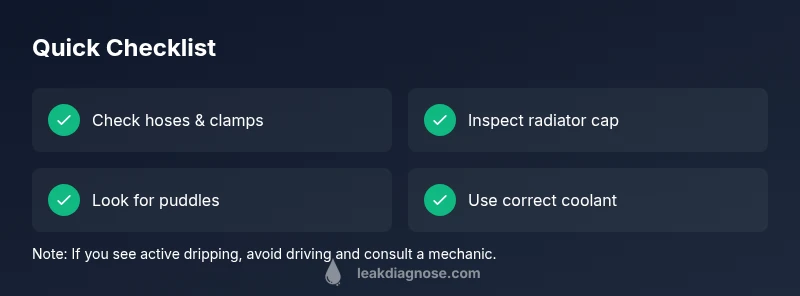
The most common coolant-leak culprits are worn radiator hoses, a loose radiator cap, or a cracked reservoir. Quick fix: inspect the engine bay for dampness or steam, tighten or replace damaged hoses and the radiator cap, and top off coolant only if the system is cool and safe. If you see active dripping, stop driving and seek professional help.
Why a coolant leak demands urgent attention
Cooling systems protect your engine from overheating, and a leak can escalate quickly into a costly breakdown. According to Leak Diagnosis, a leak coolant issue is not cosmetic—it can trigger overheating, warped heads, and even engine failure if ignored. The Leak Diagnosis team found that even small drips can become larger as the system pressure rises while the engine warms up. Early detection saves money and reduces the risk of dangerous steam and hot coolant exposure. If you notice a sweet smell around the engine bay, bright green or orange puddles under the vehicle, or unusually loud cooling fans, treat this as a potential leak and investigate promptly. Your response now keeps you safely mobile and protects your engine.
Common causes of a coolant leak
- Worn radiator hoses and clamps that crack or slip
- Loose or damaged radiator cap that fails to seal pressure
- Cracked or corroded radiator bringing coolant to the ground
- Failing water pump gasket or housing that leaks as pressure builds
- Leaking heater core or hoses routed through the dash
- Cracked reservoir tank or bad cap that vents coolant
- Gasket leaks at the intake or cylinder head in older engines
Each of these sources presents a different level of urgency and different repair paths. A small hose leak is easier to fix than a radiator crack, and a heater-core leak may require more invasive work. The goal is to identify the source quickly and stop further loss of coolant before overheating occurs. When diagnosing, note the color and location of the fluid to help pinpoint the suspect components.
Safety first: what to inspect without risking injury
Do not open hot cooling-system components. Allow the engine to cool completely before touching hoses or caps. Wear eye protection and gloves if you must handle fluids. Work on a flat surface with the parking brake engaged. Keep children and pets away from the workspace. If you smell burnt sweet coolant or see steam, step back and call for assistance. Always check your vehicle owner's manual for the correct coolant type and handling precautions. Safety is the foundation of effective diagnostics and prevents accidental burns or exposure to toxic antifreeze.
Diagnostic flow: symptom → diagnosis → solution
A coolant-leak symptom often presents as visible puddles, a rising temperature gauge, or a sweet odor near the engine bay. Start by cleaning the area to reveal the exact leak source, then inspect hoses, clamps, the radiator cap, and the reservoir. If a puddle appears under the center of the car, focus on the radiator and water pump seals. For leaks inside the engine bay, look for damp patches on hoses and around the water pump. The solution depends on source: hose/clamp replacement, cap replacement, reservoir repair, or radiator replacement. Document all findings for your records or when speaking with a mechanic.
Step-by-step overview: fix the most common hose-leak scenario
The most common fix involves a worn hose or loose clamp. Start by letting the engine cool, then inspect the radiator hoses for cracks or bulges and check clamps for tightness. If a hose shows wear, replace it with one of the correct size and material. Re-tighten or replace clamps as needed. Refill coolant to the recommended level and bleed air if your system requires it. Run the engine to verify there are no further leaks and that the temperature gauge remains in the normal range. If you discover steam or an active drip after these steps, escalate to a professional.
Prevention and maintenance to avoid future leaks
Establish a routine inspection of hoses, clamps, reservoir, and radiator caps every 6–12 months or after extreme driving conditions. Use the correct coolant specification for your vehicle and maintain the proper coolant-to-water mix. Flush the cooling system at intervals recommended by the manufacturer to remove buildup that can corrode components. Replace aging hoses and worn clamps proactively, especially on older vehicles. Keeping the system clean and secure reduces the likelihood of future leaks and overheating.
When to call a professional and how to communicate the issue
If you see a large puddle, hear hissing from the engine bay, or the temperature gauge spikes, stop driving and seek professional help. A mechanic can pressure-test the cooling system, locate hard-to-see leaks (such as the heater core), and confirm if internal engine damage has occurred. When calling a shop, describe symptoms concisely, mention fluid color, report the vehicle make/model, and share any recent maintenance. Providing clear information speeds up diagnosis and reduces diagnostic fees.
Quick-start practical tips you can use today
- Always let the engine cool for at least an hour before inspecting or touching coolant components.
- Use the exact coolant type specified for your vehicle and avoid mixing incompatible brands.
- If you must drive, take a short trip only to reach a safe destination or a nearby shop; long drives with a leak risk overheating.
Final thoughts to keep your engine safe
A leak coolant issue is not something to ignore. Rapid action protects your engine, your time, and your wallet. With careful inspection, the right tools, and the steps outlined above, you can stop a leak at its source and restore your cooling system’s reliability. For most DIYers, basic hose and cap repairs are manageable, but professional help is essential for internal leaks or radiator replacement.
Steps
Estimated time: 45-90 minutes
- 1
Park and cool the engine
Find a flat, level surface, engage parking brake, and allow the engine to cool completely before touching any cooling components.
Tip: Do not open the radiator cap while hot; serious burns can occur. - 2
Locate the leak source
Wipe the area, inspect hoses, clamps, radiator cap, and reservoir for dampness or residue that indicates a leak.
Tip: Use a flashlight and mirror to inspect hard-to-see hose connections. - 3
Assess simple fixes
Tighten clamps or replace a visibly damaged hose; reseat or replace a faulty radiator cap if you see leakage at the cap seal.
Tip: Only use hoses and clamps that match the exact size and type for your vehicle. - 4
Refill and bleed
Refill coolant to the correct level and bleed air if your system requires air removal; consult your manual for bleeding procedures.
Tip: Bleeding helps prevent air pockets that can cause overheating. - 5
Test the system
Run the engine to operating temperature and watch for new leaks; check for heat feel on hoses and continue to monitor coolant level.
Tip: Keep children and pets away from the engine while it runs. - 6
Evaluate the need for professional help
If leaks persist after basic fixes, or if you notice steam, overheating, or loss of coolant, contact a professional.
Tip: Document symptoms and steps taken to aid the mechanic.
Diagnosis: Visible coolant puddle, rising engine temperature, or sweet-smelling steam near the engine bay
Possible Causes
- highWorn radiator hoses or loose clamps
- mediumLoose or damaged radiator cap
- lowCracked radiator or reservoir
- lowFailed water pump gasket or housing
Fixes
- easyTighten clamps and replace any worn hoses
- easyReplace radiator cap and refill coolant to recommended level
- mediumRepair or replace cracked radiator or reservoir
- hardRepair water pump gasket or housing if leak is found
Questions & Answers
What are the most common signs of a coolant leak?
Look for puddles under the car, a sweet-smelling mist near the engine, rising temperature gauge, or the check engine light. These are typical indicators that coolant is escaping. Confirm by cleaning the area and rechecking.
Common signs are puddles, a sweet smell, and an overheating gauge—if you see these, inspect the cooling system and seek help if needed.
Can I fix a coolant leak myself?
Small hose leaks or a faulty radiator cap are often doable for handy homeowners. More complex leaks from the radiator, water pump, or heater core usually require professional service. Always prioritize safety and correct parts.
Some hose leaks you can fix yourself, but for major parts it's best to call a pro.
Is a coolant leak dangerous?
Yes. A leak can lead to engine overheating, which damages components and can cause fires in extreme cases. Handling antifreeze also poses ingestion risks to pets and children, so keep spills contained and clean up promptly.
A coolant leak can overheat the engine and be dangerous, so handle carefully and call a mechanic if in doubt.
How can I locate the source of a coolant leak?
Start with a visual inspection of hoses, clamps, radiator, and reservoir. Clean the area to reveal fresh leaks, then pressure-test the cooling system if necessary. A professional may use dye to trace hidden leaks.
Clean the area, inspect hoses and caps, and consider a pressure test or dye trace if the leak isn’t obvious.
What coolant type should I use for my vehicle?
Use the coolant type specified by your vehicle manufacturer; mixing types or using the wrong concentrate can reduce cooling efficiency and cause corrosion.
Always use the coolant your manual specifies and mix it correctly.
When should hoses and reservoirs be replaced?
Replace aging hoses and the reservoir if you see cracking, swelling, or frequent leaks. Proactive replacement helps prevent sudden failures and overheating.
Replace worn hoses and reservoirs before they fail to avoid leaks.
Watch Video
Main Points
- Identify the source before replacing parts
- Never work on a hot cooling system
- Only refill after ensuring the system is cool
- Proactively replace aging hoses to prevent future leaks
- Document symptoms and repairs for future maintenance