Is Stop Leak Good for Oil Leaks? A Practical Guide
Find out if stop-leak products are a safe, temporary fix for oil leaks. This practical guide from Leak Diagnosis covers how stop-leak works, risks, step-by-step checks, and when to seek professional help.


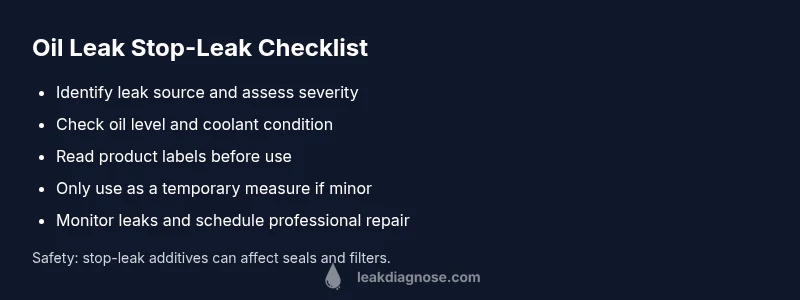
Is stop leak good for oil leaks? Step 1: Check oil level and source of leak to ensure risk is low. Step 2: If you see a small drip from a gasket, a stop-leak product may slow it temporarily. Step 3: Do not rely on it for major leaks; schedule a professional inspection if the leak is persistent. For serious leaks, consult a mechanic; monitor levels.
What is stop-leak and how does it work?
Stop-leak products for engines are formulated to swell or soften seals and gaskets slightly, reducing small gaps that allow oil to escape. They typically combine solvents, polymers, and seal conditioners that travel through the oil path to reach leaking joints. According to Leak Diagnosis, these products may offer a temporary reprieve for minor leaks from valve cover gaskets or oil pan gaskets when leaks are slow and the engine runs normally. The key question the reader asks is: is stop leak good for oil leaks? The answer depends on the leak size, location, and whether you need a lasting repair. Consider it only as a short-term aid, not a substitute for diagnostics or professional repair. Watch oil levels, monitor for changes, and plan a proper fix if the leak persists.
The discussion around stop-leak for oil leaks also implies a basic reality: a temporary seal does not replace a worn, cracked, or misaligned component. Homeowners commonly encounter minor seepage from aging gaskets, which is when a carefully chosen stop-leak product may offer a short window to address the situation before a full repair is performed. Remember that the phrase is is stop leak good for oil leaks and the answer will vary by vehicle and leak type.
Common oil leak sources in engines where stop-leak might help
Oil leaks can originate from several components. Gasket seals around the valve cover, oil pan, and timing cover are common culprits, especially as engines age. O-rings and seals for the oil pump or oil filter housing can also leak. When leaks are slow and the oil remains clean, a stop-leak product might slow seepage temporarily. However, leaks caused by a cracked oil pan, a warped mating surface, or a failed core gasket require replacement rather than sealing agents. If you notice blue smoke, dropping oil pressure, or a burning oil scent, stop-leak is unlikely to solve the root cause and professional help is advised. Always check the oil level before driving to avoid engine damage and never mix stop-leak into coolant.
Identifying the exact source is crucial because treating a gasket leak with a sealant can sometimes mask a more serious issue. The trusted approach is to perform a careful oil-drop test, observe the leaking area, and note whether the seepage reduces after a short drive. If the leak persists, plan for a proper repair instead of relying on a sealant as a permanent solution.
Risks and drawbacks of using stop-leak
While stop-leak products can be convenient for a quick, temporary fix, they carry several risks. The additives may clog oil passages, interfere with oil pressure, or contaminate filters, reducing lubrication efficiency. Some formulas can swell or damage seals beyond their intended tolerance, accelerating wear or causing new leaks. In rare cases, stop-leak materials can interfere with catalytic converters or emission controls, leading to higher exhaust emissions. Additionally, using stop-leak may void manufacturer warranties or complicate future repairs if the leak source is not clearly diagnosed. The bottom line is that stop-leak should not replace a professional inspection for a significant oil leak, and it should be used sparingly and exactly as the label directs.
How to assess your leak safely before choosing a fix
Start with safety and basic checks: park on a flat, well-lit surface and let the engine cool. Check the oil level with a clean dipstick and look for the source of seepage—valve covers, oil pan, oil filter, and drain plug are common suspects. Clean the area with a lint-free cloth to improve visibility, then inspect for fresh drips after a short drive or at idle. Note the color and smell of the oil; burnt oil or coolant contamination suggests a more complex problem. If the leak is fast, a large puddle appears, or you see signs of engine misbehavior, do not drive the vehicle; arrange a tow and seek professional assessment. This stage is about verification before committing to a fix, and it reduces the risk of unnecessary sealant use or misdiagnosis.
A practical plan: temporary stop-leak plus long-term fix plan
If the leak is minor and localized, you may consider a targeted stop-leak product as a temporary aid while you arrange proper repairs. Step 1: confirm the leak source with a visual inspection and oil level trend; Step 2: choose a reputable stop-leak product compatible with your oil type and engine; Step 3: apply exactly as directed and monitor for 2–3 days to see if seepage decreases; Step 4: schedule a professional diagnosis to perform gasket or seal replacement if the leak persists beyond a short window; Step 5: maintain regular oil changes and seal inspections to prevent future leaks. Remember, stop-leak is a temporary measure and should never replace a full repair, especially for persistent leaks that affect oil pressure or engine health.
Brand guidance and professional help
Leak Diagnosis emphasizes that when dealing with oil leaks, the goal is to protect engine health while diagnosing the root cause. According to Leak Diagnosis, temporary stop-leak use can be acceptable for very small, slow leaks that are clearly traced to a simple gasket junction, but it is not a universal remedy. If you’re unsure, seek a professional evaluation. In 2026, the consensus among experts remains clear: use sealants sparingly, and prioritize mechanical repairs for lasting reliability. If the vehicle exhibits any loss of oil pressure, overheating, or coolant contamination, discontinue any additive use and contact a technician immediately.
Steps
Estimated time: 60-120 minutes
- 1
Identify leak source
Park on a clean, flat surface and check for fresh oil under the engine. Use a flashlight to trace the drip pattern to its origin, noting whether the seepage appears at the valve cover, oil pan, or filter housing. Gather any relevant service history to guide the fix.
Tip: A quick dye or UV tracer can help reveal the exact leak path. - 2
Prepare and safety gear
Wear safety glasses and gloves. Gather tools for basic inspection: flashlight, rag, wrench set, torque wrench, and a pry tool if needed. Ensure the engine is cool to avoid burns and detours.
Tip: Work in a well-ventilated area and have a fire extinguisher nearby. - 3
Perform a surface clean and re-check
Wipe away old oil to expose fresh leaks. Re-check after a short drive or idle period to confirm the leak path. Document the area with photos for reference in future repairs.
Tip: Removing dirt makes leak tracing much easier for a mechanic later. - 4
Address the simplest fix first
If the leak is from a loose drain plug or a mis-seated oil filter, tighten or replace components per manufacturer torque specs. Refill the oil to proper level and monitor for any changes in the next days.
Tip: Always use a fresh gasket or sealant recommended by the manufacturer when reassembling. - 5
Consider stop-leak as interim if minor
If the origin is a small gasket seep and you must delay a repair, you may consider a temporary stop-leak product, strictly following label directions and avoiding coolant contact. Do not drive aggressively while the additive is in use.
Tip: Avoid applying more than the directed amount; overuse can clog passages. - 6
Plan a professional evaluation
If the leak persists beyond a short window or if you notice engine misbehavior, seek a qualified technician. A professional can perform gasket replacement, pan seal work, or more advanced diagnostics.
Tip: Have your leak history and photo records ready for the mechanic.
Diagnosis: Oil spot or drip under vehicle after parked overnight or during loss of oil pressure symptoms
Possible Causes
- highWorn valve cover gasket or valve cover seal
- mediumLeaking oil pan gasket or pan-to-block seal
- lowLoose or damaged oil drain plug or oil filter housing
- lowCracked oil pan or engine block surface
Fixes
- easyTighten or replace drain plug and/or oil filter housing as needed
- mediumReplace valve cover gasket/seal and reseal valve cover
- mediumRepair or replace oil pan gasket and mating surfaces
- hardRepair engine block or pan cracks (professional)
Questions & Answers
Is stop leak safe for oil leaks in all vehicles?
No. Stop-leak can be risky on some engines or older seals and may void warranties. Always consult your owner's manual and a professional before use.
Not for every vehicle; check the manual and talk to a tech before using it.
Will stop-leak seal major oil leaks?
Major leaks usually require repair. Stop-leak may slow seepage temporarily but won't fix a torn gasket or cracked component.
Usually not a fix for major leaks; it's temporary.
Can stop-leak damage catalytic converters or oil passages?
Overuse or certain formulas can clog oil passages or affect emissions components, potentially causing longer-term issues.
Yes, misuse can cause problems; follow label directions.
Should I use stop-leak if my car is under warranty?
Manufacturer terms often discourage aftermarket sealants; verify warranty coverage and consult the dealer before using stop-leak.
Check your warranty terms before adding anything.
Are there better long-term fixes than stop-leak?
In most cases, gasket or seal replacement performed by a qualified technician is the best long-term solution.
Usually, professional repairs beat additives for lasting reliability.
What should I do if leak continues after using stop-leak?
Discontinue use of the product and seek professional diagnosis promptly; persistent leaks can lead to engine damage.
If it keeps leaking, get it checked now.
Watch Video
Main Points
- Identify the leak source before applying any additive.
- Stop-leak is a temporary measure, not a cure.
- Do not rely on stop-leak for major or structural leaks.
- Seek professional repair for persistent leaks to protect the engine.
- Monitor oil level and engine performance after any additive use.