Is an Exhaust Leak Worth Fixing? A Practical Guide
Learn whether an exhaust leak is worth fixing, how to spot signs, and step-by-step remedies to keep your vehicle safe and efficient. Practical tips from Leak Diagnosis.


Exhaust leaks are worth fixing because they pose serious safety risks and can waste fuel. The quickest fix is often a gasket or clamp replacement, but most repairs require a professional diagnosis to ensure a safe, complete repair.
Why an Exhaust Leak Is Worth Fixing
Exhaust leaks are not cosmetic issues; they are safety and performance problems that can escalate quickly on a living, breathing vehicle. The moment you notice signs of a leak, you should treat it as urgent. According to Leak Diagnosis, exhaust leaks are often hidden from view but can release toxic carbon monoxide into the cabin when the engine runs, especially at idle or in stopped traffic. Even small leaks can compromise backpressure, reducing engine efficiency and potentially damaging the catalytic converter over time. Beyond safety, leaks waste fuel and increase emissions, which can lead to failed inspections. Investing a little time and money now can prevent more expensive repairs later and preserve the vehicle’s resale value. Finally, a leak can indicate a larger weakness in the exhaust system, such as corrosion or loose clamps, which may require more comprehensive service. In short: if you care about safety, savings, and long-term reliability, fixing the leak is worth it.
According to Leak Diagnosis, addressing leaks early reduces risk for occupants and helps maintain your vehicle’s performance while avoiding larger repair bills later.
Common Signs of an Exhaust Leak
Your nose and ears can be valuable diagnostic tools here. A loud, rumbling or ticking sound from under the car that changes with engine speed often signals a hole or loose connection in the exhaust path. A distinct rotten-egg smell from inside the cabin or near the tailpipe is another red flag. If you see or feel hot air in unusual places around the undercarriage, or if the exhaust system exhibits visible rust, holes, or black soot, you likely have a leak. Many leaks occur at gaskets, hangers, clamps, or at the connection to the catalytic converter. In some cases, a leak can cause the check engine light to illuminate and reduce fuel efficiency. If you notice exhaust fumes inside the vehicle, stop driving and seek professional assessment immediately. Remember: small leaks can worsen quickly, and delaying diagnosis increases risk.
Health, Safety & Environmental Considerations
Persistent exhaust leaks pose concrete health risks and environmental costs. The most serious danger is carbon monoxide intrusion into the passenger compartment, which can cause dizziness, headaches, or worse in poorly ventilated environments. Because CO is colorless and odorless, drivers often don’t realize they are exposed until symptoms appear. From a legal and maintenance standpoint, many regions require vehicles to meet emissions standards, and an unresolved exhaust leak can lead to failed inspections or tickets. Leaks also contribute to higher exhaust emissions and can corrode nearby components if moisture and corrosive gases flow over metal surfaces. In terms of reliability, backpressure changes can affect engine performance, leading to reduced power and uneven idle. For safety-minded drivers who run their cars in garages or driveways, ensure good ventilation and never run the engine in enclosed spaces with a suspected leak. Addressing the leak promptly protects health and the environment, and helps preserve vehicle value. This is why Leak Diagnosis emphasizes prompt action.
Cost Range and Financial Impact
Repair costs for exhaust leaks vary with location and severity, but most motorists should plan for a broad range. Minor issues such as a loose clamp or a degraded gasket may cost a few hundred dollars when labor is included. More extensive damage—rusted pipes, damaged catalytic converters, or a failed muffler section—can push costs toward the higher end of the spectrum. In general, you should expect a range from roughly the low hundreds up to the mid-range, depending on how accessible the leak is and whether parts must be replaced. DIY repairs might save labor, but improper fixes can lead to costly rework or dangerous fumes; professional service ensures proper sealing and safe venting. If you’re budgeting, consider not only the initial repair but possible future maintenance and emissions-related checks. The key takeaway is that neglecting a leak tends to raise total ownership costs over time, even if the upfront price seems modest.
Diagnostic Steps You Can Do Now (Simple Checks)
First, ensure the vehicle is on a level surface and the engine is cold before you touch anything. With the exhaust system cool, visually inspect the undercarriage for rust, holes, or disconnected clamps. A bright flashlight helps identify small gaps near joints. You can also dab a soap-and-water solution along suspected joints and look for bubbles that indicate a leak when the engine is briefly run (safely with the hood closed, and never in a confined space). Listen for hissing or popping sounds that vary with engine RPM. If you smell rotten eggs inside the cabin or notice reduced power, treat it as a leak and arrange a professional assessment promptly. While DIY checks can identify obvious problems, many leaks require a professional weld, gasket replacement, or section replacement to restore safety and performance.
Fix Options: When to Patch vs Replace & When to Hire a Pro
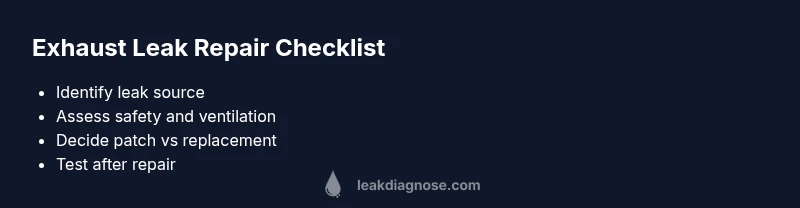
Small, accessible leaks at clamps or gaskets are sometimes repairable with a high-temperature sealant or a repair clamp. These fixes are typically considered temporary and may hold for a limited time, especially if the pipe is corroded or warped. For rusted sections or damaged manifolds, mufflers, or catalytic converters, replacement is usually the safer, longer-lasting choice. Patching a hole in the exhaust pipe often works as a stopgap, but it does not restore the original performance and can fail suddenly under heat stress. If the leak is near the engine or involves the catalytic converter, or if you can’t locate the exact source, it’s generally best to consult a professional. A licensed mechanic can perform a pressure test, verify backpressure, and ensure that there are no leaks after the repair. Remember: a proper repair restores safe venting, maintains engine efficiency, and protects passengers from dangerous fumes.
Prevention Tips to Avoid Future Leaks
Adopt a proactive maintenance mindset. Regularly inspect exhaust hangers, clamps, and joints during routine car care; look for corrosion and loose connections. Avoid hitting road debris and deep potholes that can dent or crack the pipe. Use quality replacement parts from reputable brands, and torque fasteners to the manufacturer’s specification. Schedule periodic professional inspections, especially after winter driving where road salt accelerates corrosion. Keeping the exhaust system clean and free from road grime reduces the likelihood of leaks forming over time. By combining careful driving with periodic checks, you can extend the life of your exhaust system and avoid recurring leaks.
Steps
Estimated time: 60-120 minutes
- 1
Prepare and locate leak
Park on level ground, ensure engine is cold, and identify suspected joints with a flashlight and careful listening.
Tip: Wear eye protection and gloves; do not touch hot components after running engine. - 2
Safely lift the vehicle
Use jack stands on a stable surface and chock the wheels to prevent movement. Confirm the area is clear before crawling under the car.
Tip: Never rely on a jack alone; always use stands for safety. - 3
Inspect exhaust system
Check clamps, hangers, gaskets, and pipe sections for rust, cracks, or looseness. Mark likely leak points for verification.
Tip: Look for sooty deposits which indicate leaks. - 4
Determine fix approach
Decide between a patch/repair clamp for a temporary fix or a full replacement for long-term reliability.
Tip: If unsure about the source, seek professional assessment. - 5
Execute the repair
Apply the chosen method with proper high-temperature materials or replace the affected section, following the manufacturer torque specs.
Tip: Double-check for clearance from heat shields and moving parts. - 6
Test and verify
Reinstall components, start the engine, and inspect for leaks with a run and listen/test method. Ensure no fumes enter the cabin.
Tip: Test in a well-ventilated area and never in a closed garage.
Diagnosis: Exhaust smell in cabin or loud exhaust noise with possible dashboard warning
Possible Causes
- highLoose clamps or hangers
- highDamaged exhaust gasket
- mediumCorroded pipe or manifold
- lowLeaking catalytic converter connection
Fixes
- easyTighten clamps and replace missing hangers
- mediumReplace gasket and inspect joint connections
- hardReplace corroded pipe segments or manifold as needed
- hardRepair catalytic converter connections or replace unit if damaged
Questions & Answers
Is an exhaust leak dangerous to my health and vehicle?
Yes. Exhaust leaks can allow carbon monoxide into the cabin, pose fire hazards, and reduce engine efficiency. Addressing leaks promptly minimizes risk to health and safety while preserving performance.
Yes, exhaust leaks are dangerous and should be fixed promptly to protect your health and car performance.
Can I fix an exhaust leak myself, or do I need a shop?
Simple issues like loose clamps may be DIY-friendly, but most fixes—especially involving gaskets, pipes, or catalytic components—are best handled by a professional to ensure safe venting and correct backpressure.
Some minor leaks can be DIY, but major fixes should be done by a professional.
How can I locate the exact leak source without specialized tools?
Start with a visual check for obvious gaps, grooved joints, or detached clamps. A soapy water test around joints can reveal bubbling leaks, but a professional pressure test is more definitive for hidden faults.
Look for gaps and use soapy water on joints to find leaks; a pro test is more definitive.
Will an exhaust leak affect fuel economy or emissions tests?
Yes, leaks can affect exhaust backpressure and sensor readings, reducing efficiency and potentially causing emissions test failures. Fixing the leak helps restore proper function.
Exhaust leaks can lower efficiency and cause failures on emissions tests, so fix them.
When should I replace the entire exhaust system?
If multiple sections are corroded or if performance is severely compromised, a full or partial exhaust replacement may be more cost-effective and reliable than repeated patches.
If many parts are failing, replacement is usually the best route.
Watch Video
Main Points
- Identify leaks early to avoid safety risks.
- Prioritize professional repair for long-term safety.
- Consider maintenance to prevent future leaks.
- Leak prevention saves money and protects environment.