How Big of a Problem Is an Exhaust Leak? An Urgent Guide
Urgent guide on exhaust leaks: risks, signs, and safe fixes. Learn how big of a problem an exhaust leak can be and what to do first with at-home checks.


An exhaust leak is typically caused by a loose joint or a worn gasket. Quick fixes: inspect visible joints for looseness and tighten; replace torn gaskets; and if you notice a strong exhaust odor, loud ticking, or smoke, stop driving and seek professional inspection immediately. If you can't access the joints safely, avoid driving at all.
What is an exhaust leak and why it matters
An exhaust leak occurs when exhaust gas escapes from joints, gaskets, or pipes before it reaches the tailpipe. The question of how big of a problem is an exhaust leak matters because even small leaks can allow dangerous gases to flow into the cabin, especially when a vehicle is operated in enclosed spaces. The Leak Diagnosis team notes that exhaust leaks are not merely a nuisance; they carry safety risks, reduce engine efficiency, and can increase emissions. Early signs often include a ticking sound from the engine area, a sulfur-like odor, or a louder exhaust than normal. If you notice any of these indicators, treat it as urgent and schedule an inspection. In addition to safety concerns, leaks can worsen fuel economy, strain the catalytic converter, and lead to costly repairs if ignored. A quick, careful inspection can help you avoid bigger problems down the line. According to Leak Diagnosis, addressing leaks promptly protects your family and your wallet while maintaining vehicle performance. The first step is to safely assess the source without overreaching or risking burns or injury.
How big of a problem is an exhaust leak
How big of a problem is an exhaust leak? It can range from a minor, barely audible hiss to a louder, more noticeable problem that affects performance and safety. Even small leaks can let toxic gases into the cabin or under-ignite fuel, which reduces fuel efficiency and increases emissions. Leak Diagnosis analysis notes that leaks near the manifold or close to the engine bay can be particularly dangerous because gases may infiltrate the vehicle interior more easily, especially if the car is run in a closed space. The severity grows if the leak worsens due to rust, impact damage, or cascading failures in the exhaust system. If you begin to notice performance changes, unusual backfires, or increased cabin odor, treat it as a high-priority issue and seek professional inspection. The goal is to locate the leak, determine its size, and implement a safe fix as soon as possible to prevent long-term damage. Understanding the scale of the problem helps you decide whether it’s safe to drive short distances to a shop or if you should tow the vehicle instead.
Common causes of exhaust leaks
Exhaust leaks most often originate at gaskets and joints, but there are several typical culprits. A loose or worn manifold gasket, rusted or cracked exhaust pipes, corroded clamps, or damaged hangers can all create openings for exhaust gas to escape. Improper welding from a previous repair can also lead to leaks. Overflowing corrosion from road salt and moisture accelerates wear on the pipe and flange connections. In some cases, the catalytic converter or resonator seals may fail, producing a leak if the seal is compromised. Leak Diagnosis analysis shows that, in many vehicles, the manifold-to-downpipe gasket and the pipe clamps are the frequent failure points because they experience the highest thermal cycling and vibration. Understanding these common causes can guide your quick checks and inform whether you should pursue a DIY fix or a professional repair. Always prioritize safety and avoid attempting repairs beyond your skill level.
Health and safety risks
Exhaust leaks pose real health risks, especially from carbon monoxide exposure. In enclosed spaces, CO can accumulate rapidly if the vehicle is running, which can cause headaches, dizziness, confusion, or worse. A loud exhaust note can indicate a leak, but even a quiet leak can be dangerous if fuel and exhaust gases are escaping under the vehicle. Even outside, leaks increase emissions and reduce efficiency. The risk is not confined to the driver; passengers and bystanders can be exposed when the vehicle is used in poorly ventilated areas. If you or anyone nearby experiences dizziness or headaches while the engine is running near a suspected leak, move to fresh air immediately and call for professional assistance. This is a safety concern that should not be postponed.
Immediate safety steps you should take
If you suspect an exhaust leak, take these immediate safety steps. Stop driving and pull over to a safe location with the engine off and the parking brake engaged. Do not breathe exhaust fumes; exit the vehicle and move to open air if you can do so safely. Do not attempt to seal a leak with tape or makeshift solutions, as this can worsen the issue and create fire or burn risks. If you hear a loud bang, see smoke, or smell a strong exhaust odor inside the cabin, call for roadside assistance and do not restart the engine until inspected. When safe, document the location of the leak and any symptoms so a mechanic can verify the source quickly.
How to diagnose at home safely
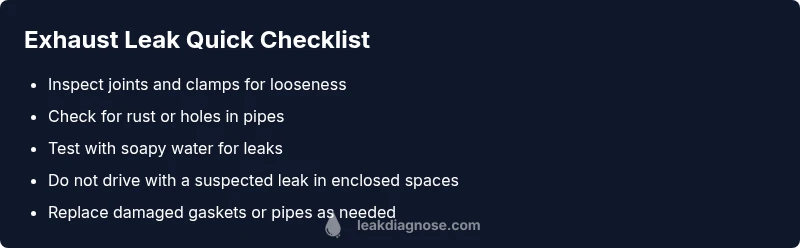
Begin with a careful visual inspection of the exhaust path under the vehicle, looking for rust, cracks, holes, or discolored heat shields. Check visible joints and clamps for looseness or corrosion. If it’s safe, lightly wiggle clamps and connections to test for looseness. A diagnostic trick is to spray a soapy solution on suspect joints; bubbling indicates a leak. Never place your body under a hot exhaust system; allow the system to cool first. Listen for ticking or tapping noises at idle or while revving gently—these can indicate loose components or a crack in the pipe. If you detect any odor, smoke, or obvious damage, treat it as a leak and seek professional help.
When to call a professional diagnostic
There are times when DIY checks aren’t enough. If you find rusted sections that are visually compromised, if the leak is near the manifold, or if you cannot access the joints safely, contact a professional. A certified mechanic can perform a precise leak test, using smoke machines or pressure tests to confirm the source, and then advise on replacement or welded repair. If a vehicle is under warranty, consult the dealer as some exhaust issues may be covered. If you’re unsure about any step or the leak is near safety-critical components, don’t delay—professional service is the safest option.
Long-term fixes and prevention
Long-term fixes depend on the leak location and severity. Minor leaks at clamps or gaskets may be addressed with replacement gaskets and resealing. More extensive leaks from rusted pipes, cracked manifolds, or failing catalytic converter seals typically require pipe replacement or manifold repair. After repair, ensure all connections are properly torqued and secured, and replace any corroded hangers or clamps to prevent re-leaks. Prevention includes regular exhaust system inspections during routine maintenance, washing away road salt and debris, addressing rust early, and avoiding driving through deep water or rough terrain that can damage vulnerable joints. Regularly scheduled professional inspections help catch issues before they escalate and protect both performance and air quality. The Leak Diagnosis team recommends proactive maintenance as the best defense against future leaks.
Quick maintenance checklist to prevent exhaust leaks
- Schedule regular exhaust inspections with a trusted mechanic
- Inspect visible joints, clamps, and hangers for looseness or corrosion
- Keep the underside clean of road salt and debris to slow rusting
- Address any unusual noises, smells, or loss of performance promptly
- Avoid aggressive driving that strains exhaust joints
- Replace damaged gaskets and worn components before failures occur
Steps
Estimated time: 2-3 hours
- 1
Inspect accessible joints and clamps
Begin with a cold engine and safely inspect all visible exhaust joints and clamps for looseness, rust, or wear. Wiggle flex points gently to check for movement. Note any areas that look damaged or discolored. This step helps identify the most accessible fix and prevents unnecessary disassembly.
Tip: Use a flashlight and mirror to view hard-to-see connections; do not touch hot surfaces. - 2
Tighten or reseal minor connections
If you find a loose clamp or gasket with minor wear, tighten to the specified torque (if you have a torque wrench) and reseal with appropriate exhaust sealant or gaskets as designed for your vehicle. Do not overtighten, as this can damage threads or flanges.
Tip: Always use replacement gaskets designed for your exact exhaust model. - 3
Check for rust and corrosion
Look for rust-through in pipes or flanges; lightly tapping may reveal thin sections. If corrosion is extensive, plan for replacement rather than patching. Rust is the leading cause of minor leaks progressing to major failures.
Tip: Consider rust-proofing and undercarriage cleaning as part of preventive maintenance. - 4
Perform a leak test
After any fix, perform a leak test by starting the engine and listening for changes in exhaust tone and looking for visible exhaust bubbles where you applied soapy water. If there’s no obvious leak, gently rev the engine to verify stability in different RPM ranges.
Tip: If you still hear a hiss or see bubbles, stop and reassess; some leaks require professional repair. - 5
Decide if professional service is needed
If a leak persists, originates near the manifold, or you are uncomfortable performing repairs, contact a licensed mechanic. Complex problems like cracked manifolds or welded failures require specialized tools and expertise.
Tip: Avoid driving long distances with an unresolved exhaust leak; towing may be safer. - 6
Follow up with preventive maintenance
After repair, schedule a follow-up inspection and implement a preventive maintenance plan to monitor seals, clamps, and piping for signs of wear. Regular checks save money and reduce risk over time.
Tip: Keep records of all repairs and part replacements for future service.
Diagnosis: Vehicle exhibits unusual exhaust sounds, cabin odor, or performance changes
Possible Causes
- highLoose or damaged gasket at manifold or joints
- mediumRust or corrosion through pipes
- mediumDamaged clamps or hangers
- lowCracked manifold or pipe
Fixes
- easyTighten clamps and replace torn gaskets
- mediumReplace corroded pipes or manifolds and reseal joints
- hardProfessional welding or full exhaust replacement for cracks
Questions & Answers
What are the common signs of an exhaust leak?
Common signs include a loud exhaust noise, a noticeable exhaust smell, a ticking sound near the engine, reduced engine performance, and, in some cases, cabin air with a sulfur-like odor. If you notice these, check the exhaust system and seek inspection.
Look for loud exhaust noise, unusual smells, and ticking sounds near the engine. If you notice these, have the exhaust system inspected.
Is an exhaust leak dangerous?
Yes. Exhaust leaks can allow dangerous gases, including carbon monoxide, to enter the vehicle cabin or surrounding environment. Take immediate precautions and have the system inspected by a professional.
Yes. Exhaust leaks are dangerous because they can let carbon monoxide into the cabin. Seek professional help right away.
Can I fix an exhaust leak myself?
Some leaks at clamps or gaskets can be addressed by a skilled DIYer with proper tools, but many leaks require welding or pipe replacement. If you’re unsure, prioritize safety and consult a professional.
Some small leaks can be fixed if you’re skilled, but many require a professional repair. When in doubt, get a pro.
How long does a typical exhaust repair take?
Repair time varies by leak location and parts needed. A simple gasket replacement may be quick, while manifold or pipe replacement can take longer. Expect to schedule a service appointment rather than a same-day fix in many cases.
It depends on where the leak is; simple fixes can be quick, but larger repairs may take more time.
Should I drive if I smell exhaust while driving?
No. If you smell exhaust while driving, pull over safely to open air and stop the engine. Do not restart until inspected by a professional.
If you smell exhaust, pull over safely and get the car checked before you drive again.
What maintenance helps prevent exhaust leaks?
Regular inspections, keeping clamps and hangers in good condition, addressing rust promptly, and replacing worn gaskets at recommended intervals can prevent leaks and extend exhaust life.
Regular checks and replacing worn parts help prevent leaks.
Watch Video
Main Points
- Identify leaks early to prevent safety risks
- Stop driving if you smell exhaust or notice strong odors
- Call a professional for persistent leaks
- Replace damaged components promptly to prevent corrosion
- Regular maintenance reduces future leaks