Car Leak Troubleshooting Guide: Fast DIY Fixes
Identify the source of a car leak quickly with practical diagnostics, safe fixes, and prevention tips. Leak Diagnosis provides a clear, DIY-friendly approach for homeowners.


A car leak is most often from the coolant system or engine oil, usually visible as bright colored puddles or steam. Start with the simplest checks: look at radiator hoses, the oil filter, and the oil pan gasket, and wipe any drips to pinpoint the source. If the drip persists after a reset engine or you’re unsure, stop driving and call for professional help.
What a car leak signals
A car leak can signal a handful of issues, from minor seals to major system failures. In many cases, a car leak means you are losing essential fluids like coolant, oil, or transmission fluid. Left unchecked, these leaks can lead to engine overheating, component wear, or environmental hazards. According to Leak Diagnosis, car leaks are most often coolant or oil-based, and early detection saves money and prevents damage. Look for puddles that match fluid color: green or orange for coolant, amber for transmission fluid, brown or black for oil. Monitoring smells and engine performance helps narrow down the source. If you notice a sweet smell or a sweet steam, that could indicate coolant; a burnt oil odor suggests an oil leak. Address leaks promptly to protect your vehicle and your driveway.
Common sources of car leaks
Several systems can leak in a typical passenger vehicle. The coolant system, including hoses, radiator, water pump, and clamps, is a frequent culprit. A worn hose or a loose clamp can spray coolant onto the engine bay and down the frame. Engine oil leaks typically arise from gaskets, valve covers, the oil pan, or seals that wear with time. Transmission fluid leaks often come from worn seals, damaged lines, or a failed pan gasket. Power steering fluid leaks can also appear as a reddish fluid around the steering rack or lines. Brake fluid leaks are less common but dangerous, typically found near the master cylinder or calipers. Older cars are more prone to multiple leaks, so a methodical inspection is essential. By focusing on fluid color and leak location, you can prioritize which component to fix first. Remember that even small drips can worsen if ignored, especially around hot engine components.
Quick checks you can perform safely
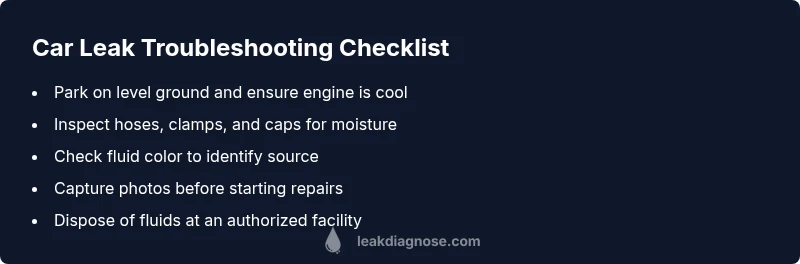
Always ensure the engine and fluids are cool before touching anything. Park on a flat surface and set the parking brake. Put on gloves and use a flashlight. Look under the front of the vehicle for fresh damp spots; note their color. Check the coolant reservoir level and cap for cracks, inspect radiator hoses and clamps for tightness, and review the oil fill cap, oil filter, and oil pan area for moisture. If you discover a steady stream from a hose or a cap that has loosened, you are likely dealing with a straightforward, inexpensive fix. When in doubt, wipe away the area and re-check after running the engine for a minute to confirm the source.
Diagnostic flow: symptom to source
Starting with the symptom, such as a puddle under the car or a steam plume after a drive, gather clues: color, odor, and location. If the fluid is green or orange and pools near the radiator or hoses, the coolant system is likely involved. If the liquid is brown or amber and appears near the oil pan or valve cover, an oil leak is probable. Transmission fluid is usually red or pink and may pool near the transmission or under the vehicle. Perform a basic pressure check on the cooling system if you have the tools, or use a UV dye to trace leaks. If the leak persists despite tightening hoses, a gasket or seal replacement is often necessary, and more advanced repairs should be handled by a mechanic.
Step-by-step: Fix for the most common causes
Step 1: Safe setup. Park on level ground, engage the parking brake, and let the engine cool. Step 2: Confirm the source. Wipe the area and run the engine briefly to see new drips. Step 3: Coolant hose leak. If a hose is cracked or a clamp is loose, replace the hose or tighten clamps with the appropriate tool. Step 4: Oil leak fix. If the gasket or oil pan seal is leaking, clean around the area and replace the gasket or tighten bolts as required, then refill oil to the correct level. Step 5: Refill fluids. Refill coolant or oil to the recommended level after the fix. Step 6: Test drive cautiously. Drive a short distance and recheck for drips, watching temperature gauge. Step 7: Clean up and disposal. Dispose of used fluids at an authorized facility and wash the area. If you still see a leak after these steps, stop driving and seek professional help.
Safety, prevention, and when to call a professional
Safety matters: leaks around hot engine parts can cause burns or fire hazards. Never work on a hot engine or pressurized system. Keep a fire extinguisher nearby and use a spill kit or absorbent material. Prevention matters: regular coolant and oil changes, inspecting hoses and seals during routine maintenance, and keeping the engine bay clean so leaks are easier to spot. If a leak is large, or if coolant mix is involved, or if you’re uncomfortable with automotive repairs, contact a qualified technician. In addition, the Leak Diagnosis analysis shows that addressing leaks early saves both money and environmental impact. A professional evaluation may prevent more costly failures down the line. Also consider keeping a diagnostic log with date, location, and photos to track progress over time.
Steps
Estimated time: 1-2 hours
- 1
Power down and secure area
Park on level ground, engage the parking brake, and let the engine cool before touching anything. Wear protective gloves and work in a well-lit area.
Tip: Lock out hot components and keep a safe distance from moving parts. - 2
Identify safety clearance
Ensure there is no ongoing steam or smoke. If there is, evacuate and wait for cooling before proceeding.
Tip: If you see steam, assume coolant exposure and avoid contact. - 3
Locate leak source with simple inspection
Inspect hoses, clamps, reservoir caps, and the oil pan area for moisture and fresh drips. Use a flashlight and clean cloths to trace moisture back to its origin.
Tip: Clean the suspected area to make a fresh drip easy to spot. - 4
Isolate the fluid and decide fix path
Determine which fluid is leaking (color and location guide the guess). Decide if a DIY hose clamp fix is feasible or if professional service is needed.
Tip: If you’re uncertain about the fluid type, assume a potentially hazardous leak and avoid contact. - 5
Fix hose/clamp if applicable
If a hose shows cracks or a clamp is loose, replace the hose or tighten clamps with appropriate tool and recheck tightness.
Tip: Use OEM or manufacturer-approved parts for reliability. - 6
Address gasket/pan leaks if needed
For gasket or pan leaks, replace the gasket or reseal the pan, then refill the affected fluid to the correct level.
Tip: Torque bolts to manufacturer specs to avoid warping. - 7
Refill fluids and test run
Refill coolant or oil to the correct level after the fix. Start the engine, monitor for new leaks during a short drive.
Tip: Stop immediately if new drips appear. - 8
Cleanup and preventative steps
Dispose of used fluids at an authorized facility and clean the area to prevent environmental damage. Schedule a professional inspection if leaks return.
Tip: Document color, location, and date for future reference.
Diagnosis: Visible fluid under a parked car or steam/odor when running
Possible Causes
- highCoolant system leak (radiator, hose, water pump)
- highEngine oil leak (gasket, pan, valve cover)
- mediumTransmission fluid leak (ATF lines or pan)
- lowPower steering fluid leak
Fixes
- easyInspect hoses and clamps; replace leaking hose, refill coolant/oil
- mediumRepair gasket or pan seal; replace worn components
- hardPressure test cooling system to locate source
Questions & Answers
What are the most common car leaks?
The most common leaks involve coolant, engine oil, and transmission fluid. Each has distinct colors and locations, which helps you diagnose the source.
Coolant, oil, and transmission fluid leaks are the most common.
Can a car leak be dangerous?
Yes. Leaks can cause engine overheating, fire risk, and environmental damage. Address leaks promptly to reduce risk.
Yes, leaks can be dangerous; fix or consult a professional quickly.
Is it safe to drive a car with a leak?
No. Driving with a leak can worsen damage and create unsafe conditions. Limit driving and seek immediate inspection if a leak is suspected.
It isn’t safe to drive far with a leak—get it checked soon.
How can I tell where a leak is coming from?
Observe color, odor, and where the fluid pools. Check near hoses, oil pans, and the radiator to narrow down the source.
Watch for color and smell to locate the leak quickly.
When should I see a mechanic?
If the leak is large, persistent after basic checks, or involves coolant, a professional evaluation is recommended.
See a mechanic if the leak is big or won’t stop.
Watch Video
Main Points
- Identify the leak by color and location first
- Prioritize hose/clamp fixes for quick wins
- Don’t drive far with a leak—seek professional help if unsure
- Document leaks and consult a mechanic for persistent issues