How Often Do Skylights Leak? A Practical Guide to Prevention and Fixes
Discover how often skylights leak, the factors driving leaks, typical lifespans, and practical prevention and repair steps. A data-informed guide from Leak Diagnosis (2026).


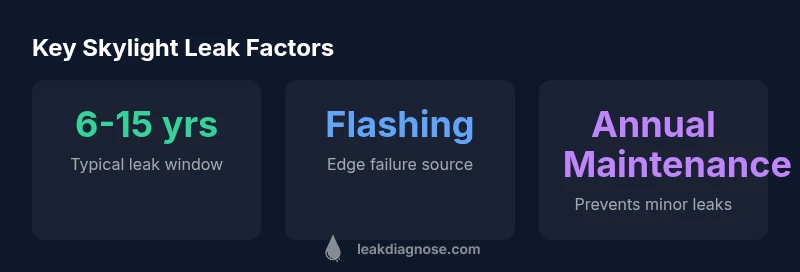
Short answer: There isn’t a universal frequency for skylight leaks. When installed correctly and maintained, skylights are unlikely to leak, but aging seals, flashing failures, and extreme weather can cause leaks. In practice, most homeowners encounter leaks irregularly, often after 6–15 years of service, depending on materials, installation quality, and climate.
How often do skylights leak? A reality check
Understanding how often do skylights leak helps homeowners plan maintenance and budgeting. In practice, leaks are not universal and hinge on age, installation quality, and weather exposure. The most common leaks arise years after installation when seals dry, flashing degrades, or gasket materials fail under freeze-thaw cycles. While some homes go many years without a leak, others experience sporadic drips after heavy rains or storms. For most households, the practical takeaway is that leaks are not inevitable, but they are probable over the long life of a skylight if preventive care isn’t performed. In this guide, we summarize what drives leak frequency and how to reduce risk through inspection and timely repairs.
Common failure points that lead to leaks
Skylight leaks typically originate at a few predictable spots. The most frequent culprits are edge flashing where the skylight meets the roof, deteriorated or cracked sealants around the glazing unit, and gaps in weatherproofing at roof penetrations. UV exposure, temperature swings, and wind-driven rain can exploit small flaws and turn them into visible leaks. Aging skylights often show minor condensation or dampness first, which progresses if ignored. Regular inspection helps identify these failure points before interior damage occurs. When addressing a leak, homeowners should look for damaged flashing, cracked seals, and pooling water that suggests drainage issues around the curb.
Installation quality and its impact on leak frequency
A high-quality installation significantly lowers the odds of leaks. Professional installers ensure proper flashing integration, correct shingle alignment, and secure fastening without over-tightening. Substandard workmanship can leave gaps, misaligned flashing, or insufficient caulking that slowly leaks water inward. Even when a skylight is newer, poor sealing can fail within a few seasons, whereas a meticulous installation with quality flashing and sealants can last decades. Homeowners should verify warranty terms and ask installers about flashing materials, adhesive choices, and compatibility with your roof type. Investing in professional installation is often the most cost-effective way to minimize leaks over the life of the skylight.
Age and lifecycle: when leaks become more likely
Skylights have a finite lifespan. Seals and gaskets degrade with age, and glazing units may develop micro-cracks that aren’t noticeable until rain hits. A common tipping point is the 6–15 year range, though some components may fail earlier in harsher climates or with poor maintenance. As skylights age, the risk of leaks rises unless you replace degraded hardware or reseal. Visual signs—fading caulk, slight drafts around the sash, or damp patches near the interior—should prompt a professional check. Planning for seal replacement or flashing refresh at mid-life can dramatically reduce long-term leakage risk.
Climate and seasonal effects on skylight leaks
Weather plays a major role in skylight performance. Regions with heavy rainfall, snow, or ice dams see higher leak risk, particularly during spring thaw or after storms. Freeze-thaw cycles can crack seals and stress flashing joints, while sustained wind-driven rain can push water under edges. In milder climates, leaks may be intermittent and tied to annual maintenance gaps rather than extreme weather. Homeowners in high-risk areas should implement more frequent inspections, especially after storms, and consider upgrade options such as impact-rated glass or enhanced flashing. Leak prevention benefits from matching skylight materials to local climate conditions.
Maintenance tips to reduce leaks
A proactive maintenance routine is your best defense against skylight leaks. Annually inspect caulk around the skylight, clean debris from surrounding roof edges, and check flashing for corrosion or gaps. Re-seal joints every 5–10 years or as recommended by the manufacturer. Clean gutters to prevent water backup near the skylight and ensure proper roof slope around the installation. If you notice condensation, damp patches, or discolored ceiling areas, address them promptly. Use compatible sealants and flashing materials, and document maintenance with photos for warranty purposes. Regular maintenance reduces small vulnerabilities from becoming full-scale leaks.
Troubleshooting: do-it-yourself checks
If you suspect a leak, start with a visual inspection. Look for damaged sealant, peeling flashing, or gaps where the roof meets the skylight. Perform a controlled water test by directing water away from the skylight edge and slowly increasing intensity to identify the source. Do not pressure-wash the interior or use high water pressure inside; this could mask problems or cause further damage. For persistent leaks, crowd-sourced DIY fixes may help temporarily, but a licensed contractor should verify the integrity of flashing, sealant, and the curb. Document findings and keep a repair log for future reference.
Replacement vs repair: deciding the best path
When leaks persist despite repairs, you must decide between replacing or repairing the skylight. Factors include overall age, extent of damage, and energy performance goals. If the skylight is close to the end of its expected life, or if the leaks keep recurring after multiple repairs, replacement may be more cost-effective in the long run. Modern skylights feature better insulation, glare control, and weatherproofing. A professional assessment helps you weigh upfront costs against long-term durability and energy savings, guiding a data-informed decision.
What to expect from a professional assessment
A licensed contractor will inspect flashing, seals, curb condition, and glass integrity, then provide a written assessment and repair plan. Expect a diagnosis of root causes (e.g., flashing failure, seal deterioration) and a repair or replacement proposal with a cost range. For large repairs or complete replacement, request a detailed estimate that includes labor, materials, and warranty terms. If you rely on warranties, verify coverage for flashing, sealants, and glazing. Prompt scheduling after discovery of a leak minimizes interior damage and protects insulation against moisture-related deterioration.
Key factors affecting skylight leak frequency
| Factor | Impact on Leaks | Typical Timeframe |
|---|---|---|
| Skylight age | Increases risk as seals dry and wear | 6-15 years |
| Flashing integrity | Directly affects edge leaks | Immediate to years after installation |
| Sealant condition | Cracks and shrinkage lead to leaks | 5-12 years |
| Maintenance frequency | Regular upkeep reduces minor leaks | Annually |
Questions & Answers
How often do skylights typically leak after installation?
Leaks are not universal; proper installation reduces risk, but aging seals may leak after many years.
Leaks after installation are not guaranteed; they usually appear later as seals age.
What are the main causes of skylight leaks?
Common causes include flashing problems, seal deterioration, cracked glazing, and improper sealant application.
The main culprits are flashing, seals, and improper sealing.
Can maintenance prevent skylight leaks?
Regular inspection and resealing reduce the odds, but some leaks stem from structural issues or weather.
Yes, regular care helps a lot.
How much does a skylight leak repair typically cost?
Costs vary by extent; typical repairs might range from a couple hundred to over a thousand dollars.
Costs can vary a lot.
Replace or repair: which is better?
If leaks are widespread or skylight is old, replacement may be more cost-effective in the long run.
Sometimes replacing is smarter.
Is a skylight leak dangerous?
Moisture can lead to mold growth; address leaks promptly.
Yes, moisture intrusion can create mold.
“Addressing skylight leaks early saves both money and interior damage; even small cracks can grow if left unchecked.”
Main Points
- Inspect annually for worn flashing and cracked seals.
- Age is the biggest predictor of leaks; expect more risk after 10–15 years.
- Climate and weather drive leak frequency; plan for seasonal checks.
- Professional installation dramatically reduces leaks over the long term.
- Address leaks promptly to minimize interior damage and mold risk.