Pee Leak After Peeing: Troubleshooting Guide
Learn practical, urgent troubleshooting for pee leak after peeing. Identify causes, try safe home fixes, follow a diagnostic flow, and know when to seek medical help for persistent leakage.


Most likely, you’re experiencing post-void leakage from incomplete bladder emptying or pelvic floor weakness. Quick fixes include: finish urinating, perform a few light pelvic-floor contractions (Kegels) to tighten the sphincter, gently press on the perineum to help dribble out residual urine, and avoid rushing to the bathroom which can worsen leakage. If symptoms persist, seek medical evaluation.
Understanding pee leak after peeing
Pee leak after peeing is a common symptom that can be embarrassing and confusing, especially when it happens after you think you’ve finished. According to Leak Diagnosis, post-void leakage often signals that the bladder isn't completely empty or that the pelvic floor muscles aren’t providing enough support. This distinction matters: some cases stem from temporary irritation, while others point to underlying conditions that merit medical evaluation. Recognizing the signs early helps you avoid unnecessary worry and ensures you seek help before it worsens. In many adults, a small amount of leakage after urination is manageable with simple changes to how you void, how you exercise your pelvic floor, and how you track symptoms. However, persistent or worsening leakage deserves a structured troubleshoot approach because untreated issues can affect quality of life and may indicate infections, hormonal changes, or pelvic organ issues. The goal of this guide is to empower you with practical steps, safety tips, and a clear path to care. By starting with basic checks and moving to targeted exercises, you can often reduce or eliminate leakage without invasive treatment.
Common Causes and Red Flags
Leakage after urination has several plausible explanations, and most are treatable. The most common cause is post-void residual urine caused by incomplete bladder emptying, which can leave a small amount of urine behind that dribbles after you finish. Pelvic floor weakness, often linked to childbirth, aging, or certain medical conditions, can make it harder to fully close the urethra during voiding, leading to leakage with activities or at rest. In men, benign prostatic enlargement or other prostate-related issues can contribute to incomplete emptying and dribbling after peeing. Women may experience pelvic organ prolapse, which changes the urethral angle and support, increasing leakage risk. Urinary tract infections or prostatitis can irritate the urinary tract and worsen leakage, especially with urination. Caffeine, alcohol, and certain medications can irritate the bladder and trigger leakage in sensitive individuals. If you notice blood in urine, fever, severe pain, or a sudden inability to urinate, seek urgent medical evaluation.
Immediate Safe Checks You Can Do
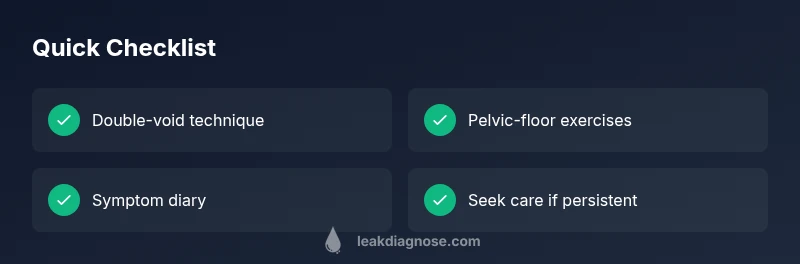
Start with the simplest steps first; many cases respond to small adjustments. First, try the double-void technique: pee, wait 20–30 seconds, and try to urinate again to clear residual urine. This simple practice helps reduce post-void dribble when there’s a build-up of urine in the urethra or bladder neck. Next, perform gentle pelvic-floor contractions (Kegels) to strengthen the sphincter and pelvic muscles; aim for 3 sets of 10 slow squeezes, holding each for 5 seconds, with a brief rest between reps. Keep a consistent voiding schedule to avoid forcing rapid urination, which can irritate the bladder and worsen leakage. Hydration matters too: drink a steady amount of water rather than chugging large volumes before bed. Finally, track your symptoms for a couple of weeks, noting triggers like certain positions, activities, or foods; this data helps you and your clinician identify patterns. If leakage is accompanied by fever, painful urination, or if you’re pregnant or diabetic, seek professional guidance promptly. Leak Diagnosis analysis shows that structured symptom tracking improves diagnostic clarity.
Diagnostic Flow Overview
Following our diagnostic flow, start with simple self-checks and then escalate as needed. Step 1: determine whether leakage occurs only after urination or also during coughing, sneezing, or walking; this helps distinguish stress incontinence from other issues. Step 2: assess bladder emptying by performing double-void and noting residual dribble. Step 3: monitor for signs of infection, such as fever or burning during urination. Step 4: if leaks persist despite home measures, arrange a clinician visit for a UA, urine culture, and possibly imaging or uroflowmetry. Step 5: based on results, consider pelvic-floor physical therapy or referral to a urologist or gynecologist. This flow keeps you oriented: start simple, document patterns, and seek professional care when safe. Remember to consult a clinician immediately if you have blood in urine, severe pain, or fainting spells during urination.
Step-By-Step Fixes for Common Causes
-
Double-void technique: After you finish urinating, wait 20–30 seconds and try to urinate again to clear residual urine. This simple step is easy and can substantially reduce post-void leakage. Tip: perform this in a comfortable, relaxed stance.
-
Pelvic-floor strengthening (Kegels): Practice slow squeezes for 5 seconds, then release for 5 seconds. Do 3 sets of 10 reps daily. Tip: align your breathing with the squeeze for better engagement.
-
Bladder training and timed voiding: Schedule bathroom visits every 2–3 hours and gradually increase the interval as control improves. Avoid caffeine and alcohol close to your planned void times. Tip: use a simple diary to track triggers and patterns.
-
Hydration and bladder irritants: Maintain consistent hydration and limit bladder irritants like caffeine, artificial sweeteners, and certain spicy foods. Tip: drink most fluids earlier in the day to reduce nighttime symptoms.
-
Assess for prolapse or structural issues: If you’re a woman with pelvic organ changes, gentle exercises and professional assessment can help. Tip: pelvic-floor physical therapy can address multiple contributing factors.
-
When to seek medical testing: If leakage persists after home adjustments for 4–6 weeks, or if you have blood in urine, fever, or significant pain, schedule a clinician visit. Tip: bring your symptom diary and list of medications to the appointment.
Safety, Warnings, and When to Seek Help
- If you notice blood in the urine, fever, severe pain, vomiting, or a sudden inability to urinate, seek urgent medical care immediately. These could indicate infections, stones, or more serious conditions.
- Do not delay professional evaluation if you are pregnant, have diabetes, or have recently started new medications that affect urination.
- While home fixes help many, some cases require medical evaluation, imaging, or specialist therapy. Always prioritize safety and avoid attempting invasive self-treatment at home without guidance.
Prevention and Long-Term Management
Building a routine that supports bladder and pelvic health can reduce the risk of pee leak after peeing over the long term. Maintain a consistent hydration pattern and limit bladder irritants. Practice daily pelvic-floor exercises, incorporate regular physical activity, and maintain a healthy weight to reduce pressure on the pelvic floor. Consider bladder-friendly strategies like timed voiding and a symptom diary to catch patterns early. If you’ve had childbirth, aging, or pelvic surgery, talk to a clinician about a tailored pelvic-floor program. Early, proactive care reduces the chance of chronic leakage and improves overall urinary health.
How Leak Diagnosis Approaches This Issue
At Leak Diagnosis, we emphasize a practical, safety-first approach. We start with user-friendly home checks, then move to a structured diagnostic flow, and finally connect you with targeted interventions such as pelvic-floor therapy or clinician-guided testing. Our analysis highlights the value of symptom tracking, double-void techniques, and evidence-based pelvic exercises to address common post-void leakage patterns. We tailor recommendations to your history, daily routine, and comfort level, ensuring you feel supported every step of the way.
Steps
Estimated time: 60-90 minutes
- 1
Confirm symptom pattern
Note when leakage occurs (immediately after voiding, during sneezing, or at rest). Include any accompanying symptoms like burning or fever to guide the next steps.
Tip: A symptom diary helps clinicians spot patterns quickly. - 2
Try double-void technique
Pee fully, pause 20–30 seconds, then attempt a second easy urination. This can clear residual urine that causes dribble.
Tip: Do this routinely for several days to test effectiveness. - 3
Strengthen pelvic floor
Perform controlled Kegels: squeeze the pelvic floor as if stopping urine flow, hold for 5 seconds, release for 5 seconds. Repeat 3 sets of 10 daily.
Tip: Breathe normally; avoid bearing down at the same time. - 4
Adopt bladder-friendly habits
Maintain a regular voiding schedule, reduce caffeine and alcohol, and stay hydrated with even fluids across the day.
Tip: Track how different beverages affect leakage. - 5
Monitor for warning signs
Watch for blood in urine, fever, severe pain, or sudden inability to urinate. Seek care immediately if these occur.
Tip: Keep emergency numbers handy and share your diary with your clinician. - 6
Follow up with a clinician
If leakage persists after 4–6 weeks of home care, schedule a visit for urinalysis, possible imaging, and specialist referral.
Tip: Bring your symptom diary and medication list to the appointment.
Diagnosis: pee leak after peeing
Possible Causes
- highPost-void residual urine from incomplete bladder emptying
- mediumWeak pelvic floor muscles causing leakage after urination
- mediumBenign prostate enlargement or other male-specific issues
- lowPelvic organ prolapse in women
- lowUrinary tract infection or prostatitis
Fixes
- easyDouble-void technique: wait 20–30 seconds after finishing urination and try again to clear residual urine
- easyKegel exercises to strengthen the pelvic floor and sphincter
- easyBladder training and timed voids to improve emptying and control
- mediumMedical evaluation with urinalysis, imaging, or uroflowmetry if symptoms persist
Questions & Answers
What is pee leak after peeing?
Pee leak after peeing is leakage that occurs after finishing urination. It’s often caused by leftover urine or weak pelvic floor muscles and is commonly treatable with home exercises and timing strategies.
Post-void leakage is leakage after you finish urinating, usually from residual urine or weak pelvic muscles.
Is this normal for men or older adults?
Occasional leakage can occur in both men and women as muscles weaken with age or after certain medical conditions. Persistent leakage is not normal and warrants evaluation.
It's not uncommon with age, but persistent leakage should be checked by a clinician.
What tests will a doctor perform?
A clinician may order a urinalysis, urine culture, and possibly imaging or uroflowmetry to assess bladder emptying and detect infection or structural issues.
Tests can include urine analysis and possibly imaging to check bladder emptying and infection.
Can exercises help?
Yes. Pelvic-floor exercises (Kegels) and bladder training can reduce leakage by strengthening the sphincter and improving control.
Pelvic-floor exercises and bladder training often reduce leakage.
Does hydration affect it?
Proper hydration supports healthy bladder function, but excess fluids or caffeine can irritate the bladder. Balance is key.
Drink water regularly, but avoid bladder irritants like caffeine near planned void times.
When might surgery be considered?
Surgery is rarely needed for post-void leakage and is usually reserved for specific, persistent pelvic-floor disorders or prolapse after conservative options fail.
Surgery is uncommon and considered only after other options.
Watch Video
Main Points
- Start with double-void to reduce dribble
- Daily pelvic-floor training strengthens control
- Log symptoms to guide care decisions
- Consult a clinician if leakage persists or worsens