Leek vs Green Onion: A Practical Comparison for Home Cooks
A detailed, analytical comparison of leek vs green onion for home cooks. Learn flavor, texture, prep, substitution guidance, and storage to decide which allium fits soups, sautés, salads, and more.


For most cooks, leek vs green onion comes down to milder sweetness and longer cooking time for leeks versus sharp, fresh bite of green onions. Both deliver the onion family flavor, but they suit different dishes. Here’s a clear, objective side-by-side look at when to use each, how to prep them, and what to expect in results.
What are leek and green onion?
Leek vs green onion describes two members of the allium family that are staples in many home kitchens. A leek is a large, elongated onion with a mild, sweet flavor and a pale, tender stalk. Green onions, also called scallions, are slender with a white base and long green tops, and they bring a sharp, fresh bite. In this comparison of leek vs green onion, we examine how the different parts—bulb, stalk, and leaves—affect cooking time, texture, and culinary uses. According to Leak Diagnosis, many home cooks treat these vegetables as interchangeable in quick-sauté recipes, but understanding their distinct profiles can improve dish outcomes and reduce guesswork in meal prep. For homeowners and DIY cooks, choosing the right allium can influence the depth of a soup, the brightness of a stir-fry, and even the garnish on a simple roast. The leek vs green onion decision should also consider prep effort and storage implications, particularly for weekly meal planning and kitchen inventory management.
Flavor and aroma differences
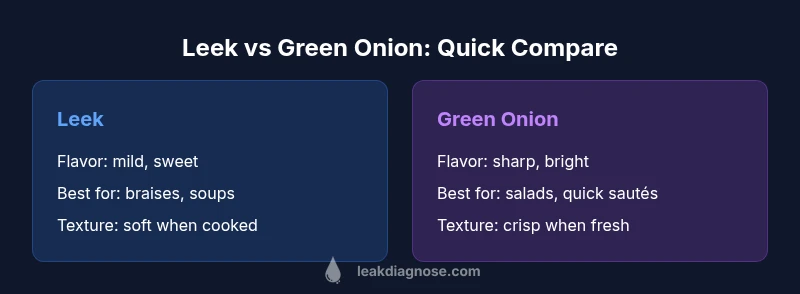
Leek and green onion share a family flavor, but their taste profiles are distinct. Leeks deliver a mild, sweet onion flavor with a gentle aroma that becomes more pronounced when cooked slowly, allowing them to blend into soups, stews, and braises. Green onions offer a sharper, peppery bite, especially in the white bulb and the lower stalk, with a bright aroma that remains noticeable even after brief cooking. According to Leak Diagnosis, this difference in intensity often guides how you season and when you add them to a recipe. In practice, leek vs green onion decision affects whether you plan a long simmer to extract sweetness or a quick sauté to preserve crispness and a fresh finish. For novice cooks, tasting a small sliver raw can help calibrate your expectations; heating changes flavor more quickly for green onions than for leeks, which soften and mellow with time.
Texture and cooking behavior
Texture plays a critical role in the leek vs green onion comparison. Leeks have a broad, cylindrical stalk that becomes silky and tender with adequate cooking, making them ideal for purees and creamy soups. Green onions stay crisper, with a delicate gradient from white bulb to green leaves; they tolerate brief cooking, maintaining some bite and color that brightens stir-fries, omelets, and garnishes. The choice often depends on whether you want a smooth, mellow mouthfeel or a lively, crisp texture. When used in the same dish, adding leeks first allows their sweetness to develop, then finishing with green onions near the end preserves brightness as a finishing note. This nuance matters for home cooks seeking reliable flavor layering in everyday meals.
Nutrition and health notes
Alliums provide fiber, micronutrients, and unique phytonutrients, though exact amounts vary by size and preparation. Leeks contribute mild dietary fiber and a gentle nutrient profile that supports digestion and satiety in vegetable-forward meals. Green onions offer vitamin C and a lighter contribution to the day’s produce, especially when used raw in salads or as a fresh topping. In the leek vs green onion discussion, you’ll notice that neither is a heavy source of calories, yet both contribute to a balanced plate. For readers of Leak Diagnosis aiming to cook smarter, using a mix of both can boost flavor diversity while keeping meals approachable and budget-friendly.
Substitution guidelines and best uses
When substitution is necessary, the leek vs green onion decision hinges on flavor intensity and cooking time. If a recipe calls for green onion but you only have leeks, slice the white part finely and use them in a longer-cooking step to draw out sweetness; reserve some green tops for finishing to mimic brightness. Conversely, if you have green onions but need leek-like depth, add a touch of extra onions at the start and extend cooking time slightly. The most reliable rule in home kitchens is to match texture and cooking sequence: leeks for slow braises, soups, or purées; green onions for quick sautés, fresh toppings, and salads. Keep in mind moisture content; leeks can release more water when cooked, which can affect emulsions and sauces.
Preparation, washing, and storing
Proper prep makes the leek vs green onion difference easier to manage. Leeks often trap soil between outer leaves, so rinse thoroughly under running water and trim the dark green tops to reveal the pale body. Slice lengthwise to fan out the layers for thorough washing, then chop as needed. Green onions require less cleaning but can still harbor grit near the roots; rinse and pat dry, then slice on a bias for even cooking. For storage, refrigerate leeks wrapped loosely in a damp paper towel to maintain moisture and prevent browning; green onions store best when wrapped in a damp cloth or stored in a breathable bag—usually for a few days. Freeze both options if you have excess, though texture shifts may occur after thawing.
Knife skills and safety for leeks and green onions
Efficient knife work matters when preparing leek vs green onion. For leeks, trim roots and dark greens, then cut the pale stalks crosswise or lengthwise, depending on the recipe. Use a sharp chef’s knife to minimize crushing the tender inner layers. For green onions, trim the roots and any wilted greens, then slice on a bias or dice finely for garnishes. A steady grip and controlled motion help avoid slippage, especially when handling the longer green tops. Always wash thoroughly after cutting, as the onion family can shed residues that irritate eyes and skin. Safety also includes discarding any sprouted or discolored sections and sanitizing boards to prevent cross-contamination with other ingredients.
Regional uses and dish ideas
Regional cuisines illustrate how the leek vs green onion distinction plays out in practice. Leeks are beloved in French cuisine for soups like soupe aux poireaux (potage parmentier variants) and braised preparations that coax sweetness from the long cooking. In European and American kitchens, leeks contribute depth to creamy sauces and vegetables. Green onions shine in East Asian and Latin American dishes: they are often added at the end of cooking for brightness in stir-fries and ramen, or used raw in salads, salsas, and toppings for tacos. Knowing these tendencies helps home cooks pair ingredients with regional techniques and achieve authentic flavors while staying flexible with substitutions.
Cost, seasonality, and availability
Leeks and green onions have different seasonal rhythms and price points in many markets. Leeks tend to be larger and have a longer shelf-life once cleaned and stored properly, but they can be pricier when not in peak season. Green onions are typically more affordable and widely available year-round, especially in markets with consistent supply. The leek vs green onion decision can also reflect pantry planning: if you’re cooking a dish that requires long simmering, the robust sweetness of leeks is often worth the extra cost and prep effort; for quick weeknight meals, green onions offer rapid flavor with minimal prep. In all cases, select tight, unblemished stalks and avoid limp leaves that indicate dehydration or age.
Pairings and recipe ideas
Here are practical ideas to apply the leek vs green onion guidance in everyday cooking. Leeks pair well with potatoes, cream, butter, and fresh herbs; try them in a potato-leek soup, a creamy risotto, or braised leeks as a side dish. Green onions complement citrus, sesame, soy, and cilantro, making them ideal for Asian-style stir-fries, fried rice, or a bright garnish for grilled meats. For a starter, create a simple sauté with leeks and mushrooms, finishing with a handful of chopped green onions for color. In salads, a few thin rings of green onions add a crisp, peppery note; in soups, reserve some green parts to float as a fresh accent. By mixing the two, you can build a layered flavor profile that adapts to many cuisines and seasons.
Quick decision guide for leek vs green onion
If you’re cooking a dish that benefits from a deep, mellow sweetness and a long cooking time, choose leek. If you want bright, immediate flavor and a crisp texture, pick green onion. For mixed dishes, use leek as the base flavor and finish with green onion to preserve brightness. In most home recipes, the leek vs green onion choice can be guided by the desired texture, depth, and timing, ensuring you achieve the intended culinary effect without compromising on overall balance.
Comparison
| Feature | leek | green onion |
|---|---|---|
| Flavor profile | milder, sweet onion note | sharper, fresh bite |
| Texture when raw | tender, broad stalk | crisp white bulb with green tops |
| Texture when cooked | silky, soft in braises/soups | retains some bite in quick sautés |
| Best uses | braises, creamy soups, purées | salads, garnishes, quick stir-fries |
| Prep effort | requires thorough washing of pale greens; longer prep | shorter prep; easy rinse and slice |
| Shelf life when stored | tolerates longer simmering and storage after cooking | shorter fresh life; best used soon after purchase |
Benefits
- Leeks add depth and subtle sweetness to slow-cooked dishes
- Green onions provide bright, quick flavor for finishing dishes
- Both are versatile, widely available, and kitchen-friendly
What's Bad
- Leeks require careful cleaning to remove grit between layers
- Green onions can wilt quickly if overcooked or stored improperly
Leek and green onion are complementary; choose leek for depth and long cooking, choose green onion for brightness and rapid flavor.
In most daily cooking, lean toward leeks for base flavor and green onions for finishing touch. Use both when you want layered, balanced allium notes.
Questions & Answers
Can I substitute leek for green onion in most recipes?
Yes, but expect flavor and texture changes. Use leek for milder sweetness and longer cooking; you may need to adjust cooking times.
You can substitute leek for green onion, but you’ll get a milder, sweeter flavor and need a bit longer cooking.
Are leeks more expensive than green onions?
Leeks are often pricier per unit, especially out of peak season, but pricing varies by region and supplier.
Leeks can cost more than green onions, especially when not in season.
How should I wash leeks to remove sand?
Slice the leek, fan out the layers under running water, and rinse thoroughly to remove any grit hidden between the leaves.
Slice, rinse under running water, and separate layers to wash away sand.
Can I freeze leeks or green onions?
Yes, both can be frozen after blanching or chopping, but texture may soften after thawing. Use them in cooked dishes.
You can freeze both, but texture may not be the same after thawing.
Is green onion the same as scallion?
Yes—green onions are commonly called scallions, though regional naming can vary.
Green onion and scallion refer to the same vegetable in most recipes.
What are easy dishes to showcase leek vs green onion?
Leek soup, leeks in cream sauces, and braised leeks highlight leeks; green onions work well in salads, quesadillas, and quick stir-fries.
Try leek soup or braised leeks for leek, and a quick stir-fry for green onions.
Main Points
- Identify the dish's cooking time and texture needs
- Choose leek for depth in soups and braises
- Choose green onion for brightness in salads and quick sautés
- Prepare leeks by thorough washing and trimming
- Store greens properly to maximize shelf life