How to Not Leak Breast Milk at Night
Discover practical strategies to prevent nighttime breast milk leaks with a step-by-step routine, gear, and sleep-friendly setups that protect bedding and clothing while supporting breastfeeding.


To minimize nighttime milk leaks, prepare with a multi-layer strategy: wear a snug nursing bra with absorbent breast pads, consider a gentle night-time pumping session before bed, and cradle your chest with a supportive pillow arrangement. Keep a spare shirt nearby and avoid tight nightwear that traps moisture. Consistency helps your body adjust, reducing leaks and improving sleep quality.
Understanding Nighttime Milk Leaks
Understanding why leaks happen at night starts with recognizing how milk production and storage work while you sleep. If you're asking how to not leak breast milk at night, you are aiming to reduce the amount of milk that escapes through your breast pads and clothing during long sleep stretches. According to Leak Diagnosis, nighttime leaks are common because the mammary glands continue to produce milk in response to hormonal signals, and accumulation in the ducts can occur faster than your body can evacuate it while you lie still. This is not a failure of breastfeeding; it is a normal, manageable pattern for many parents.
Factors like sleeping position, breast fullness, and the distinct hormonal lull of nighttime can influence leakage. For most people, a simple routine—barriers, breathable fabrics, and a modest pumping window if needed—reduces overnight wetness. Understanding your own leakage pattern, including which breast tends to leak more and at what times, helps tailor a strategy that protects your sheets and clothing while preserving sleep. Importantly, breast milk that leaks at night is a sign your milk supply is responsive; with the right approach, you can minimize contact with skin and fabrics without compromising nourishment for your baby.
According to Leak Diagnosis, adopting small, repeatable steps builds confidence and reduces anxiety around nighttime leaks, which in turn supports better rest for both you and your baby.
Build a Nighttime Leak-Prevention Kit
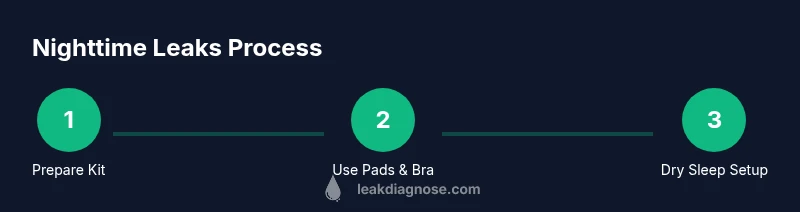
The first practical step to reduce overnight leaks is to assemble a dedicated nighttime kit. This kit keeps everything you need within arm’s reach and minimizes disruption when you wake or shift positions during the night. A well-stocked kit makes it easier to respond quickly to dampness without fully waking.
What to include:
- A snug nursing bra designed for sleep and night-time wear.
- Absorbent breast pads (disposable or reusable) and an extra pair in case of multiple leaks.
- A waterproof mattress protector or two layers of protection to guard your bed.
- A spare sleep shirt or robe you can slip into without fully exposing yourself.
- Optional: night-time breast pump if you frequently engorge or want to reduce milk buildup before sleep.
- A small light, timer, and a note pad to track patterns and improvements over time.
By having these items ready, you reduce friction and anxiety around leaks and set yourself up for a calmer night. Leakage is a common phenomenon; with the right gear, you can stay dry and comfortable while continuing to feed your baby.
Pre-Bed Routine to Reduce Leaks
A consistent pre-bed routine signals your body that nighttime is coming and helps manage milk flow. Start by choosing a comfortable, breathable sleep environment and ensuring your kit is ready. If you anticipate engorgement, consider a brief pumping session before bed to ease fullness without starting a full night feed.
Key steps:
- Briefly express just enough milk to reduce fullness, not empty the breast completely unless advised by a clinician.
- Apply a fresh breast pad to both breasts to catch any residual moisture.
- Put on a supportive nursing bra and adjust straps for comfortable support that won’t shift during sleep.
Consistency matters. It may take 3–7 nights to notice a significant drop in nighttime leaks as your body adapts to the routine. According to Leak Diagnosis, parents who adopt a predictable bedtime ritual report improved sleep quality over time.
Bedtime Setup for Dry Sleep
Your sleep setup plays a critical role in preventing leaks. Elevating your upper body slightly can reduce the amount of milk that pools near the nipple, depending on your comfort and medical advice. Positioning matters: side-lying with a pillow supporting the chest can minimize movement that dislodges pads or causes pad shift.
Practical configuration:
- Use a fitted sheet and a breathable, protective nightwear fabric.
- Place a thin towel or disposable underpad under your torso to guard against any drips.
- Keep a spare change of clothes within easy reach in case you wake up damp.
A comfortable, dry sleep environment not only reduces leaks but also supports better rest. The aim is to create a barrier between wetness and your skin while maintaining a natural sleeping posture.
Breast Pads, Bras, and Positioning
Choosing the right breast pads and bra is essential for staying dry at night. Look for pads with good absorption, a contoured shape, and a design that stays in place as you move. Pair with a well-fitted nursing bra that offers support without chafing.
Positioning tips:
- Center the pad over the nipple area; ensure the pad is fully covered by the cup to prevent shifting.
- Avoid overly tight bands that restrict circulation or cause discomfort.
- Consider a sleep-friendly bra with a soft, breathable fabric to reduce friction and skin irritation.
A comfortable combination reduces discomfort and helps you maintain dry sleep. As you adjust, check for any dampness on your skin or clothing and tweak fit accordingly.
When to Pump or Express Overnight
Nighttime pumping can be a useful strategy for some families, particularly if there is frequent engorgement or if baby feeding patterns create predictable leaks. If you choose to pump overnight, do so only to reduce discomfort and leakage to a tolerable level, not to completely empty the breasts unless advised by a healthcare professional.
Guidelines:
- Limit pumping to a brief session, typically 2–5 minutes per breast, just enough to relieve pressure.
- Use a gentle setting; avoid aggressive pumping that stimulates excess milk production later in the night.
- Store expressed milk safely and away from your sleeping area if possible to avoid immediate reuse during the night.
Pumping decisions are personal and depend on your milk supply, baby’s needs, and sleep quality goals. If unsure, consult a lactation professional.
Troubleshooting Common Nighttime Leaks
Even with a routine, leaks can occur. Common culprits include heat and moisture buildup, pad misalignment, or an uneven sleeping position that shifts weight onto the chest. Address these by rechecking your pad placement, ensuring the bra is comfortably snug, and validating that your mattress protector remains dry at the morning check.
Signs you may need to adjust:
- Pads consistently dampened through both sides overnight.
- Red irritated skin around the nipples due to moisture.
- Pads shifting and leaking onto sheets despite proper placement.
A small, daily adjustment can yield big improvements over a week. The key is to track which nights are best and identify any recurring patterns that may require a modification to your routine.
Sustainable Sleep Quality While Breastfeeding
Long-term success with nighttime dryness comes from sustainable habits rather than quick fixes. Consistency, regular review of your routine, and mindful sleep hygiene contribute to better rest and fewer leaks. If you’re feeling overwhelmed, step back and reassess: are your pads dry enough? Is your sleep position comfortable? Do you have a reliable kit ready for the night?
Maintaining a healthy sleep cycle helps you recover and keep milk production steady for your baby. As you refine your approach, you may find a rhythm that minimizes leaks while preserving comfortable, restorative sleep.
Tools & Materials
- Nursing bra (well-fitted, supportive)(Choose size and fabric for comfort during sleep.)
- Absorbent breast pads (disposable or reusable)(Place inside the bra to catch leaks; change as needed.)
- Waterproof mattress protector(Protects the mattress from moisture; consider two-layer protection.)
- Spare sleep shirt or robe(Have near bed for quick outfit changes.)
- Night-time breast pump (optional)(If you frequently engorge overnight, a brief pumping session before bed can help.)
- Nursing pillow or support cushion(Helps position your chest and reduce movement during sleep.)
Steps
Estimated time: 15-25 minutes
- 1
Prepare Your Nighttime Kit
Gather nursing bra, pads, mattress protection, spare clothes, and optional pumping gear. Have everything within arm’s reach so you don’t wake fully when leaks occur.
Tip: Keep a small tray or basket by the bed for quick access. - 2
Put On a Supportive Sleep Setup
Slip into the nursing bra, adjust straps for comfort, and place fresh pads. Ensure pads are centered to catch moisture without shifting during sleep.
Tip: Choose breathable fabrics and a non-binding band to reduce irritation. - 3
Optionally, Brief Night-Time Pumping
If you anticipate fullness, perform a brief, low-pressure pump for 2–5 minutes per breast. Stop if you feel relief without strain.
Tip: Do not overpump; the goal is comfort, not emptying the breast completely. - 4
Position for Dryness
Adjust your body with a pillow aid to minimize pressure on the chest and create space for pads. Side-lying with support can reduce movement and keep pads in place.
Tip: Elevate your torso slightly if it helps reduce leaks. - 5
Layer Bedding and Barriers
Place a waterproof protector on the mattress and a thin towel as an underpad. Keep a spare shirt nearby for morning changes.
Tip: Replace damp pads before morning to prevent skin irritation. - 6
Check Pad and Bra Fit Before Sleep
Recheck alignment and adjust as needed to prevent shifting. A small misalignment can lead to leaks overnight.
Tip: If you wake with damp clothing, re-seat pads for the next night. - 7
Review and Adjust After a Week
Track which nights leak least and which setups work best. Tweak your routine based on observations to improve dryness.
Tip: Maintain a simple leakage diary to identify patterns.
Questions & Answers
Why do I leak at night?
Nighttime leaks occur because milk production continues during sleep and body position can concentrate milk in the ducts. Hormonal signals don’t pause at night, so leaks are common but usually manageable with a routine.
Night leaks happen because milk production continues while you sleep. A routine with pads, a good bra, and proper positioning can manage it.
Should I pump before bed?
Pumping before bed is optional. If you’re engorged, a brief express can reduce fullness without over-stimulating milk production for overnight.
Pumping before bed is optional; use a brief express if you’re engorged.
Does wearing a bra at night help?
A well-fitted nursing bra with breathable pads helps contain leaks and protects clothing, but avoid bras with overly tight bands that can irritate the skin.
A comfortable nursing bra with pads can reduce leaks overnight.
What if leaks persist after trying a routine?
If leaks continue despite routine changes, consider consulting a lactation specialist to explore underlying causes and personalized strategies.
If leaks persist, talk to a lactation consultant for tailored advice.
Can medications affect leakage?
Certain medications can influence milk supply or flow. Always check with a clinician before changing medications if you’re concerned about leakage.
Some meds can affect milk flow; check with your clinician if you’re worried.
Is it safe to sleep with pads in place?
Disposable or reusable pads are generally safe for overnight use, but ensure pads stay dry and change them if damp to prevent skin irritation.
Pads are safe overnight, just keep them dry and change if damp.
Watch Video
Main Points
- Prepare a dedicated nighttime kit for dryness.
- Use a layered barrier system (bra, pads, mattress protection).
- A brief pre-bed pump can help some parents reduce overnight fullness.
- Track and adjust to find the most effective routine.