Do Leak Proof Underwear Smell? Troubleshooting Guide
Discover practical, urgent steps to stop odors in leak-proof underwear with washing, drying, and maintenance tips from Leak Diagnosis. Learn to diagnose and fix smells safely.


Most often, a persistent odor in leak-proof underwear comes from moisture trapped between layers, creating bacteria growth. Quick fix: rinse, wash with an enzyme-based detergent, avoid fabric softeners, and air-dry completely before wearing again. If odor continues after cleaning, inspect for wear or material breakdown and consider replacement or guidance from the brand.
Understanding odor in leak-proof underwear
Odor in leak-proof underwear is a common concern, especially for fabrics designed to manage moisture. If you asked, do leak proof underwear smell, the answer is often tied to how moisture is managed between layers and how thoroughly you dry and clean the fabric. According to Leak Diagnosis, odor issues tend to arise when moisture becomes trapped, creating a hospitable environment for bacteria and yeast. The result is a stubborn smell that can feel stronger after workouts or long wear. In many cases, the problem is not a leak at all but a buildup of sweat, minerals from hard water, or detergents left in the fibers. Understanding the basics helps you act quickly and protect your underwear's performance and your comfort. This guide walks you through practical checks, proven washing routines, and smart maintenance that address the most frequent odor scenarios while keeping safety and fabric integrity in mind. Throughout, we emphasize safe handling, proper drying, and routine rotation to prevent recurring smells.
Common causes behind do leak proof underwear smell
There are several drivers behind persistent odor. Moisture retention is the most common: the inner layers trap sweat and skin oils, which bacteria feed on. Over time, this microclimate can produce a noticeable scent even after washing. Bacteria and yeast love damp fabrics, especially if your underwear is made with moisture-wicking fibers that hold onto moisture until you dry completely. Residual detergent or fabric softener can also contribute to smells by coating fibers and interfering with moisture evaporation. If you wear the same pair repeatedly without allowing it to dry fully, odor compounds multiply. Another factor is fabric wear: stretched elastics, micro-tears, or degraded membranes may harbor smells more easily. Finally, external factors like hard water minerals, soap residue, and body-care products can interact with fibers to create a lingering odor. By identifying the most likely culprits, you can tailor your routine to the specific issue, whether it’s improving drying, switching detergents, or adjusting storage conditions.
Best washing practices to eliminate odor
Effective odor control starts in the wash. Use an enzyme-based detergent designed to break down sweat and body oils, and run your cycle on a warm or hot setting if fabric care labels permit. Pre-soak treated areas with a small amount of detergent or a specialized odor eliminator to help lift stubborn residues. Avoid fabric softeners and scented additives that can leave a film on fibers and reduce moisture-wicking performance. After washing, run an extra rinse cycle to ensure all cleaners are removed. For best results, wash similar fabrics together and do not overload the machine, which can prevent thorough cleaning and rinsing. If odors persist, consider a second wash with a tablespoon of baking soda added to the drum for odor neutralization. Remember, safety first: always follow the garment’s care label and avoid high heat that could damage moisture barriers.
How to dry and store properly
Drying is as critical as washing. Squeeze out excess water gently; never wring, which can damage fabric layers. Air-dry flat or hang in a well-ventilated area, ideally in sunlight or a dry, shaded outdoor spot if weather permits. Avoid high-heat dryers that can degrade moisture barriers and cause smell retention in stretched elastics. Ensure underwear is completely dry before folding or storing; damp folds encourage mildew and sour odors. Store in a dry, breathable container or drawer with good air circulation. If you live in a humid climate, using a dehumidifier in the laundry area can reduce overnight moisture buildup and help odors dissipate more quickly.
When to consider product issues or warranty
If you consistently notice a smell after multiple thorough washes and complete drying, the issue may be intrinsic to the product’s design or materials. Inspect for delamination, compromised membranes, or stretched elastics that might harbor odor compounds. Check warranty terms for replacement options if a manufacturing defect is suspected. Some users may benefit from trying a different fabric blend or brand model, especially if you notice recurring odor across multiple items. Keeping records of washing routines and care labels can help you communicate effectively with customer support if you pursue a replacement.
Prevention tips for odor-free wear
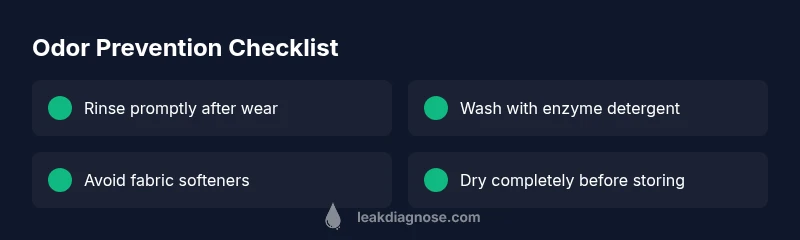
Proactive care reduces future odor problems. Rotate pairs so each item has ample time to dry between wears. Choose underwear made from breathable, moisture-managing fabrics and avoid blends that trap water. Rinse immediately after use if possible, especially after workouts, then wash promptly. Use a detergent with proven odor removal properties and avoid fabric softeners that leave residue on fibers. Finally, store clean underwear in a dry, airy space to prevent mildew and moisture buildup. Regular maintenance plus smart storage equals odor-free wear over time.
Steps
Estimated time: 60-90 minutes
- 1
Initial assessment and prep
Examine the garment for visible wear, stretched elastics, and any signs of damage. Separate the underwear from other items to prevent cross-contamination. Tip: set aside any items that show wear for inspection before attempting a fix.
Tip: Document any visible wear to help with warranty decisions. - 2
Pre-soak to loosen residues
Rinse under cold water to remove surface sweat, then soak in a basin with a mild enzyme-based detergent for 15-20 minutes. This helps lift oils and odors without harsh scrubbing. Tip: skip hot water to protect fabric integrity.
Tip: Gentle pre-soaking reduces the brushing needed later. - 3
Wash with proper detergent and cycle
Wash on the appropriate setting per the care label using an enzyme-based detergent. Do not use fabric softener or scented additives. If possible, run a second rinse cycle to remove all residues. Tip: wash similar fabrics together for even cleaning.
Tip: Double-rinse helps remove detergent film that traps odors. - 4
Dry completely before storing
Air-dry the underwear in a well-ventilated area until fully dry. Avoid high-heat dryers that can compromise fabric layers. Store in a dry, breathable space away from damp leakage sources. Tip: sunlight can help kill odor-causing bacteria when safe for fabric.
Tip: Never fold damp items; moisture promotes mildew. - 5
Evaluate results and next steps
Reassess the odor after drying. If the smell persists, consider repeating the wash or moving to a different fabric blend or brand. If damage or persistent odors occur, contact the brand for guidance or warranty options. Tip: keep a simple log of washes and outcomes.
Tip: Persistent odor may indicate a product issue rather than user error.
Diagnosis: Persistent odor in leak-proof underwear after washing
Possible Causes
- highMoisture trapped between fabric layers causing bacteria growth
- mediumResidual detergent or fabric softener buildup on fibers
- highInadequate drying leaving damp spots
- lowFabric wear or compromised membranes
Fixes
- easyRinse thoroughly, run an enzyme-based wash, and avoid fabric softeners
- easyAir-dry completely in a well-ventilated area, preferably with sunlight
- easyPre-soak or double-wash for stubborn residues and check care labels before re-wearing
- mediumInspect fabric for wear or membranes; if damaged, consider replacement or warranty options
Questions & Answers
What causes odor in leak-proof underwear?
Odor typically comes from moisture trapped in the fabric, which fosters bacteria and yeast. Sweat, body oils, and mineral residues can compound the smell. Proper washing and thorough drying usually resolve most cases.
Odor mainly comes from moisture in the fabric that lets bacteria grow. A proper wash and complete drying normally fix it.
Does washing remove all odors from these underwear?
Washing with an enzyme-based detergent greatly reduces odors, but some fabrics may retain a faint scent if repeatedly worn damp. A second rinse or pre-soak can help improve results.
Enzyme detergents remove most odors, but a second rinse helps if something still smells.
Should I use fabric softener on leak-proof underwear?
No. Fabric softeners can leave residues that reduce moisture-wicking performance and trap smells. Stick to unscented detergents and avoid softeners on these fabrics.
Avoid fabric softeners; they can trap odors and reduce performance.
When should I replace underwear due to odor?
If odor persists after deep cleaning and drying, and the fabric shows wear or reduced performance, consider replacement. Persistent smells can indicate a material failure.
If it still smells after deep cleaning and looks worn, replace it.
Are there long-term prevention strategies?
Rotate pairs, use breathable fabrics, rinse after use, wash promptly, and store in a dry space. These steps reduce moisture buildup and odor recurrence over time.
Rotate pairs, rinse after use, and keep them dry to prevent bad smells.
Watch Video
Main Points
- Act quickly to remove odor with proper washing.
- Dry completely to prevent bacteria growth.
- Rotate pairs to avoid moisture buildup.
- If odor persists after cleaning, inspect for wear or consider replacement.