Difference Between Leek and Onion: An Analytical Guide
Explore the difference between leek and onion across flavor, texture, and uses. This analytical guide helps home cooks decide when to use each bulb and how to store them.


Leek and onion are both Allium vegetables, but they differ significantly in flavor, texture, and culinary roles. The difference between leek and onion lies mainly in their structure (bulb versus long, pale stalk) and how their flavors develop during cooking. Leeks offer milder sweetness and a tender texture when sautéed, while onions provide deeper, more versatile depth through caramelization.
Overview of the Difference Between Leek and Onion
The difference between leek and onion is more than a matter of size. Both are members of the Allium family, yet their roles in cooking, flavor development, and even how you prep them vary considerably. Leeks are cylindrical plants with a long pale stem and a fan of dark green leaves, while onions form compact bulbs with papery skin. This article explains the key distinctions and how those differences translate into everyday kitchen decisions. By understanding the difference between leek and onion, home cooks can choose the right bulb for soups, sautés, braises, and raw applications. Throughout, we’ll reference practical tips, substitution ideas, and storage best practices to help you achieve consistent results. In this guide we use the exact phrase, difference between leek and onion, to anchor the comparison for search and learning.
Botanical Background and Classification
Leeks (Allium ampeloprasum var. porrum) and onions (Allium cepa) share a genus but have separate cultivated varieties that influence their culinary behavior. Both belong to the Allium family, known for sulfur-containing compounds that drive aroma and flavor, but the production history and breeding differ. Leeks are a cool-season crop that develops a long, hollow stem with a white foundation and layered leaves, whereas onions form globe-shaped bulbs that store energy in sugars and sulfur compounds. This botanical distinction helps explain why leeks taste milder when cooked, while onions offer stronger raw and cooked flavors. When thinking about the difference between leek and onion, remember that seasonality, growth habit, and harvest timing all shape how readily you can find them at your local grocery.
Visual and Textural Differences
Visually, leeks present as thick ivory-white bases transitioning to pale green and dark green leaves, while onions display a rounded bulb with a papery skin in various colors (yellow, red, white). In the kitchen, texture matters: leeks are tender and crisp in dishes where their fibers soften with gentle heat, producing a silky bite when simmered, but they can feel fibrous if undercooked. Onions respond quickly to heat, developing a translucent sheen and a waxy-soft texture when caramelized. The difference between leek and onion becomes especially apparent when you slice; leek rings are uniform and long, whereas onion rings or chop produce more voluminous, layered pieces. Understanding texture helps you adjust cooking time and technique for the best result.
Flavor and Aroma Profiles
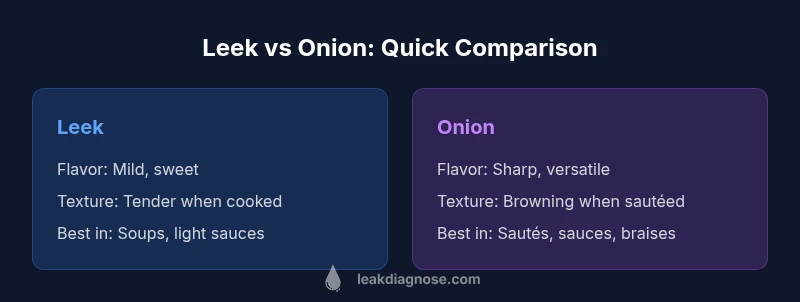
Flavor is the most noticeable difference between leek and onion. Leeks deliver a mild, grassy sweetness with a subtle onion-like note, particularly in the white stalk. When sautéed, they release a gentle aroma that many cooks describe as comforting and clean, not overpowering. Onions, by contrast, offer a robust baseline of sulfurous compounds that translate into sharp raw flavor and deep, caramelized sweetness when cooked slowly. The difference between leek and onion is most pronounced in sauces, stocks, and braises: leeks can add depth without dominating, while onions provide the foundation that others build on. Pair leeks with delicate herbs and light dairy, and reserve onions for bold sauces and sautéed dishes.
Culinary Uses by Cuisine
For soups and light broths, leek shines in combinations with potatoes; a classic French pairing is leeks and potatoes in soups and purées. Onions are a global staple that appears in countless cuisines: French onion soup, Indian curries, Mexican salsas, and Italian soffritto all rely on onion-building flavors. The difference between leek and onion becomes most evident in how they balance acidity, sweetness, and fat: leeks work well in delicate broths, fish dishes, and creamed preparations; onions excel in sauces, gravies, and roasted vegetable medleys. This section highlights practical recipe pairings and demonstrates when to choose one bulb over the other for a superior outcome.
Preparation Techniques and Cleaning
Cleaning is where the leek requires extra attention. The white base sits in sand-laden soils, so rinse under running water while fanning out the layers to remove grit. Trim the root end and the darker green leaves, then slice the leek lengthwise and rinse again. Onion prep is more straightforward: trim the stem and root, peel, and dice or slice as needed. The difference between leek and onion here is about ease of handling and the risk of sandy residues. If you’re sensitive to sulfur compounds, chill the onion briefly before cutting to minimize tears; leeks typically cause less lachrymation. For best results, pat dry after washing to prevent excess moisture in the pan.
Cooking Methods and Timing
Leeks benefit from gentle heat and longer cooking to soften their fibers and release sweetness. Simmering in broths or sautéing with a touch of butter allows the pale stalk to become velvety and inviting. Onions are more forgiving and versatile across methods: a quick sauté opens their flavor, a slow caramelization yields deep brown sweetness, and roasting concentrates their natural sugars. The difference between leek and onion in cooking times matters: leeks may need 5–10 minutes to soften, while onions can progress through translucent to golden in similar windows, depending on cut size and pan temperature. This section helps you tailor time and temperature to achieve the precise flavor profile you want.
Nutritional Comparison
From a nutrition standpoint, both leek and onion contribute valuable micronutrients and fiber, though their profiles differ. Leeks provide minerals such as potassium and certain trace elements, along with vitamin K and folate in meaningful amounts. Onions offer vitamin C, dietary fiber, and flavonoids that support heart health and antioxidant activity. The difference between leek and onion in nutrition is nuanced: leeks are more bouquet-like in minerals, while onions deliver more vitamin C per serving. Both are low in calories and fat, making them smart ingredients in balanced meals. Cooking methods also influence nutrient retention, so consider the dish’s needs when choosing which bulb to use.
Storage, Shelf Life, and Freshness
Storage is important for maintaining flavor and texture. Onions store well in a cool, dry, well-ventilated space for weeks to months, depending on variety and humidity. Leeks require refrigeration to stay crisp; wrap or store in a perforated bag to preserve moisture and prevent wilting, and use within a week or so for best flavor. If you’re looking to extend freshness, freeze or lightly blanch leeks for later use in soups and stews. Note the difference between leek and onion storage practices: leeks need more moisture management, while onions benefit from dryness and airflow. Always trim damaged leaves before storage to deter spoilage.
Substitution Guidelines: When to Swap
When your recipe calls for one bulb and you only have the other, substitution is possible with adjustments. Use onions when you want more depth and a robust sauce, but expect stronger aroma and possibly longer caramelization. If you substitute leeks for onions, cut larger pieces to compensate for their milder flavor and slower browning. The difference between leek and onion in substitution often hinges on moisture and texture; leeks add a lighter bite, whereas onions contribute a stronger, sometimes sharper bite. Flavor balance adjustments—such as extra sugar, salt, or a splash of stock—can help harmonize the dish.
Common Mistakes and How to Avoid Them
Common mistakes include overcooking leeks until they disintegrate and undercooking onions, which leaves a harsh bite. Not washing leeks properly can leave grit in the final dish. Another pitfall is using too much heat, causing onions to burn before softening; balance heat with gradual browning for best flavor. The difference between leek and onion becomes clearer when you watch the pan: leeks brown more evenly and release delicate sweetness; onions can scorch quickly if you aren’t attentive. A simple tip is to slice leeks and onions to uniform thickness to ensure even cooking and flavor development across the dish.
Quick Reference Cheat Sheet
- Leek: milder, green stalks; best in delicate soups, light sauces, and vegetables cooked gently.
- Onion: sharper flavor; best for caramelized sauces, gravies, and robust sautés.
- Storage: onions in cool, dry place; leeks in the fridge.
- Substitution: if swapping, adjust for flavor strength and texture; onions often substitute for leeks with more browning.
Comparison
| Feature | Leek | Onion |
|---|---|---|
| Botanical family | Allium | Allium |
| Appearance | Long, hollow stalks with white base and dark green leaves | Round bulb with papery skin in multiple colors |
| Flavor profile | Mild, sweet, leek-like when cooked | Pungent raw, versatile; deepens with cooking |
| Texture when cooked | Tender and silky when properly cooked | Soft to crisp depending on cook method and cut size |
| Culinary uses | Soups, light sauces, gentle sautés | Sautés, roasts, braises, raw applications |
| Storage | Refrigerate stalks; trim and wrap | Cool, dry place; refrigerate after cutting |
| Nutritional highlights | Vitamin K, folate, minerals | Vitamin C, fiber, flavonoids |
Benefits
- Clear culinary versatility across soups, sautés, and braises
- Leaves a milder flavor footprint for delicate dishes
- Leeks add gentle sweetness without overpowering other ingredients
- Onions provide robust depth and broad availability
- Both contribute valuable micronutrients and fiber
What's Bad
- Leeks require thorough cleaning due to soil in the crevices
- Leeks can be pricier and less available in some regions
- Onions can cause eye irritation and may overpower subtle dishes
- Overcooking leeks can lead to mushiness if not watched
Choose based on flavor goal and recipe structure
Leeks suit milder, more delicate preparations, while onions provide bold depth. Use leeks for lighter soups and creamy dishes; turn to onions when you need strong caramelization and robust sauces.
Questions & Answers
What is the main difference between leek and onion?
Leeks are milder and have a long stalk, whereas onions are stronger and bulb-shaped. The difference between leek and onion also shows up in how they brown and soften during cooking.
Leeks are milder with a long stalk; onions are stronger and bulb-shaped. They brown and soften differently when cooked.
Can I substitute onions for leeks in a recipe?
Yes, but expect a stronger flavor and different texture. You may need to reduce cooking time slightly and use more liquid to balance the bite.
Yes, you can substitute onions for leeks, but you’ll likely get a bolder flavor and a different texture. Adjust cooking time and moisture accordingly.
How do you clean and prepare leeks properly?
Rinse thoroughly under running water while fanning out the layers to remove grit. Trim the roots and dark greens, then slice lengthwise and rinse again.
Rinse the leeks well, trim the ends, and slice. Wash again to remove sand and grit.
Are leeks healthier than onions?
Both offer health benefits. Leeks provide minerals and vitamin K; onions offer vitamin C and fiber. The difference between leek and onion is nuanced, depending on your nutrient goals.
Both are healthy; leeks give vitamin K and minerals, onions give vitamin C and fiber.
How should you store leeks and onions?
Onions store best in a cool, dry place with good air circulation. Leeks should be refrigerated and kept dry to prevent wilting.
Store onions in a cool, dry place; refrigerate leeks and keep them dry.
What recipes best showcase leek vs onion?
Leeks shine in light soups, creamy sauces, and delicate vegetable dishes. Onions excel in sauces, gravies, and caramelized dishes.
Leeks are great in light soups; onions for bold sauces and caramelized dishes.
Main Points
- Identify the bulb structure and flavor intensity first
- Match the bulb to your dish's required aroma and texture
- Leeks excel in light, creamy, or delicate preparations
- Onions are reliable for depth, browning, and sauces
- Store properly to maximize freshness and flavor