Are Leeks the Same as Scallions? A Detailed Comparison
Explore whether leeks and scallions are interchangeable. This analytical comparison covers flavor, texture, cooking uses, substitutions, storage, and practical tips for home cooks.


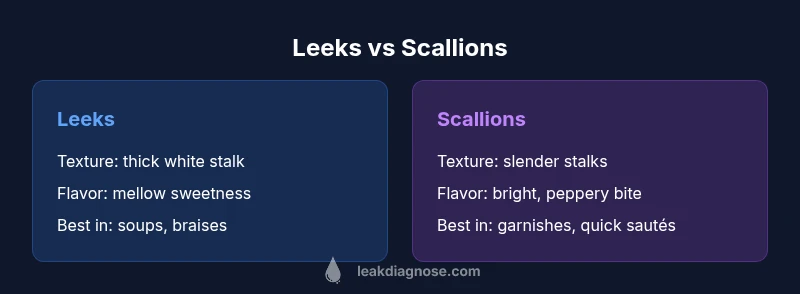
Are leeks the same as scallions? No—leeks and scallions are distinct members of the Allium family with different shapes, flavors, and typical uses. Leeks have a thick white stalk and gentle sweetness, while scallions are slender with a sharper finish and a fresh, peppery bite. Understanding these differences helps you cook with confidence.
Are Leeks the Same as Scallions? Botanical Distinctions
Are Leeks the Same as Scallions? This question often appears in grocery aisles and home kitchens, where cooks weigh onion-like greens for soups, sautés, and garnishes. Botanically, leeks and scallions are related to onions but they occupy different forms within the Allium family. Leeks are generally categorized as Allium ampeloprasum var. porrum, producing a thick, cylindrical white stalk that gradually greens toward the top. Scallions, also called green onions, can arise from immature Allium cepa or, in some cases, Allium fistulosum, yielding slender stalks with a small white base and long green leaves. The varieties influence not only appearance but how they respond to heat, moisture, and time in a recipe. This distinction matters for cooks who aim for precise textures and flavor balance in dishes.
In practical terms, many home cooks ask: are leeks the same as scallions? The answer hinges on culinary goals. Leeks bring softness and a mellow sweetness that shines after long simmering, braising, or blending into creamy soups. Scallions contribute brightness and crisp texture, especially when used raw or with a quick sauté. The differences affect how you plan prep, cooking duration, and even plating. For home kitchen readers of Leak Diagnosis, recognizing these nuances helps you avoid substitutions that alter a dish’s core profile. In short, the two greens share a family tree but diverge in use, texture, and flavor intensity.
mainTopicQuery_id3wordOrNull_spanishNote_id3wordOrNull_spanishNote_id3wordOrNull_spanishNote_id3wordOrNull_spanishNote_id3wordOrNull_spanishNote_id3wordOrNull_spanishNote_id3wordLet'sFix
Comparison
| Feature | Leeks | Scallions (Green Onions) |
|---|---|---|
| Botanical classification | Allium ampeloprasum var. porrum | Typically immature Allium cepa or Allium fistulosum |
| Texture and edible parts | Thick white stalk with broad leafy tops; edible portion mainly white-to-pale green | Slender stalks with white base and long green tops; edible everywhere from base to tip |
| Flavor profile | Mellow, sweet onion notes when cooked; very mild when simmered | Bright, grassy, peppery bite; more pungent when raw |
| Common culinary uses | Soups, braises, purées, and slow-cooked dishes | Fresh garnishes, quick sautés, salads, and salsas |
| Cooking time and preparation | Longer cooking times to soften; often 15–40 minutes depending on dish | Very quick cooking; 2–5 minutes in pan; often eaten raw or barely cooked |
| Storage and shelf life | Best kept refrigerated; trimmed stalks last several days to a week when wrapped | Keeps well in the fridge; use promptly for best texture; longer shelf life when trimmed and stored upright |
| Cost and availability | Seasonal availability can vary; often priced higher in off-season regions | Widely available; generally affordable and sold in bundles or bunches |
| Best for | Dishes that benefit from deep, mellow onion flavor and smooth texture | Dishes that benefit from bright, quick release of flavor and crisp texture |
Benefits
- Leeks deliver a mellow, onion-like sweetness without the sharp edge of mature onions
- Scallions provide bright, fresh flavor and a crisp texture, especially when raw
- Both greens adapt to a wide range of recipes and cooking techniques
- They offer flexibility in substitution with flavor adjustments when needed
What's Bad
- Substitutions can noticeably alter texture and color of a finished dish
- Leeks require longer cooking times, which may complicate meal timing
- Scallions lose delicate texture when cooked for long durations
- Raw scallions can overwhelm milder dishes if not balanced with other flavors
Leeks and scallions are distinct greens, not the same; choose based on flavor, texture, and cooking time.
Use leeks for mellow, long-cooked dishes where a soft texture matters. Opt for scallions when you need bright color and quick flavor. In many cases, a careful substitution with flavor adjustments yields the best result.
Questions & Answers
Are leeks and scallions interchangeable in recipes?
Substituting one for the other is possible but changes texture and flavor. If replacing leeks with scallions, add them later in cooking to preserve texture; for leeks replacing scallions, cook longer to soften and mellow the bite.
Substitution is possible with adjustments; add scallions later when cooking or extend leek cooking time to soften.
What is the main flavor difference between leeks and scallions?
Leeks offer a milder, sweeter onion note, especially when cooked slowly. Scallions bring a sharper, crisper bite, with a fresh element that stands out in raw dishes or quick sautés.
Leeks are milder; scallions are sharper and crisper.
Can I use scallions in a recipe that calls for leeks without sacrificing flavor?
Yes, but adjust cooking time and quantities. Use fewer raw scallions for delicate soups, or sauté scallions briefly to mimic the gentle sweetness of leeks. Expect a brighter flavor profile.
Substitute with mindful timing and flavor balance.
How should I store leeks and scallions to maximize freshness?
Wrap trimmed stalks in a damp paper towel and refrigerate in a plastic bag for both. Keep scallions upright if possible to preserve moisture; leeks last longer when trimmed and stored properly.
Keep them cool and dry; trim, wrap, and refrigerate.
Do regional cuisines favor one over the other?
Yes. Some regions favor leeks for hearty soups and braises, while others rely on scallions for fresh, bright finishes in salads and quick dishes. Regional freshness and dish style often guide the choice.
Depends on the region and dish style.
Are leeks related to onions or garlic more broadly?
Leeks and scallions are both Alliums and related to onions and garlic, but they belong to different culinary forms. This relationship explains shared flavors and diverse uses in recipes.
Alliums share family traits but differ in form and flavor.
Main Points
- Know the botanical and culinary differences before cooking
- Choose leeks for slow-cooked recipes; scallions for raw or quick-cooked dishes
- Plan prep and cooking time to match the greens’ texture requirements
- Use substitutions thoughtfully to preserve flavor balance