Is Leaking Amniotic Fluid Bad? An Urgent Guide for Expecting Moms
Urgent guide for recognizing and responding to amniotic fluid leakage during pregnancy. Learn signs, immediate steps, when to seek care, and how clinicians diagnose rupture of membranes to protect you and your baby.


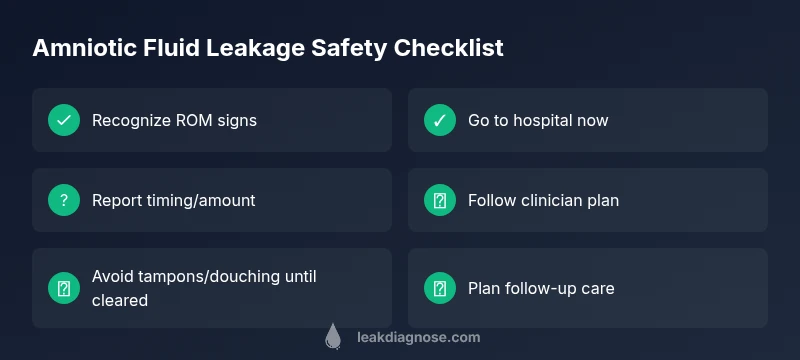
Yes—if you’re pregnant and notice vaginal fluid leaking, this can indicate rupture of membranes and requires urgent medical evaluation. Do not delay care. Go to labor and delivery or the nearest emergency department, and report the onset time, amount, color, and odor. Do not insert anything or rely on home remedies until a clinician assesses you.
Is leaking amniotic fluid dangerous? What you need to know now
In pregnancy, a sudden fluid leak from the vagina can signal ruptured membranes. According to Leak Diagnosis, ruptured membranes may herald labor or require urgent obstetric evaluation, depending on gestational age and symptoms. This is not a symptom to ignore. Leaking fluid can carry risk of infection for you and the baby if not evaluated promptly. Key indicators include the amount of fluid, its color, and any accompanying contractions or bleeding. If you’re unsure, treat it as urgent and seek medical care right away. While waiting, avoid inserting anything into the vagina and avoid sexual activity. Keep a clean, dry pad in place to monitor flow, and record the time you first noticed the leakage. The question is real for many readers: is leaking amniotic fluid bad? The simple answer is that it can be dangerous and merits professional evaluation.
wordCount: 0
Steps
Estimated time: 60-90 minutes
- 1
Assess symptoms and confirm pregnancy status
Take a moment to calmly evaluate what you’re feeling. If you are pregnant and you notice fluid leakage, treat it as potentially ROM until proven otherwise. early documentation helps clinicians decide whether you are in active labor or at risk for infection.
Tip: Note the exact onset time and whether contractions or bleeds accompany the leakage. - 2
Contact a clinician or go to the hospital immediately
Call your obstetrician or proceed to labor and delivery or the nearest emergency department without delay. Bring your prenatal records and a list of medications, and have a trusted person accompany you if possible.
Tip: If you experience heavy bleeding, severe pain, or dizziness, seek urgent care right away. - 3
Triage and initial assessment
At the facility, staff will monitor your vital signs, fetal heart rate, and contractions. They will determine whether the fluid is amniotic fluid and assess the risk of infection.
Tip: Be prepared to provide information about recent infections, bleeding, or fever. - 4
ROM testing and diagnosis
Clinicians may perform exams and tests such as fluid pH testing or fern test, ultrasound, and infection screening to confirm ROM and guide management.
Tip: Ask what each test means and how results will affect care. - 5
Follow the clinician’s plan
If ROM is confirmed, you and your baby will be monitored and a plan established. This may involve delivery plans, antibiotics to reduce infection risk, and possibly steroids if preterm.
Tip: Ask about signs that require returning to triage. - 6
Discharge planning or admission
Depending on gestational age and condition, you may be discharged with instructions or admitted for observation. Follow-up appointments will be scheduled to monitor both you and the baby.
Tip: Clarify when to return for any new symptoms. - 7
Post-evaluation steps and prevention
Discuss activity restrictions, infection prevention, and what to do if symptoms recur. Plan ahead for future pregnancies with your care team.
Tip: Keep a written care plan and emergency contact numbers handy.
Diagnosis: Suspected rupture of membranes (ROM) or amniotic fluid leakage during pregnancy
Possible Causes
- highRupture of membranes with or without labor
- mediumNon-amniotic vaginal discharge or urine mistaken for fluid
- lowVaginal infections or cervical changes causing fluid leakage
Fixes
- easySeek immediate medical evaluation at labor & delivery or the nearest emergency department
- easyCall your obstetrician or midwife for guidance if you are not in active labor
- easyAvoid vaginal insertion, sex, or douching until evaluated by a clinician
- easyDocument onset, color, odor, and amount to report to clinicians
Questions & Answers
What is the difference between amniotic fluid leakage and normal vaginal discharge?
Amniotic fluid leakage is typically a sudden, copious flow that may be clear or pale and may have little to no odor. Normal discharge is usually smaller in amount and varies in consistency and color. When in doubt, seek medical evaluation.
ROM usually presents as a sudden, noticeable leak; if you’re unsure, contact your clinician for guidance.
Is it safe to go to the hospital if ROM is suspected?
Yes. If you suspect rupture of membranes, go to the hospital or call your OB promptly. Prompt evaluation reduces infection risk and helps determine the right delivery plan.
If you think your membranes have ruptured, go to the hospital or call your care team now.
What tests might diagnose ROM?
Providers may perform a physical exam and tests such as pH-based tests (nitrazine), fern test, ultrasounds, and infection screening to confirm ROM and guide care.
Tests include pH paper or fern test, plus imaging to check your baby’s well-being.
Can ROM happen before labor starts?
Yes, ROM can occur before labor begins, especially in certain pregnancies. This requires careful monitoring and often delivery planning.
Rupture can happen before labor; monitoring is crucial.
What should I bring to the hospital if ROM is suspected near term?
Bring ID, prenatal records, medications, a support person, and a list of symptoms and times of leakage to aid triage.
Bring your documents and a trusted person to aid the triage process.
Are there home remedies to stop amniotic fluid leakage?
No reliable home remedy stops ROM. Medical evaluation is necessary to determine next steps for you and the baby.
There aren’t safe home fixes; seek medical help.
Watch Video
Main Points
- Seek urgent medical care for suspected ROM.
- Note onset time, color, odor, and amount of fluid.
- Distinguish amniotic fluid from urine or discharge.
- Discuss management options with your provider and follow instructions.