Urinary Leakage After Prostate Surgery: Recovery Outlook
Discover how much urinary leakage to expect after prostate surgery, typical recovery timelines, and practical strategies to manage continence during recovery, with actionable at-home tips.


Leakage after prostate surgery varies widely, but most men experience some urinary leakage in the early weeks. With time and appropriate rehab, continence improves for many, and a substantial share regain most or all urinary control within 6 to 12 months. Manage expectations with pelvic floor exercises, timed voiding, and gradual activity adjustments under your clinician’s guidance.
Understanding leakage after prostate surgery
According to Leak Diagnosis, leakage after prostate surgery is highly variable and depends on several factors, including surgical technique, nerve preservation, age, and pelvic floor strength. In the immediate postoperative period, many men notice some leakage, especially after catheter removal. The good news is that continence commonly improves over weeks and months with appropriate rehabilitation. Leakage can range from light dribbling to more moderate leakage that occurs with coughing, laughing, or physical exertion. Factors such as baseline urinary function, body mass index, smoking status, diabetes, and overall tissue healing influence how quickly you regain control. Early conversations with your care team help align expectations and tailor a recovery plan that accommodates your daily routine.
The first weeks after surgery are often the most challenging for leakage. A practical approach is to document patterns—what activities trigger leakage, how long it lasts, and whether it coincides with bladder fullness. Many patients find that keeping a simple diary boosts awareness and guides therapy. Protective pads or garments can reduce discomfort and protect clothing during the early phase, while you work with your clinician on pelvic floor strengthening and bladder training. Throughout recovery, staying hydrated, moderating caffeine and alcohol, and avoiding bladder irritants can contribute to steadier progress."
Typical recovery timeline and what to expect
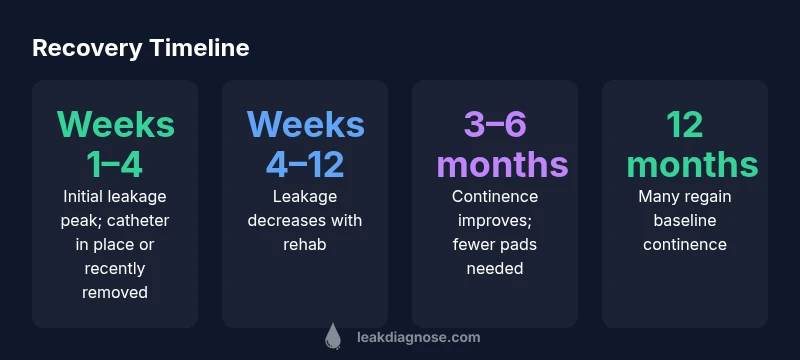
Recovery is best understood as a multi-phase process. In the weeks following catheter removal, leakage tends to be more noticeable, especially during movement, coughing, or rising from a sitting position. As the pelvic floor muscles strengthen through targeted exercises and consistency, leakage gradually diminishes. By 3 months, many men report a significant decline in leakage frequency and volume, with some experiencing only occasional dribbles. Between 6 and 12 months, the majority improve further, and a substantial portion achieve continence sufficient for daily activities without heavy pads. It is important to track symptoms over time and discuss plateaus with your surgeon or urologist, since individual trajectories can differ based on preoperative continence status and rehabilitation adherence.
Rehabilitation plays a central role. Pelvic floor physical therapy, guided exercises, and proper voiding strategies can accelerate progress. For some, combining pelvic rehab with bladder training—scheduled voids and gradual increases in inter-void intervals—yields meaningful gains. While many recover full continence within a year, others may require ongoing management for intermittent leakage, particularly with high-impact activities or heavy lifting. Your medical team can help you set realistic milestones and adjust plans as you progress.
Factors that influence leakage duration
Several variables influence how long leakage lasts after prostate surgery. Age and baseline pelvic floor strength are important; younger patients with strong pelvic muscles often progress faster. The surgical technique matters—nerve-sparing approaches and meticulous tissue handling can support continence recovery. Pre-existing urinary symptoms, obesity, diabetes, smoking, and cardiovascular fitness can also affect healing rate. If radiation therapy or additional treatments are part of your cancer care plan, leakage duration may be longer or more variable. Adherence to rehabilitation—daily pelvic floor exercises, bladder training, and avoiding strains—consistently correlates with better outcomes. Emotional support and realistic goal-setting reduce frustration and keep the recovery on track.
If recovery stalls, a clinician might adjust therapy, add pharmacologic options, or explore targeted pelvic floor modalities. A personalized plan that combines education, exercise, and lifestyle adjustments often yields the best results.
Practical management and rehab strategies
A proactive recovery plan makes a big difference. Start pelvic floor exercises early and perform them consistently, aiming for daily sessions. A physical therapist specializing in pelvic floor rehab can tailor exercises to your needs and monitor progress. In addition to exercise, structured bladder training helps retrain the bladder to hold urine longer and reduces urgency-driven leakage. Practical steps include:
- Use timed voiding: go at regular intervals and gradually extend the time between bathroom visits.
- Gradually increase activity: gentle walking or light resistance training can improve pelvic floor engagement without straining.
- Consider pads for comfort during the early weeks; transition to lighter protection as leakage decreases.
- Maintain hydration and avoid bladder irritants (caffeine, alcohol, acidic beverages) that can provoke urgency.
- Discuss medications with your clinician only if they are indicated; some drugs can reduce bladder spasms or improve storage capacity.
Lifestyle adjustments, such as chest-high sleeping positions, pelvic support garments during high-impact activities, and controlled lifting, can also help; the key is to partner with your clinician to create a strategy that fits your daily life.
When to seek medical advice and red flags
Most leakage is expected to improve with time and rehab, but certain signs warrant medical contact. If leakage remains heavy or worsens after several months, if you develop burning or fever with leakage, if you have blood in the urine, or if you suddenly lose the ability to urinate, contact your healthcare provider promptly. Also seek advice if leakage interferes with essential activities, sleep, or significantly affects quality of life. A clinician may reassess your pelvic floor therapy plan, check for urinary tract infections, or explore additional treatments such as bladder training intensification, medications, or minimally invasive options when appropriate.
Remember, persistent leakage alone does not indicate cancer recurrence; however, ongoing symptoms deserve evaluation to rule out other causes and to optimize your recovery plan.
Tracking progress and setting realistic goals
A structured approach helps maintain motivation and reveals progress that may not be immediately obvious. Create a simple weekly log of leakage frequency, the size of leakage, pad usage, and impact on daily activities. Schedule regular follow-ups with your urologist or pelvic floor therapist to adjust exercises and voiding strategies. Setting SMART goals—Specific, Measurable, Achievable, Relevant, Time-bound—can keep you focused: for example, “reduction in leakage events from daily to every other day within 8 weeks” or “increase inter-void interval by 15 minutes over 6 weeks.” Celebrate milestones, however small, and lean on your support network for accountability. With consistent practice and professional guidance, most individuals progress toward greater continence and improved quality of life.
Leakage progression and expected milestones after prostate surgery
| Time point | Typical leakage range | Notes |
|---|---|---|
| Immediate post-op | Moderate to high leakage | Catheter in place or just removed; variability based on healing |
| 3 months post-op | Reduced leakage; intermittent dribbling | Continuation of pelvic floor rehab advised |
| 12 months post-op | Often minimal or no leakage | Most patients reach baseline continence |
Questions & Answers
What is the typical amount of leakage after prostate surgery?
Leakage can range from light dribbling to more noticeable leakage, especially in the first weeks. With consistent pelvic floor rehab and time, most patients see a substantial reduction in leakage as healing progresses.
Leakage after surgery can vary a lot, but it usually gets better with pelvic floor exercises and time.
How long does leakage last after prostate surgery?
For many men, leakage improves over months. A majority reach continence within 6-12 months, though some may need ongoing management longer depending on individual factors and rehab adherence.
Most people improve over several months, and many are continent by a year.
What helps reduce leakage after surgery?
Pelvic floor exercises, bladder training, and timed voiding are first-line. Use pads temporarily if needed and consult a physical therapist specialized in pelvic health for personalized guidance.
Kegels and bladder training often help a lot; talk to a pelvic floor therapist.
Does leakage mean cancer has returned?
Leakage after prostate surgery is common and not a direct sign of cancer returning. If you have new or worsening symptoms, discuss them with your doctor to rule out other issues.
Leakage after surgery isn’t usually a sign of cancer coming back; check with your doctor if you’re worried.
Does age affect leakage recovery?
Age can influence healing speed, but rehabilitation plans tailored to your needs are effective across ages. Consistency and professional guidance remain key.
Age can influence how fast you heal, but a good rehab plan helps people of all ages.
When should I contact a doctor about leakage?
If leakage remains heavy beyond several months, worsens, or is accompanied by pain, fever, or difficulty urinating, seek medical advice promptly.
If leakage is very heavy or you have other concerning symptoms, contact your doctor.
“Continence after prostate surgery generally improves over months with pelvic floor therapy and structured rehabilitation. Many patients achieve good urinary control within a year.”
Main Points
- Start pelvic floor rehab early and consistently
- Leakage commonly improves over months
- Use pads as needed during early recovery
- Bladder training can accelerate progress
- Persistent leakage deserves medical evaluation