Do You Leak While Pregnant? Amniotic Fluid Leak Guide
Learn the signs of amniotic fluid leakage, how to distinguish it from normal discharge, when to seek urgent care, and how to stay safe during pregnancy with clear, practical steps.


Do you leak while pregnant? Fluid leakage can range from normal discharge to potentially serious amniotic fluid loss. According to Leak Diagnosis, persistent or large leaks require medical evaluation, while small, intermittent discharge may be harmless. If you experience a gush or continuous wetness, contact your OB or visit urgent care promptly. When in doubt, seek professional guidance immediately.
Do You Leak While Pregnant? Understanding the Signs
According to Leak Diagnosis, fluid leakage during pregnancy can signal several conditions, from harmless discharge to an amniotic-fluid leak. This is an important distinction for safety. Many people notice some wetness or discharge at times, which can be normal. However, a sudden gush, ongoing wetness, or a leakage with a noticeable odor or color change should raise concern. Do you leak while pregnant is a question that deserves timely assessment by a healthcare professional. The goal is to protect both you and your baby by determining whether the fluid is amniotic or a different cause. If you are asking this question, you’re not alone, and getting clarity quickly can reduce anxiety and guide the next steps. Always remember that medical care is the best source of reassurance when there is any doubt about leakage during pregnancy.
What Pregnancy Leakage Really Means
Leakage in pregnancy can originate from several sources, and understanding the difference matters. Amniotic fluid leakage, also known as PROM if membranes rupture before labor, requires urgent attention because it can affect fetal well-being. In contrast, normal vaginal discharge or urinary leakage does not carry the same risk profile, though it should still be discussed with your provider if persistent or unusual. The key to safety is timely evaluation and honest reporting about quantity, timing, and accompanying symptoms. The Leak Diagnosis team emphasizes keeping a symptom diary and seeking guidance if leakage is heavier than expected or if contractions begin.
The Signs to Watch For
- Continuous wetness or a gush of fluid, especially if it occurs suddenly
- Fluid that is clear, pale yellow, or odorless, not related to urination
- Fever, abdominal pain, vaginal bleeding, or foul-smelling discharge
- A feeling that the baby is moving unusually or contractions start soon after leakage
These signs don’t replace medical judgment, but they help you determine when to seek care. Do not delay if any red flags appear, as timely evaluation can be crucial for both maternal and fetal health.
How to Differentiate Amniotic Fluid From Other Fluids
Doctors use a combination of history, physical exam, and tests to confirm leakage. A nitrazine test, crystallization (ferning) on slides, ultrasound, and sometimes amniotic fluid assessment are common approaches. In early or mid-pregnancy, leakage may be more likely to be urine or cervical mucus, which typically have different patterns than amniotic fluid. Your healthcare team will guide you on the right tests and next steps after a leakage event. Remember, home tests are not definitive; rely on clinical evaluation for confirmation.
What to Do Now: Immediate Steps (If You Suspect Leakage)
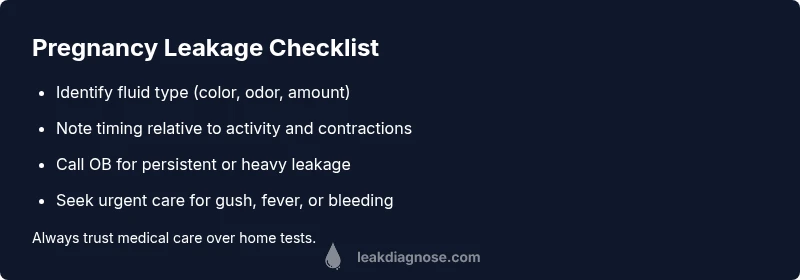
- Note the timing, amount, color, and odor of any leakage.
- Use a clean pad or sanitary towel to monitor ongoing wetness; avoid tampons.
- Don’t insert anything vaginally or try to stop the flow with household products.
- Call your obstetrician or go to the nearest emergency department if you have a gush, persistent leakage, fever, or abdominal pain.
- Bring your pregnancy notes, medications, and any test results to your appointment for faster evaluation.
Steps
Estimated time: 1-2 hours
- 1
Observe and record
Begin by noting when leakage started, how much fluid there is, and whether it is continuous or intermittent. Note color and odor, and whether contractions occur within the next hour. This baseline will help your clinician evaluate risk.
Tip: Keep a small diary or note on your phone for quick reference. - 2
Protect yourself with a pad
Place a clean, breathable pad to monitor ongoing leakage. Avoid tampons or internal devices. If leakage soaks more than one pad in an hour, seek medical advice promptly.
Tip: Check for pooling rather than a one-time drip to gauge flow. - 3
Call your healthcare provider
Contact your OB or midwife to discuss symptoms. They may advise you to come in for assessment or go to the ER if red flags are present.
Tip: If you’re within 24 hours of your due date or membranes are suspected to be ruptured, seek urgent care. - 4
Prepare for evaluation
Bring your medical history, current medications, and a list of recent activity. Be ready to undergo tests (e.g., nitrazine, ferning) and possibly an ultrasound.
Tip: Arrive with a trusted companion if you’re anxious or worried. - 5
Follow medical guidance
Based on test results, your clinician will outline next steps, whether monitoring, antibiotics, or delivery planning is indicated.
Tip: Ask about signs that require immediate re-evaluation. - 6
Post-evaluation plan
Adhere to instructions regarding rest, hydration, and activity. Schedule follow-up and report any changes in sensation, odor, or another leak.
Tip: Keep emergency numbers handy in your phone.
Diagnosis: Pregnant person experiences vaginal fluid leakage
Possible Causes
- highAmniotic fluid leak (PROM)
- mediumUrinary leakage due to increased pelvic pressure
- lowVaginal discharge from infection or hormonal changes
Fixes
- easyCall OB or go to ED if there is a gush, continuous leakage, fever, or foul odor
- easyDocument amount, timing, color, and any contractions; share with your provider
- easyProvide a urine sample if requested to distinguish urine from amniotic fluid
- easyFollow medical advice; avoid home remedies or douches until evaluated
Questions & Answers
What is the difference between amniotic fluid leakage and normal vaginal discharge during pregnancy?
Amniotic fluid leakage is typically a sudden gush or continuous wetness and may lack odor, while normal discharge is lighter, more intermittent, and often related to hormonal changes. A clinician can confirm with tests such as nitrazine or ferning.
Amniotic fluid leakage usually comes as a sudden gush or steady wetness, with little odor. Normal discharge is lighter and intermittent, but only a clinician can confirm via tests.
When should I seek emergency care for suspected leakage?
If you have a sudden gush, persistent leakage, fever, vaginal bleeding, or strong contractions, seek urgent care or go to the emergency department immediately.
Go to the ER or call your provider if you have a gush, ongoing leakage, fever, or heavy bleeding.
Can leakage be prevented during pregnancy?
Some leakage types cannot be prevented. Maintaining regular prenatal care and promptly reporting symptoms helps ensure timely evaluation and care.
Some leakage can’t be prevented, but staying in touch with your prenatal team helps catch problems early.
What tests do doctors use to confirm leakage?
Clinicians may use nitrazine tests, ferning patterns under a microscope, ultrasound, and clinical assessment to determine if amniotic fluid is present.
Doctors use tests like nitrazine and ferning, plus imaging, to confirm amniotic fluid.
Is leakage always a sign that labor has started?
Leakage does not always mean labor has begun. It can occur before labor or as PROM. Evaluation helps determine timing and management.
Leakage can happen before labor or as PROM, so check with your clinician to know what it means for you.
What should I do if I’m near term and leakage occurs?
Near term, leakage requires immediate evaluation to decide whether delivery is imminent or if the membranes have ruptured and how to proceed.
If you’re near your due date and leakage happens, seek evaluation right away to plan next steps.
Watch Video
Main Points
- Seek evaluation for any suspected amniotic fluid leakage.
- Differentiate fluid types with clinical tests, not home tests.
- Monitor timing, amount, color, and odor to guide care.
- Urgent care is needed for gush, fever, bleeding, or contractions.
- Follow your healthcare provider’s plan and schedule follow-ups.