Where's the Leak Ma'am? A DIY Troubleshooting Guide
Urgent, practical steps to locate and stop a hidden household leak. Learn a safe diagnostic flow, quick fixes, and when to call a pro with Leak Diagnosis.


Where's the leak ma'am? The most likely culprit is a hidden indoor leak behind walls or under a slab. Quick action: shut off the main water, inspect visible fixtures (toilets, sinks, hoses), and run a dye test or meter check. Confirm the source, then follow the diagnostic flow below for the best fix.
Where's the leak ma'am? A reality check
Where's the leak ma'am? In many homes, the first sign of trouble is a damp patch, a musty odor, or a rising water bill that doesn’t match your usage. This triad often points to a hidden leak: something leaking behind a wall, under a floor, or inside a plumbing chase. The urgency matters because small leaks waste water, damage structures, and invite mold. Quick, deliberate actions save time and reduce damage. By approaching the problem with a clear plan, you can identify the likely source and begin a safe repair path without creating additional risk to electrical systems or occupants. Leak Diagnosis emphasizes safety and method: shut off water where appropriate, observe changes, and document signs for accurate diagnosis.
Common leak hotspots you should inspect first
Most home leaks originate from familiar places. Start with these hotspots and work systematically:
- Toilets: worn flappers or wax rings cause slow drips that creep onto flooring and increase bills.
- Faucets and showerheads: loose fittings and worn seals create persistent drips.
- Appliance hoses: washing machines, dishwashers, and ice makers use flexible hoses that can rupture or loosen.
- Under-sink plumbing: supply lines and shut-off valves are common failure points.
- Outdoor spigots and irrigation lines: buried or poorly insulated lines leak during freezes or when hoses are left on.
- Behind walls or under slabs: invisible leaks from supply pipes can silently damage framing and drywall.
As you inspect, look for staining, soft spots in ceilings or floors, musty odors, and pooling water. Keeping notes and photos helps verify the leak path as you progress. Remember: visible leaks are the easiest to fix; unseen leaks demand a systematic approach to avoid unnecessary demolition.
Safety and immediate actions you can take
Safety must come first in any leak investigation. Begin by shutting off the nearest available water valve when you suspect a leak in a fixture or hose. If you cannot locate a valve or if water is flooding, shut off the main water supply from outside the home and switch off the electrical circuits in affected areas if there is standing water. Use a flashlight in dark spaces, wear non-slip shoes, and avoid standing in water near electrical outlets. Ventilate damp areas to prevent mold growth and keep children and pets away from the area until you’ve secured the scene. If you smell gas or notice a hissing sound near gas lines, exit the home and call the gas company immediately. Documenting signs with photos helps you communicate clearly with a professional if needed.
Diagnostic flow at a glance
A clear diagnostic flow keeps you from chasing false sources. Start with simple checks and escalate only as needed:
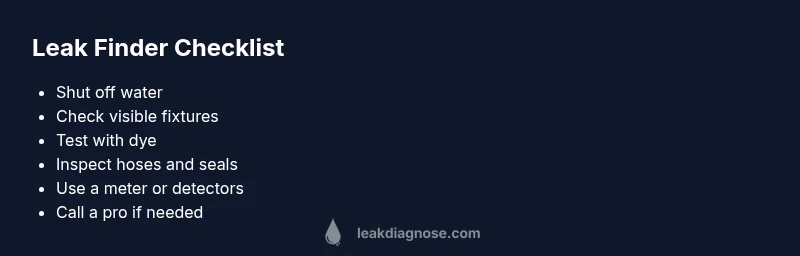
- Symptom check: damp spots, odor, or a rising water bill. 2) Quick visual inspection: fixtures, hoses, and accessible valves. 3) Simple tests: dye tests for toilets, meter checks for hidden flow. 4) Narrow down: identify likely zones (bathroom, kitchen, laundry). 5) Plan fixes: start with easy fixes, then consider professional evaluation if the source remains elusive. 6) Verify: recheck after fixes to confirm water usage drops and damp areas dry out. This approach minimizes guesswork and protects your home’s structure.
Prevention tips to reduce future leaks
Once you’ve located and fixed the leak, prevention matters. Adopt routine checks and maintenance to keep leaks from sneaking back:
- Schedule annual fixture inspections (toilet flappers, faucet seals, hose connections).
- Replace appliance hoses every 5-7 years and use brass fittings where possible.
- Install water-leak detectors near washers, under sinks, and in basements or mechanical rooms.
- Maintain a stable indoor humidity level to minimize mold risk after a leak.
- Keep a basic leak-diagnosis kit: dye tablets, a moisture meter, and a spare shut-off key.
When to call a professional
Some leaks are straightforward, but others require professional expertise. If you discover a suspected leak behind walls, under slabs, or if you cannot accurately locate the source after basic checks, contact a licensed plumber or Leak Detection specialist. Persistent high bills with no obvious source or multiple damp areas after a fix indicate a hidden problem that warrants expert tools like thermal imaging or acoustic listening devices. Professionals can determine the exact path and provide a safe remediation plan, often preventing costly structural damage.
Final reminder: document, test, verify
Throughout the process, keep notes of all observations, test results, and actions taken. After repairs, re-test the system, monitor water usage, and re-inspect for any signs of moisture over the next several days. A proactive maintenance mindset reduces the risk of future leaks and preserves your home’s integrity.
Steps
Estimated time: 60-90 minutes
- 1
Shut off water and power safety
Locate the nearest shut-off valve and turn it clockwise to stop water flow to the area. If there’s standing water and you’re near electrical outlets, switch off affected circuits before proceeding. This prevents further damage and reduces the risk of electrical shock while you inspect.
Tip: Keep a flashlight handy and note the exact shut-off location for future emergencies. - 2
Do a quick visual sweep
Inspect visible fixtures: sinks, toilets, faucet bases, and appliance hoses. Look for dripping, staining, or corrosion. Use a dry cloth to wipe surfaces so you can detect new moisture quickly.
Tip: Mark any damp areas with a sticky note to track changes over time. - 3
Check the water meter after a pause
With all taps off, note the water meter reading. Wait 1-2 hours without using water, then recheck. A change indicates a leak path you need to follow.
Tip: Take photos of the meter reading for record-keeping. - 4
Toilet leak test
Add a few drops of food coloring or use dye tablets in the tank and wait 20-30 minutes. If color appears in the bowl, the wax ring or flapper needs replacement.
Tip: If dye test fails but moisture remains, check for external leaks around the base. - 5
Inspect appliances and hoses
Check the back of the washer and dishwasher hoses for bulges, cracks, or loose clamps. Tighten fittings and replace damaged hoses. Don’t forget drain pans under units if present.
Tip: Replace rubber hoses with stainless steel braided ones for durability. - 6
Decide next steps
If you’ve located the source and can safely fix it, perform the repair and re-test. If the leak is behind walls or under slab, or you feel uncertain, schedule a professional evaluation.
Tip: Document all steps and plan for a follow-up check after repairs.
Diagnosis: Visible damp patches, a musty odor, or an unexplained rise in water usage without an obvious source
Possible Causes
- highHidden supply-line leak behind walls or under flooring
- mediumToilet wax ring or shut-off valve leak
- lowLeaking appliance hoses or drain lines
Fixes
- easyShut off the main water and perform a dye test or meter check to confirm hidden leaks; isolate suspected area first
- easyTighten, replace, or secure loose fittings and appliance hoses; check toilet connections and flapper
- mediumIf the source appears behind walls or under slabs, do not demolish; contact a licensed plumber for detection and remediation
- mediumIf the leak source remains elusive after basic checks, schedule professional leak-detection services
Questions & Answers
What should I do first when I suspect a hidden leak?
Shut off the water at the main valve, check obvious fixtures for leaks, and run a quick dye test to confirm. Document signs and plan next steps based on what you find.
First, shut off the water and check obvious fixtures. Then run a quick dye test and document what you see to guide your next steps.
How can I tell if a toilet is leaking?
Perform a toilet dye test by placing dye in the tank and waiting 15-30 minutes. If dye shows in the bowl without flushing, the flapper or seal needs replacement.
Use a dye test in the toilet tank and check if color shows up in the bowl without flushing.
Is it safe to use appliances near a leak?
Avoid using appliances near standing water. If you suspect wiring or outlets are involved, stop and contact a professional to avoid shock or fire risk.
Don’t use electrical devices near any water. If wiring is involved, call a professional.
When should I call a professional?
Call a professional if you can’t locate the source after basic checks, or if the leak is behind walls or under slabs. A pro can safely detect and remediate without causing further damage.
If the source is hidden or you’re unsure, it’s best to call a pro for precise detection and safe remediation.
What are early signs of a slab leak?
Unexplained high water bills, unusually warm floor areas, or damp spots on concrete slabs can indicate a slab leak. These require specialized equipment to locate and repair.
Look for hot or damp spots on concrete and rising water bills. A slab leak often needs a professional with specialized tools.
Watch Video
Main Points
- Stop the water to control the situation.
- Identify the leak source before trying fixes.
- Prioritize safety around electricity and mold prevention.
- Use dye tests and meter checks to confirm leaks.
- Call a pro if the source is behind walls or under slabs.