Urine Leak in Men: Troubleshooting Guide
Urgent guidance to diagnose and manage urine leak male at home. Learn common causes, at-home checks, safety, and when to seek medical help with a practical, step-by-step approach.


Most often, urine leak male is caused by overactive bladder, stress incontinence, or prostate-related issues. Start with quick checks: monitor fluid intake, review medications, and perform pelvic floor exercises. Track when leakage occurs and any triggers. If the problem persists, seek professional evaluation promptly for accurate diagnosis and treatment options.
Understanding the problem: urine leak male
Urine leak male can be distressing, especially when it disrupts daily life or sleep. This symptom is more common than many realize and can result from a range of issues, from bladder overactivity to pelvic floor weakness or prostate changes. The key is to observe patterns: how often leakage occurs, whether it happens with coughing or sneezing, and whether there are accompanying signs like burning, fever, or blood in the urine. Through careful observation you can help your clinician narrow down possible causes and choose the safest, most effective treatment path. According to Leak Diagnosis, early recognition reduces anxiety and leads to faster, safer solutions. In this guide, you will find practical, home-friendly steps to assess risk, reduce episodes, and know when professional care is needed. Remember that urgency or pain warrants timely medical attention rather than waiting for a later appointment.
Common causes in men
Urine leak male can occur for several reasons. The most common are overactive bladder, stress incontinence due to pelvic floor weakness, and benign prostatic hyperplasia that affects urine flow. Less common but possible are urinary tract infections, diabetes-related nerve problems, medications that act as diuretics or relax bladder muscles, and after surgeries affecting the bladder or urethra. Age can influence risk, but leaks can occur at any adult stage. Distinguishing among these requires considering timing (night vs day), triggers (coughing, running water, physical exertion), and associated symptoms (urgency, pain, fever). While some men experience leaks only with certain activities, others may leak continuously. A careful history helps a clinician decide whether to start with lifestyle changes, bladder training, or medical therapy. If you notice blood in urine or fever, seek urgent medical care.
Daily checks you can perform safely
Here are safe, at-home steps you can begin today to understand and manage the symptom of urine leak male:
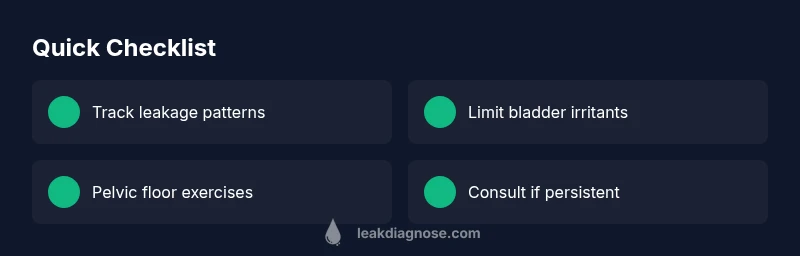
- Track leakage: note date, time, amount, and triggers.
- Hydration and caffeine: monitor fluid intake and reduce bladder irritants.
- Medication review: check prescribed or over-the-counter drugs that may affect urine control.
- Pelvic floor exercises: perform Kegels daily to strengthen supportive muscles.
- Protect skin and dignity: use protective garments and barrier creams.
- Nighttime strategies: limit fluids after 6 PM and urinate before bed.
These steps are non-invasive and can reduce symptoms while you pursue a medical assessment. If leakage worsens or you develop painful urination, fever, or severe urgency, contact a clinician promptly.
Medical red flags and when to seek urgent care
Some signs require urgent medical attention for urine leak male. If you experience sudden inability to urinate, severe pain in the back or abdomen, fever with chills, red or dark urine, or leakage accompanied by numbness or weakness in the legs, seek immediate care. Also call if leakage is associated with blood clots or if you have a known neurological condition that could affect bladder control. While many leaks are manageable with lifestyle changes, some may indicate infections, stones, nerve problems, or a more serious prostate issue. In the meantime, avoid delaying evaluation for more than a few days if symptoms persist or worsen.
Diagnostic approach you can use at home
To help your clinician diagnose the cause of urine leak male, maintain a diary describing leakage episodes and potential triggers. Record the time of day, activity, fluid intake, caffeine/alcohol use, medications, and any associated symptoms. Consider doing a simple at-home check: observe whether leakage occurs with coughing or sneezing (stress incontinence) or with a strong urge (urge incontinence). If a urine test is available to you, collect a sample as directed. Bring your diary to the appointment to speed up the evaluation and avoid unnecessary tests. Remember that home testing has limits; a clinician may order uroflow testing, post-void residual measurement, ultrasound, or referral to a urologist based on your diary and physical exam.
Step-by-step home management for common causes
- Pelvic floor strengthening: lie down, contract muscles used to stop urination, hold for 5 seconds, rest 5 seconds, repeat 10-15 times, 3 times daily.
- Fluid and irritant management: sip water consistently, avoid caffeine and alcohol, especially late in the day.
- Bladder training: try delaying urination by 5-10 minutes to extend the interval between urges.
- Protective strategies: absorbent garments for daytime or nighttime; change frequently to prevent skin irritation.
- When to reassess: if after 4 weeks there is no improvement, revisit your clinician.
Safety considerations and when to avoid self-treatment
Self-treatment is generally safe for most adults with urine leak male, but there are risks. Do not ignore symptoms like fever, severe pain, or blood in urine. Some home remedies can interfere with medications or worsen symptoms (e.g., excessive fluid restriction, constipating laxatives) and should be discussed with a clinician. Always follow label directions for any medications and consult a pharmacist or clinician before starting new supplements. If you have a known neurological condition, diabetes, or a history of prostate problems, coordinate with your healthcare team before making changes. If you are pregnant or have had recent bladder surgery, seek professional guidance before attempting bladder training or pelvic floor exercises.
At-night leakage management
Night leakage can be especially distressing. Try: limiting fluids after 6 PM; empty bladder before bed; use a protective bed liner or mattress protector; keep a bedside urinal or protective pad; try nocturnal bladder training; ensure comfortable sleep with a consistent schedule; If nocturnal leakage persists, talk with your clinician about medications or devices that may help.
Medical testing and what's involved
Tests may include urine analysis to rule out infection, imaging to examine urinary tract, and specialized tests to assess bladder function like uroflowmetry and post-void residual measurement. A urologist may perform a digital rectal exam to evaluate prostate size. Blood sugar testing may be used if diabetes is suspected. The results guide treatment planning, from lifestyle approaches to medications or surgery.
Long-term management and prevention
Long-term management focuses on risk reduction and symptom control. Maintain hydration with balanced fluids, limit irritants, continue pelvic floor training, and address underlying conditions such as BPH or diabetes with your clinician. Consider weight management and smoking cessation if relevant. Regular follow-up helps monitor progress and adjust therapy as needed. A well-managed plan reduces episodes of urine leak male and improves quality of life.
Steps
Estimated time: 4-6 weeks
- 1
Establish a leakage diary
Document when leakage occurs, amount, triggers, activities, and hydration. This creates a clear pattern for your clinician to review.
Tip: Include nighttime episodes and any associated symptoms. - 2
Implement pelvic floor exercises
Perform daily Kegels to strengthen the pelvic floor, which supports the bladder and urethra. Gradually increase hold times as you gain strength.
Tip: Consistency beats intensity in the first month. - 3
Modify fluids and irritants
Limit evening fluids and avoid caffeine/alcohol if they worsen symptoms. Maintain steady hydration to prevent concentrated urine.
Tip: Sip small amounts rather than large servings. - 4
Review medications
Certain drugs can worsen leakage. Talk to your clinician about diuretics, sedatives, or bladder-affecting meds.
Tip: Never stop prescribed meds without professional guidance. - 5
Plan a medical visit
Bring your diary, list of meds, and any previous tests. Expect urinalysis, and possibly bladder function tests.
Tip: Be ready to discuss daily routines and symptoms in detail.
Diagnosis: Frequent or persistent urine leak male with variable patterns
Possible Causes
- highOveractive bladder or urge incontinence
- highPelvic floor weakness leading to stress incontinence
- mediumBenign prostatic hyperplasia affecting urine flow
- lowUrinary tract infection or stones
- lowMedication effects or diabetes-related neuropathy
Fixes
- easyStart pelvic floor exercises and bladder training
- easyReview medications with a clinician for potential interactions
- mediumAddress underlying issues like BPH with medical guidance
- mediumSchedule a clinician visit for testing (urinalysis, imaging, urology consult)
Questions & Answers
What are the common causes of urine leaks in men?
Urine leaks in men often stem from overactive bladder, pelvic floor weakness, or prostate-related changes. Infections, medications, or diabetes can contribute as well. A clinician can differentiate these with your history and tests.
Common causes include overactive bladder and prostate issues. A clinician can help determine the exact cause.
When should I see a doctor about urine leakage?
If leakage occurs frequently, is worsening, or is accompanied by pain, fever, or blood in the urine, seek medical care promptly. Even mild leakage that repeats weekly warrants evaluation.
If leakage is frequent or persistent, see a doctor.
Can dehydration cause urine leakage?
Dehydration can irritate the bladder and increase urgency, but it is rarely the sole cause of leakage. Balance fluids and avoid irritants to see if symptoms improve.
Hydration matters, but dehydration isn't usually the sole cause.
Is a UTI a possible cause of urine leakage in men?
Yes, a urinary tract infection can cause urgency and leakage. Treating the infection may reduce leakage, but persistent symptoms require further evaluation.
UTIs can cause leakage; see a clinician if symptoms persist.
What tests do doctors use to diagnose male urine leakage?
Doctors may review history and perform a physical exam, urinalysis, and bladder tests (such as uroflowmetry or post-void residual). Imaging or urology referral may be needed depending on findings.
Expect urine tests and possibly bladder-function tests.
What can I do tonight to reduce leakage?
Limit evening fluids, avoid caffeine and alcohol, and perform pelvic-floor exercises. If leakage continues, seek medical advice promptly.
Limit late fluids and relax with pelvic floors.
Watch Video
Main Points
- Start with simple at-home checks and diary tracking.
- Pelvic floor exercises and hydration strategies help many cases.
- Seek medical evaluation for persistent or alarming symptoms.
- Treatment ranges from lifestyle changes to medications; surgery is rare and discussed with a clinician.
- Stay proactive with follow-up to adjust the plan as needed.