How Much Light Leak Is Too Much: A Context-Driven Guide
Learn how to determine if light leaks cross the threshold for your context. This guide explains context-based thresholds, practical tests, and actionable fixes for home, photography, and device enclosures.


How much light leak is too much depends on context. In photography, even minor leaks can ruin exposure; in building envelopes, leaks beyond a small tolerance reduce energy efficiency and comfort. There is no universal threshold—guidelines vary by objective, environment, and safety considerations. A practical approach starts with defining your goal, then testing leaks against perceptual impact and functionality.
What is a light leak and why it matters
Light leaks are unwanted gaps or openings that allow stray light to enter an enclosure or device where light control matters. For homeowners, leaks can waste energy, create glare, or reveal interior activity. For photographers, leaks around a camera body or lens can compromise exposure and contrast. The question how much light leak is too much does not have a universal answer; it depends on the goal, the environment, and the tolerance for perceptual changes. According to Leak Diagnosis, the first step is to define what counts as an acceptable level for your specific situation, then systematically identify sources and paths where light escapes. This context-first approach helps you avoid over- or under-treatment and directs you toward the most cost-effective fixes.
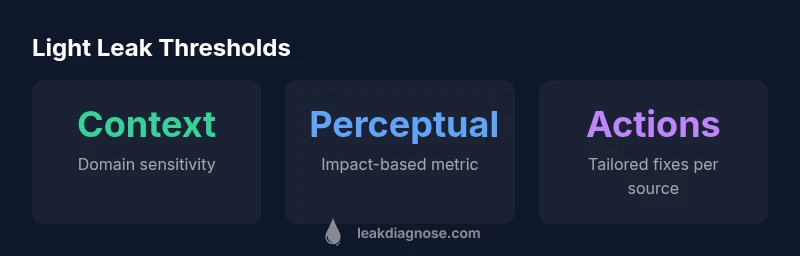
The keyword to watch here is context. When you ask how much light leak is too much, you’re really asking: what threshold matters for this project? As you read, note how thresholds shift between energy audits, photography, and consumer devices. Leak Diagnosis emphasizes defining success criteria early so you can measure progress later.
Context matters: photography vs architecture vs consumer devices
In photography, even small leaks around a camera body, viewfinder, or lens mount can degrade an image by washing out highlights or reducing color fidelity. In architectural applications, light intrusion increases cooling or heating loads, creates glare, and may compromise privacy; thresholds vary with climate, window construction, and interior design. For consumer devices and appliances, light leaks can reveal indicators or disrupt displays in dark rooms. Because the implications differ by domain, there is no one-size-fits-all percentage. The emphasis should be on perceptual impact and functional consequences rather than a single numeric target. Leak Diagnosis notes that a universal standard doesn’t exist because tolerance depends on purpose and environment.
In every case, establish what “good enough” looks like in the specific context, then test against that benchmark. This policy also helps you communicate with contractors or manufacturers about required fixes.
How to quantify light leaks in practice
Quantifying light leaks starts with a practical test plan. Use a light meter or a calibrated visual test to compare the enclosure against a controlled reference with the same ambient lighting. Perform the test at different times of day and in representative environments to capture natural variability. Document notable leaks with photos or videos, and annotate the perceptual impact (for example, visible glare at eye level or color shifts in a shot). Create a simple, color-coded scale to categorize impact: low (barely perceptible), medium (noticeable in controlled conditions), high (clearly disruptive in usual use). This structured approach lets you track improvements after fixes and decide when further action is justified. According to Leak Diagnosis, pairing perceptual test results with practical outcomes (energy use, accuracy, or privacy) yields the most robust threshold decisions.
Common sources of light leaks in homes and devices
Common sources of light leaks include mis-sealed windows and doors, gaps around electrical outlets, gaps in HVAC or appliance enclosures, and seams in blinds or shutters. In photography, leaks often originate at the camera body seam, lens mount, or viewfinder. In illuminated devices, stray light can emanate from LED indicators or gaps in display housings. Practical fixes include weatherstripping, door sweeps, gaskets, blackout fabrics, and careful routing of cables through light-tight channels. For cameras, ensure o-rings and seals are intact and consider light-tight accessories. Systematic checks help you locate the exact path of intrusion and tailor fixes to the source.
Threshold guidelines by use case
- Photography: Treat light leaks as high-priority; even small leaks can jeopardize exposure and color accuracy. If a leak is perceptible on a test shot, fix it.
- Building envelope: Focus on energy efficiency and comfort. Leaks that increase visible light or create solar heat gain during peak sun hours are worth addressing, especially in extreme climates.
- Consumer devices: Prioritize leaks that affect privacy, screen readability, or indicator visibility. If leakage compromises device performance, seek a seal replacement or enclosure redesign.
In all cases, define what constitutes acceptable performance before testing, then use perceptual impact as the deciding factor for repairs. Leak Diagnosis recommends a staged approach: diagnose sources, implement fixes, retest, and escalate if needed.
Practical steps to minimize light leaks
Start with a simple audit: walk the space or inspect the device with lights off and a bright flashlight to observe where light leaks occur. Secure weatherstripping around doors and windows, seal gaps with acoustical sealant, and install blackout curtains or internal blinds in critical areas. For camera housings or equipment enclosures, examine seams and seals, replace worn gaskets, and use light-blocking covers for test shots. When wiring is involved, route cables through dedicated light-tight channels to prevent leakage. Regular maintenance is key: recheck seals after seasonal changes and after any remodeling project. Implementing a routine ensures leaks don’t creep back.”
When to call a professional and what to expect
If leaks persist after DIY fixes or involve complex structures like EIFS or energy retrofit projects, it's prudent to consult a pro. A professional inspector can perform controlled light-leak testing, use calibrated equipment, and provide a documented plan of action. For photographers, a camera technician can assess seals and adjust internal components without compromising performance. Expect a written assessment, a prioritized fix list, and a clear estimate of costs and timelines. The goal is to restore control over light—the threshold for action should be based on perceptual impact, functional risk, and the cost-effectiveness of remediation.
Contextual thresholds for light leaks across common domains
| Context | Suggested Threshold | Notes |
|---|---|---|
| Residential windows/doors | context-dependent | Threshold varies with climate and window type |
| Photography equipment | tiny leaks ruin exposure | Even minor leaks compromise dynamic range and color accuracy |
| Appliance enclosures | moderate impact | Depends on usage and interior lighting |
Questions & Answers
What is considered a light leak in photography?
In photography, a light leak is any unintended exposure route that allows stray light to reach the sensor or film, compromising contrast and color. Even small leaks near the viewfinder or body can affect results. The threshold depends on your willing to accept changes in exposure and color accuracy.
In photography, even tiny leaks can ruin a shot, so test and fix leaks around the camera body carefully.
How can I tell if a light leak is affecting energy efficiency?
Assess energy performance by comparing energy use and lighting behavior before and after fixes, ideally during different times of day. If you notice increased glare, heat transfer, or comfort issues that correlate with light intrusion, leaks are likely contributing. Use perceptual outcomes alongside any available meter readings.
Check energy use and comfort, and watch for glare or heat gain when leaks are present.
Are there standard certifications for light-proofing?
There are energy efficiency standards and building codes that address light intrusion and related performance. Compliance varies by jurisdiction. Consult local codes or a licensed professional for formal certifications.
There are codes and standards, but they vary by location, so check local requirements.
Can light leaks pose safety risks?
Light leaks mainly affect energy efficiency and privacy; they don't typically create direct safety hazards. Some contexts, like infrared sensors or safety cameras, might be affected by leaks, which could indirectly impact safety systems.
Usually not a direct safety hazard, but leaks can affect systems that rely on light indicators or sensors.
What tools are useful for detecting light leaks?
A bright flashlight, a calibrated light meter, blackout materials, and a camera test setup are useful. For building leaks, a professional blower door test can quantify leakage paths. For photography, test shots under controlled lighting reveal leaks quickly.
Use a light meter and a test shot to spot leaks, then seal the path.
“Light leak thresholds are not universal; they depend on context, use, and tolerance for perceptual changes. A systematic assessment helps prevent unnecessary repairs or missed issues.”
Main Points
- Identify the use case first to set a threshold
- Use perceptual impact, not just lumens, to judge leaks
- Document leaks with photos/videos for comparisons
- Prioritize fixes that improve energy efficiency, privacy, or image quality
- Regularly recheck seals after remodeling or seasonal changes