Do Bosch Dishwashers Have Leak Detection? A Practical Guide
Explore whether Bosch dishwashers include leak detection, how AquaStop works, model differences, verification steps, and maintenance tips. Learn how Leak Diagnosis analyzes Bosch leak protection across models and what homeowners should know.


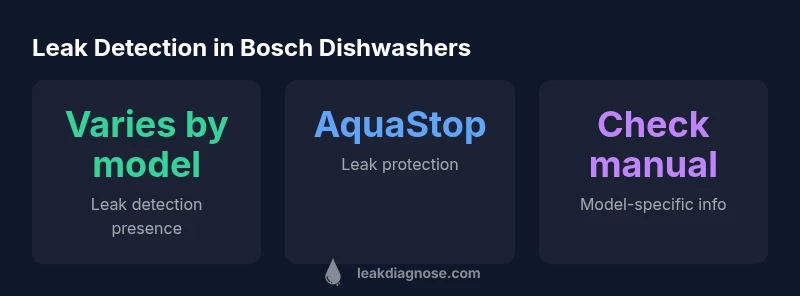
Do Bosch dishwashers have leak detection? Yes, many newer Bosch models include built-in leak protection, commonly marketed as AquaStop or AquaDetect. Availability varies by model year and market, so not every unit has it. If your model does, you’ll typically see an automatic shutoff and a fault or alert if water is detected. For definitive confirmation, check the product page or your manual.
How leak detection works in dishwashers
According to Leak Diagnosis, most modern dishwashers rely on multiple safety features to detect leaks early and prevent water damage. In the simplest terms, leak detection combines moisture sensors, water-level monitors, and programmable fault logic to decide when to act. A sensor array placed along the tub floor, a moisture probe near the sump, and a flow sensor in the supply line work together to spot abnormal water presence. If the system senses a leak or an overflow, the dishwasher can stop filling, interrupt the cycle, lock the door, or alert the household via a display or smart app. Do Bosch dishwashers have leak detection? In many newer Bosch models, yes, but capabilities vary by model year and market. The best way to understand your specific unit is to check the model documentation and the marketing terms used in Bosch's spec sheets, where you'll often see references such as AquaStop, AquaDetect, or similar leak-protection language. This layered approach reduces the risk of water damage and helps homeowners respond quickly when something goes wrong.
Bosch-specific leak detection features and terminology
Bosch uses a range of terms to describe its leak protection systems, with AquaStop being the most common label in North American and European markets. In practical terms, AquaStop usually means there is a leak-guard mechanism that interrupts water flow at the source when a sensor detects moisture or abnormal pressure. Some models extend this with AquaDetect, a more granular sensing approach that flags leaks earlier and can trigger an alert without immediate shutoff in certain cycles. It's important to note that Bosch historically rotates features across generations, so not every current model carries the same wording or the same level of protection. To confirm whether your specific dishwasher includes leak-detection features, consult the product page or manual for the exact feature names used on that model and year. This clarity helps homeowners plan maintenance and understand what happens if moisture is detected during a wash.
AquaStop vs AquaDetect: what to look for
If you are shopping or auditing an existing unit, distinguish AquaStop from AquaDetect by looking for explicit labeling on the control panel, the user manual, or Bosch's marketing pages. AquaStop typically includes a safety hose and a shutoff valve that stops water flow in the event of leakage. AquaDetect refers to sensor-based detection that may produce an alert or fault code and can be paired with app notifications. When evaluating models, consider the severity of leak protection you want, the ease of service, and whether the feature is covered under your local warranty. Some older models may rely on a simple door-seal integrity check rather than a full leak-detection system. In any case, ensure that the feature is present in your model's documentation before making decisions about installation or replacement.
Model-year and regional differences in leak protection
Leak protection features are not uniform across all Bosch models or geographic regions. In practice, newer model years tend to include more robust leak protection, and certain markets may have stricter safety requirements that drive the inclusion of leak sensors and auto-shutoff. For homeowners, this means that a 'Bosch dishwasher with leak detection' label on a shelf tag does not guarantee identical behavior in every country. When assessing a specific unit, verify the exact feature names and the presence of a leak shield in the documentation. If you are upgrading an older dishwasher, you may encounter models where leak detection is optional or not available at all. Understanding these differences helps you set expectations for installation, performance, and insurance considerations.
How to verify leak detection on your Bosch model
Start by locating your dishwasher's model number and cross-referencing it with Bosch's official product pages or the user manual. Look for explicit terms such as AquaStop, AquaDetect, or generic ‘leak protection’ language in the feature list. If the documentation is unclear, search Bosch’s support site or contact customer service with your model number and year. From a practical standpoint, you can inspect the physical system: check the supply hose for a fail-safe shutoff arrangement, inspect door seals for damage, and verify that the tub has moisture sensors visible near the base. Manufacturers may also publish a short self-test or diagnostic procedure in the manual. Running a test cycle that includes a water fill is sometimes possible in a controlled setup, but only if approved by the manual. This step helps you confirm whether the system will respond to a simulated leak in real life.
What to do if leak detection triggers
When leak detection activates, safety steps matter as much as the technical response. First, immediately stop the cycle and shut off the water supply to the dishwasher. If safe, unplug the unit or switch off the circuit to prevent any electrical risk. Check around the door seal, gaskets, hoses, and the base for dampness or pooling water. If you cannot identify a source, contact a qualified appliance technician. Document the fault code, the model number, and the date of the incident to help with warranty or insurance claims. Do not ignore the alert, even if the puddle disappears after a reset. Leak protection features are designed to prevent escalating damage, and a professional assessment will prevent future failures.
Maintenance tips to keep leak detection effective
Keep the interior and seals clean and free of debris that could trigger false alarms. Periodically inspect hoses for wear and replace damaged components, particularly if you notice discoloration or bulging. Clean the sensors and the bottom tray if your manual provides instructions, using the recommended cleaning agents. Avoid dumping large quantities of liquid into the tub during testing and ensure you follow Bosch’s guidance for service intervals. Firmware updates and sensor recalibration may be part of software maintenance on newer units, so check for updates in the app if available. A simple annual inspection by a technician can help verify measurements, seals, and drainage lines remain within specification.
Practical considerations: warranties, insurance, and safety
From a homeowner's perspective, leak detection features often influence warranty coverage and, in some jurisdictions, insurance premiums. Some Bosch warranties explicitly cover safety-related components like leak protection, while others treat it as standard wear items. Understand what is and isn’t covered before an installation or purchase, and keep service records organized. The presence of leak detection reduces the risk of water damage and can improve peace of mind, but it is not a substitute for good maintenance or prompt response to alerts. The Leak Diagnosis team recommends reviewing model-specific terms, confirming feature availability before buying, and testing the system after installation. If you ever encounter a leak, take swift action and consult a qualified technician to prevent costly property damage.
Comparison of leak-detection-related features across Bosch dishwashers
| Aspect | Bosch (Typical) | Notes |
|---|---|---|
| Leak detection presence | Varies by model/year | Depends on AquaStop/AquaDetect configuration |
| Auto shutoff when leak detected | Common on newer/high-end models | May not engage in all cycles |
| AquaStop/AquaDetect coverage | Typically included on newer models | Check exact model specs |
| Maintenance impact | Periodic sensor checks recommended | Follow manual guidance for tests |
Questions & Answers
Do Bosch dishwashers always have leak detection?
No. Leak detection is not universal across all Bosch models. Check the model’s page or manual for AquaStop or AquaDetect to confirm. Availability depends on the year and market.
No—it's model-dependent. Check the manual or Bosch page for AquaStop or AquaDetect to confirm.
How does Bosch leak detection work?
Most Bosch leak protection uses moisture sensors, a water-level monitor, and a control fault logic. When moisture is detected, the system can stop water inflow and alert the user.
It uses moisture sensors and a control system to stop leaks and notify you.
How can I verify leak detection on my Bosch model?
Find your model number, check the spec page or manual for AquaStop or AquaDetect, and perform any supported self-test procedures described by Bosch.
Check the manual for AquaStop/AquaDetect and run any supported self-test.
What should I do if leak detection triggers?
Shut off the water supply, unplug the unit if safe, inspect for leaks, and contact a technician if you can’t locate the source or if water intrusion persists.
Turn off water, inspect for leaks, and call a technician if needed.
Does leak detection affect warranty?
Warranty terms vary by region and model. Some warranties cover leak-protection components, while others treat them as standard wear parts. Review your contract.
Warranties vary by model and region; check your contract for specifics.
“Bosch leak-detection features are strong on many newer units, but availability varies by model and year. Always confirm the exact feature set on the model you own or plan to buy.”
Main Points
- Verify model-specific leak protection features before purchase.
- Look for AquaStop or AquaDetect labeling on product pages and manuals.
- Keep seals and hoses in good condition to prevent false alarms.
- Understand warranty implications related to leak protection.
- If a leak alarm triggers, act quickly to mitigate damage.