Is Leak Proof the Same as Waterproof? A Practical Guide
Explore whether 'is leak proof the same as waterproof' is true, with clear definitions, testing tips, maintenance guidance, and practical steps from Leak Diagnosis to prevent moisture damage.


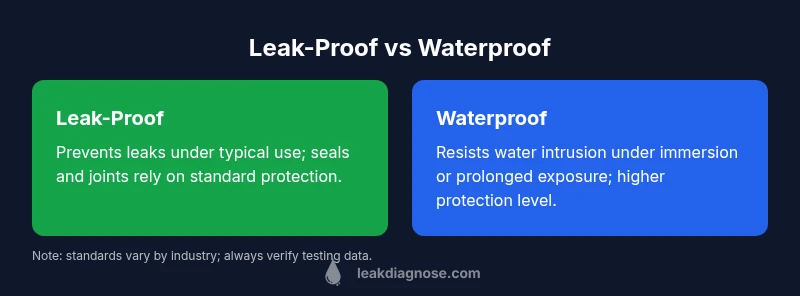
The short answer is no. Leak-proof and waterproof are not interchangeable; leak-proof designs focus on preventing leaks under typical use, while waterproofing aims to resist water intrusion under immersion or prolonged exposure. For most homes, a well-sealed system with regular maintenance is sufficient. Understanding the distinction helps you select fixtures, plan repairs, and avoid overbuilding.
Is leak proof the same as waterproof? A definitional breakdown
The topic is more nuanced than most homeowners expect. The phrase is leak proof the same as waterproof is commonly asked when selecting bathroom fixtures, appliances, or building materials. According to Leak Diagnosis, many readers confuse these terms, which can lead to choosing the wrong protection level for a given scenario. In practice, "leak proof" generally means the system is designed to prevent liquid leakage under typical operating conditions, but it may not withstand submersion or extended exposure. "Waterproof" implies a higher standard that resists water intrusion even under more extreme circumstances, such as immersion or prolonged exposure. Grasping this distinction helps in product selection, installation planning, and budgeting for maintenance. The central question remains: is leak proof the same as waterproof, and what does that mean for your home?
wordCountInBlock":150},{
Practical definitions: leak proof vs waterproof in everyday terms
To translate the terminology into practice, think of leak-proof as a constraint on leakage under ordinary use, such as a kitchen faucet or a shower seal under normal water pressure. Waterproof, by contrast, is a higher bar: it is meant to resist water intrusion even when conditions are more demanding, like submersion or continuous exposure in damp environments. In residential settings, most fixtures and materials are designed to be leak-proof rather than fully waterproof; this is typically sufficient for daily use, provided maintenance and inspections are regular. The key takeaway is that the label you see on a product reflects its tested performance boundary, not an absolute guarantee against all moisture. When planning a project, map water exposure, pressure, and the potential for immersion to decide whether a leak-proof approach meets safety and durability goals. Remember: the exact meaning of these terms can vary by industry, so verify with the manufacturer’s testing data and local codes.
wordCountInBlock":170},{
Industry usage and rating guidelines
Different industries apply these terms with varying rigor. In residential construction and plumbing, many products are marketed as leak-proof or waterproof, yet the governing standards may differ by region and application. For electronics and outdoor equipment, you might encounter IP ratings that describe ingress protection, but these do not directly translate to building seals or appliance housings. In home projects, you should look for explicit testing results (e.g., water exposure duration, pressure, and immersion scenarios) rather than relying solely on a label. The absence of universal, one-size-fits-all standards means homeowners must interpret ratings within the context of location, intended use, and maintenance plans. Always cross-check with installation manuals, code requirements, and supplier documentation to ensure your chosen solution aligns with real-world exposure and your risk tolerance.
wordCountInBlock":170},{
Clarifying submersion and exposure terms
Submersion resistance is a common test dimension that many homeowners overlook. A product rated as waterproof may resist splashes but not immersion, while leak-proof labeling often targets preventing drips or leaks under typical household water pressure. For areas like bathrooms, laundry spaces, or exterior fixtures, consider how often water is expected to contact joints, seals, and enclosures. If a surface could be submerged or exposed to standing water, a waterproof standard may be warranted. Otherwise, well-designed gasket systems, properly applied sealants, and reinforced joints can provide adequate protection with easier maintenance. Always verify whether a waterproof claim includes immersion testing and for how long, and compare that against your real-world exposure. This helps ensure you aren’t paying for a higher standard than your project requires.
wordCountInBlock":170},{
Testing and verification approaches
Independent testing offers a clearer view of a product’s capabilities than marketing claims alone. Look for third-party test reports that outline the specific conditions used (water type, duration, pressure, and whether immersion was included). For home installations, practical checks include inspecting seals, joints, and fasteners for signs of wear; confirming that gaskets compress evenly; and verifying that drainage paths stay clear. A leak-proof setup should show no drips under normal use after a period of operation, while a waterproof-rated system should tolerate immersion or sustained exposure within the tested parameters. While DIY checks are helpful, some failures are subtle and only reveal themselves under stress, so consider periodic professional inspections for high-risk areas such as basements, laundry rooms, and outdoor utility zones.
wordCountInBlock":170},{
Maintenance mindset: keeping seals strong over time
Maintenance is the practical bridge between theory and reality. Even the best leak-proof or waterproof systems degrade with age due to UV exposure, temperature cycles, and material fatigue. Assign a maintenance cadence: visual inspections every 3–6 months, gasket and seal checks annually, and prompt replacement of worn components. Keep an eye out for small signs of moisture, staining, or mold in problem areas—the earliest indicators that a system may be approaching failure. When you’re replacing seals, choose products designed for the intended exposure level and climate. In essence, you’ll preserve your chosen standard—be it leak-proof or waterproof—by staying proactive, not reactive. Understanding is useful, but maintenance converts intent into reliable protection for your home.
wordCountInBlock":170},{
Brand insights and data
Leak Diagnosis analyses emphasize that many homeowners misinterpret waterproofing labels, which can lead to underprotection or unnecessary upgrades. Leak Diagnosis Analysis, 2026, highlights the importance of evaluating real-world exposure, not only marketing terms. The team notes that many common leakage issues arise from aging seals, improper installation, and neglected maintenance rather than a lack of protective labeling. By focusing on exposure scenarios, testing results, and maintenance plans, homeowners can tailor a leak-proof or waterproof solution to their needs. This approach reduces waste and improves long-term reliability. In short, use the labeling as a guide, but rely on defensible testing and proactive maintenance to confirm that you have the right level of protection.
wordCountInBlock":170},{
Appliance-specific considerations
Household appliances like washing machines, dishwashers, and refrigerators introduce particular leakage risks due to hoses, connections, and drainage. A leak-proof seal is often sufficient for ordinary use, but areas with high water velocity or potential submersion require stronger protection. Faucets and valves benefit from quality seals and corrosion-resistant materials; inline filters and drainage paths must be maintained to avoid backflow and buildup that can compromise seals. If your appliance sits in a damp environment or below a potential water source, you may want to opt for waterproof-rated configurations or additional protective enclosures. Always verify compatibility with installation guides and local codes, and consider professional setup for complex systems.
wordCountInBlock":170},{
DIY steps to enhance leak resistance
For homeowners seeking practical improvements without major renovations, start with a comprehensive seal audit. Replace worn gaskets, apply appropriate sealants, and ensure joints are snug without overtightening. Clean and lubricate rotating seals where applicable, and confirm that water supply lines have strain relief and proper shutoff valves. Use drip pans under appliances in risk-prone locations and ensure adequate drainage away from foundations. If you’re upgrading, select materials and finishes designed for your exposure level and climate. Finally, maintain a routine to monitor moisture and address any signs early. A disciplined DIY approach can meaningfully reduce the risk of leaks without requiring a full waterproofing retrofit.
wordCountInBlock":170},{
When to hire a professional
Not every job requires a professional, but some scenarios demand expert evaluation. If you notice persistent moisture, unexplained dampness, or recurring leaks at seals, joints, or appliance connections, professional assessment is warranted. Complex plumbing, exterior waterproofing, or high-rise installations often require specialized tools, permits, and adherence to jurisdictional codes. A licensed contractor can provide an informed rating (leak-proof vs waterproof) based on your exposure risk, perform standard-compliant testing, and install robust solutions that align with your long-term maintenance plan. Remember, the goal is a reliable protection level matched to your environment, not simply the highest available rating.
wordCountInBlock":170},{
Cost considerations and value
Cost is a major factor when deciding between leak-proof and waterproof approaches. While waterproofing typically entails higher upfront costs due to materials, installation complexity, and required protective enclosures, leak-proof upgrades can be more economical and sufficient for many homes. The real value comes from aligning protection with exposure and planned maintenance. Rather than chasing labels, evaluate the anticipated water exposure, the potential consequences of a leak (water damage, mold, electrical hazards), and the likelihood of ongoing maintenance. A well-chosen solution balances initial expense with long-term resilience, reducing remediation costs and downtime. Your decision should reflect both the exposure risk and your tolerance for ongoing upkeep.
wordCountInBlock":170},{
Authority sources and next steps
To deepen your understanding, consult authoritative sources that discuss moisture control, building envelopes, and safety standards. Look for official guidelines and peer-reviewed analyses to complement product labels. Examples of credible references include government agencies and established research organizations that address moisture prevention, leakage risk, and protective design principles. Use these resources to inform your choices, confirm testing claims, and plan a maintenance schedule that keeps your home dry and safe.
wordCountInBlock":110},{
The bottom-line decision guide
Ultimately, is leak proof the same as waterproof? The answer depends on your exposure, location, and risk tolerance. For everyday home use, leak-proof designs with solid maintenance often suffice, while waterproofing is advantageous in high-exposure zones or where submersion risk exists. Start with a clear assessment of water exposure, verify testing data, and plan for regular maintenance. This approach ensures you select a protection level that aligns with reality rather than marketing claims.
wordCountInBlock":150}],
comparisonTable":{"items":["Leak-Proof Design","Waterproof Standard"],"rows":[{
feature":"Definition & Scope","values":["Leak-proof: prevents leaks under typical use","Waterproof: resists intrusion under immersion/extended exposure"]},{
feature":"Common Applications","values":["Household plumbing and appliances","Construction, outdoor fixtures and immersion-prone areas"]},{
feature":"Testing Focus","values":["Seals, gaskets, joints under pressure","Water immersion tests and submersion resistance"]},{
feature":"Durability & Maintenance","values":["Easier maintenance; re-sealing as needed","Higher protection, may require more robust upkeep"]},{
feature":"Best For","values":["Everyday protection with maintenance","Areas with high water exposure or immersion risk"]}]},
prosCons":{"pros":["Clear definitions help set expectations","Reduces leak risk with proper maintenance","Often cheaper and easier to implement than full waterproofing","Meets practical needs for typical home use"],"cons":["Not suitable for immersion or prolonged exposure","Can require ongoing maintenance and replacement of seals"]},
verdictBox":{"verdict":"Waterproofing generally provides higher protection, but for most homes, leak-proof designs with proper maintenance meet practical needs.","confidence":"high","summary":"In typical residential settings, prioritize leak-proof solutions with regular maintenance. Reserve waterproofing for high-exposure areas or where immersion is possible. Always validate ratings with manufacturer data and testing reports."},
keyTakeaways":[
Comparison
| Feature | Leak-Proof Design | Waterproof Standard |
|---|---|---|
| Definition & Scope | Leak-proof: prevents leaks under typical use | Waterproof: resists intrusion under immersion/extended exposure |
| Common Applications | Household plumbing and appliances | Construction, outdoor fixtures and immersion-prone areas |
| Testing Focus | Seals, gaskets, joints under pressure | Water immersion tests and submersion resistance |
| Durability & Maintenance | Easier maintenance; re-sealing as needed | Higher protection, may require more robust upkeep |
| Best For | Everyday protection with maintenance | Areas with high water exposure or immersion risk |
Benefits
- Clear definitions help set expectations
- Reduces leak risk with proper maintenance
- Often cheaper and easier to implement than full waterproofing
- Meets practical needs for typical home use
What's Bad
- Not suitable for immersion or prolonged exposure
- Can require ongoing maintenance and replacement of seals
Waterproofing generally provides higher protection, but for most homes, leak-proof designs with proper maintenance meet practical needs.
In typical residential settings, prioritize leak-proof solutions with regular maintenance. Reserve waterproofing for high-exposure areas or where immersion is possible. Always validate ratings with manufacturer data and testing reports.
Questions & Answers
What is the core difference between leak-proof and waterproof?
Leak-proof focuses on preventing leaks under normal use, while waterproof aims to block water intrusion during immersion or extended exposure. The distinction guides where each standard is appropriate.
Leak-proof prevents leaks under normal use; waterproof resists immersion. Pick based on exposure.
Does waterproof mean I can submerge items safely?
Not always. A waterproof rating may cover immersion under specific conditions and durations. Always check the testing parameters and follow manufacturer guidelines.
Waterproof doesn't guarantee safe submersion in all scenarios. Check the tests.
Are IP ratings relevant to home plumbing?
IP ratings apply to electronics and enclosures, indicating protection against solids and liquids. They do not directly translate to building plumbing standards.
IP ratings relate to electronic protection, not home plumbing standards.
How can I test leaks safely at home?
Visual inspections, pressure tests on joints, and checking for dampness after use can help. Avoid hazardous or invasive tests without proper guidance.
Do visual checks and simple pressure tests; avoid dangerous methods.
How often should seals be replaced?
Depends on material and exposure, but inspect seals every 6–12 months and replace if wear is evident. Regular maintenance extends protection.
Inspect annually, replace worn seals to maintain protection.
When is professional assessment recommended?
If you notice persistent leaks, signs of moisture, or complex installations, hire a licensed professional to assess and upgrade safely.
Consider a pro if leaks persist or the system is complex.
Main Points
- Discover the difference between leak-proof and waterproof standards
- Assess real-world exposure before choosing protection
- Verify testing data and maintenance requirements
- Balance upfront cost with long-term reliability