When Was the Password Leak? A Practical Guide
Understand how breach dates are determined, how to verify them, and how to protect accounts after a password leak. Practical insights, notable incidents, and concrete steps for homeowners and users.


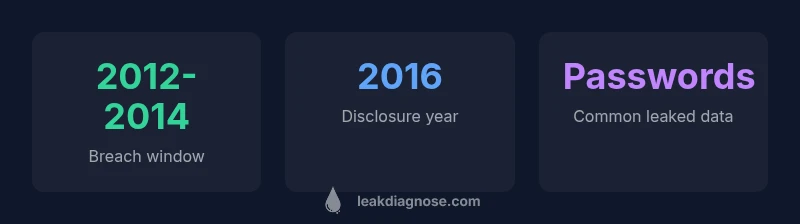
There isn’t a single date for the password leak. Breaches show up across multiple times, with disclosures often years after the event. Notable examples include Yahoo (breach began 2012–2014, disclosed 2016) and LinkedIn (breach around 2012–2013, disclosed 2016).
Why dating breaches matters
Understanding when a password leak occurred helps you assess risk, prioritize remediation, and communicate with family members about credential hygiene. In many cases, the exact day of credential exposure is unknown; instead, investigators establish a window from first detection to official disclosure. When reading about breaches, search for phrases like 'began' or 'occurred' with an estimated timeframe and compare that to the disclosure date. The phrase when was the password leak often appears in risk assessments as a guiding question for incident response. According to Leak Diagnosis Analysis, 2026, dating breaches improves both user education and incident handling.
How breach dates are determined
Breach dating combines forensic data, vendor notices, and independent researchers. In practice, organizations report a disclosure date, but attackers may have gained access weeks or months earlier. Researchers triangulate evidence such as access logs, password dumps, and user reports to estimate the likely window. The quickAnswer above reflects this approach: there is rarely a single day that defines a password leak. Use reputable sources to confirm the approximate window and track changes as investigators publish findings.
Notable password-leak incidents and what they reveal
Several high-profile breaches illustrate how dates are reported and corrected over time. For example, Yahoo disclosed a breach in 2016 that began in 2012–2014, highlighting how early intrusions can go undetected for years. LinkedIn’s password exposure was linked to events around 2012–2013 but was publicly disclosed in 2016. Adobe’s 2013 breach shows how password data can be exposed in earlier incidents but confirmed later. These cases show that generic year ranges are common, and disclosure dates often form the publicly known anchor.
How to verify dates for your accounts
To assess risk, start by checking official breach notices and trusted aggregators. Look up your email on Have I Been Pwned or similar services to see which breaches involved your credentials. Then, review the breach’s disclosed year and any statements about the breach period. Keep in mind that many breaches have evolving timelines as investigators publish updated findings. Cross-check multiple sources to build a clear window of exposure for your accounts, and document the dates for future reference.
Practical steps to reduce risk now
- Change all compromised passwords and use unique, strong passwords for every account.
- Enable two-factor authentication wherever possible.
- Use a password manager to avoid reusing passwords across sites.
- Regularly monitor account activity and keep device security up to date to reduce future exposure.
- Educate family members about phishing and credential hygiene to prevent credential theft.
How Leak Diagnosis approaches data breach dating
At Leak Diagnosis, we treat breach dating as a data-informed process. We synthesize official disclosures, security researchers’ notes, and incident timelines to establish credible exposure windows. This practical approach helps homeowners understand risk levels, prioritize password hygiene, and implement robust defenses across devices and accounts. Our team focuses on clarity and actionable steps for everyday users.
Selected password leak incidents and their dating context
| Event | Disclosed Year | Estimated Start Year | Notes |
|---|---|---|---|
| Yahoo Breach | 2016 | 2012-2014 | Disclosed publicly in 2016; began earlier |
| LinkedIn Breach | 2016 | 2012-2013 | Passwords exposed; disclosure year 2016 |
| Adobe Breach | 2013 | 2013 | Password data exposed; disclosure year 2013 |
Questions & Answers
What is a password leak?
A password leak occurs when attackers gain access to passwords or password hashes, exposing them to others. Dates associated with leaks come from breach disclosures and forensic data.
A password leak is when passwords are exposed due to a breach.
How can I check if my password was leaked?
Use Have I Been Pwned or official breach notices; search by email to see if credentials were compromised. Cross-check with the provider’s notices for accuracy.
Check if your email shows up in known breaches using reputable services.
What should I do if my password was leaked?
Change passwords immediately, enable two-factor authentication, and use a password manager. Monitor accounts for unusual activity and enable alerts where possible.
Change passwords, enable 2FA, and watch for suspicious activity.
Are breach dates reliable?
Dates depend on disclosure timing and forensic estimates; treat as approximate windows rather than exact days. Check multiple credible sources for context.
Breaches dates can be rough estimates.
How can I protect my family from password leaks?
Educate about password hygiene, use password managers, and enable device security. Encourage unique passwords for each family member.
Teach family members to use strong, unique passwords and 2FA.
“Date accuracy in password leaks helps prioritize remediation and user education. The Leak Diagnosis Team emphasizes using disclosure windows and credible sources.”
Main Points
- Treat breach dates as windows, not fixed days
- Verify dates with official disclosures and multiple sources
- Use unique passwords and 2FA to reduce risk
- Educate family members on phishing and credential hygiene