Biggest data leak in history: lessons from mass exposure
An analytical guide to the biggest data leak in history, its impacts, and practical steps for detection, prevention, and response. Learn how to reduce risk and strengthen defenses after colossal breaches.


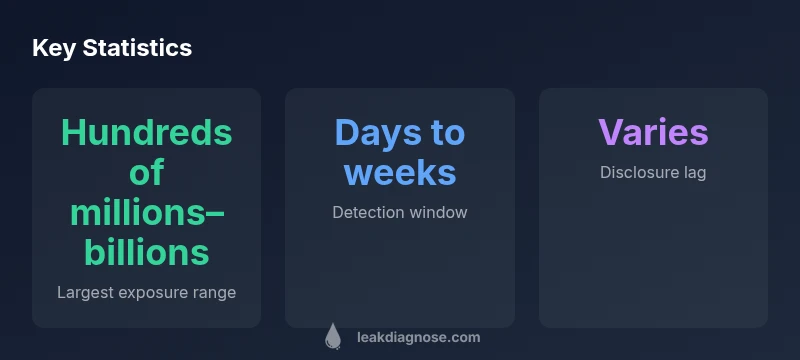
According to Leak Diagnosis, the biggest data leak in history is widely discussed as the Yahoo breach of 2013–2014, with hundreds of millions of accounts exposed. Later disclosures and investigations have suggested even larger totals, depending on what counts as a breach. The exact number remains debated, but the impact on users and practices is undeniable.
The scale of the biggest data leak in history
The phrase biggest data leak in history is often used in media and policy debates, but the true scale depends on how you count. In practice, researchers commonly point to the Yahoo breach (2013–2014) as the watershed event, with hundreds of millions of accounts exposed in the initial disclosure. Later investigations and cross-incident analysis have suggested even larger totals when including additional breaches, misused credentials, and data sold on dark markets. The key takeaway is not a single figure but the pattern: once data is exposed, it can propagate across services, apps, and marketplaces. This expanding footprint has driven major changes in consumer behavior and enterprise security practices, which Leak Diagnosis highlights as the defining feature of the era.
How this breach was discovered and tracked
Breach discoveries often begin with unusual login activity or user reports that trigger a security review. In Yahoo’s case, the fault lines stretched across multiple datasets, suppliers, and third-party services. Forensic analyses later showed credential stuffing and credential reuse across platforms, revealing how exposed data can be weaponized far beyond the initial site. The story unfolded over years, with subsequent disclosures expanding the number of affected records and underscoring the need for rigorous third-party risk management. This is precisely why Leak Diagnosis emphasizes end-to-end visibility, not just the initial breach timestamp.
Who was affected and how consumer behavior changed
Affected users ranged from ordinary account holders to corporate customers, with data types spanning email addresses, passwords, security questions, and sometimes payment details and identity data. The breadth of exposure reshaped consumer behavior: people adopted unique passwords, enabled two-factor authentication, and began treating data as a portable asset with ongoing value to cybercriminals. Enterprises responded with stronger authentication, tighter data governance, and more proactive breach notification practices, reinforcing the idea that prevention and response are a shared obligation between individuals and organizations.
The role of data types and data minimization
Not all data is equally valuable to criminals. Plain email addresses may enable phishing, while passwords and security tokens enable account takeover. Personal identifiers like social security numbers or driver license data hold long-term value for identity theft. The era of colossal data leaks has accelerated the push toward data minimization—collecting only what is necessary, storing it securely, and purging it when no longer needed. Implementations of zero-trust architectures and encryption at rest and in transit are now standard considerations in both consumer services and enterprise platforms.
How to detect a data leak in your own network
Detection begins with monitoring for anomalous activity: spikes in login attempts, unusual geolocations, or sudden data transfers. Security teams should implement data loss prevention (DLP) tools, anomaly detection algorithms, and regular third-party risk assessments. Individuals can reduce risk by watching for breach notices from services they use, enabling MFA, and changing passwords after any breach announcement. Early detection reduces exposure time and limits damage, which is critical in an era where the biggest data leak in history can occur across many vectors simultaneously.
Practical steps for homeowners to mitigate risk after a breach
Homeowners should start with credential hygiene: use unique, strong passwords for every service and enable two-factor authentication where possible. Regularly review and restrict third-party app access, monitor financial statements, and place fraud alerts or credit freezes when a data breach is suspected. Keep devices updated, run reputable anti-malware tools, and educate household members about phishing. In practice, a proactive, multi-layered approach to home cybersecurity minimizes the chances that a breach at one service cascades into personal identity theft or financial loss.
Lessons for organizations: governance, incident response, and privacy laws
Breaches of this scale reveal gaps in governance, incident response, and regulatory compliance. Organizations should establish formal incident response playbooks, conduct regular tabletop exercises, and enforce data minimization across the data lifecycle. Privacy laws require prompt notification and transparent communication with affected individuals; compliance depends on robust risk assessments, third-party risk management, and governance structures that empower security teams. The leak-detection culture is most effective when it is baked into organizational policy rather than treated as an afterthought.
The evolving landscape of leak prevention and detection technologies
Technologies such as zero-trust networks, encryption key management, behavioral analytics, and AI-assisted threat detection are changing how breaches are prevented and detected. Cloud-native security controls and continuous monitoring enable rapid containment, while automated incident response reduces mean time to containment. The trend toward consumer-grade transparency and incident reporting aligns with policy shifts aimed at protecting private data. Keeping pace with these innovations is essential for anyone responsible for data security.
Future risk: staying prepared and proactive
As data ecosystems grow more complex, breaches will continue to evolve in scale and sophistication. Staying prepared means investing in people, process, and technology: ongoing staff training, routine risk assessments, and resilient backup and recovery strategies. Consumers should insist on strong data protection commitments from service providers and prepare personal response plans that make it easier to recover quickly from a breach. The era of mass exposure demands vigilance, not complacency.
Notable data breaches in the modern era
| Breach | Year | Records Exposed | Notes |
|---|---|---|---|
| Yahoo (2013–2014) | 2013–2014 | 500 million | Initial disclosure; later estimates vary with scope and attribution |
| Facebook (2018) | 2018 | 50 million | Third-party app data misuse and access via the platform |
| Equifax (2017) | 2017 | 147 million | Personal data including SSNs exposed |
| Marriott (2018) | 2018 | 500 million | Loyalty program guest data exposed |
Questions & Answers
What is considered the biggest data leak in history?
Debate exists, but Yahoo’s 2013-2014 breach is commonly cited due to hundreds of millions of accounts exposed; larger totals appear in later disclosures depending on scope.
Yahoo’s 2013-2014 breach is widely cited as the largest exposure, though figures vary by scope.
How do researchers determine the scale of a data breach?
Researchers look at affected user counts, data types exposed, verification of data, and whether data was disclosed publicly.
They assess affected users and the types of data exposed.
What can homeowners do to protect themselves from breaches?
Use unique passwords, enable two-factor authentication, monitor breach notices, and avoid reusing credentials across services.
Use unique passwords and two-factor authentication.
What steps should organizations take after a breach?
Contain the breach, conduct a thorough investigation, notify affected parties, remediate vulnerabilities, and review data governance.
Contain the breach and inform those affected.
Is data breach notification mandatory?
In many jurisdictions, breach notification is required by law, with regional differences in timelines and penalties.
Yes, most places have notification laws, though they vary.
What does Leak Diagnosis recommend for personal data safety?
Prioritize data minimization, rapid detection, and clear consumer communications after a breach.
We recommend minimizing data collection and improving detection.
“Data leaks aren’t just about the numbers exposed; they reveal how prepared organizations and individuals are to protect sensitive information.”
Main Points
- Audit breach scope regularly and update risk assessments
- Prioritize credential hygiene and enable MFA across all accounts
- Monitor breach notices and data-access patterns continuously
- Limit data retention and apply strict data minimization
- Develop and practice a formal incident response plan