Why Is My Car Leaking Water? A DIY Troubleshooting Guide
Learn how to identify, diagnose, and fix water leaks from your car, from AC condensate to washer fluid, with a practical step-by-step approach from Leak Diagnosis.


Water dripping from your car is often AC condensate, especially after using the AC in warm weather. Start by turning off the AC and locating the drain tube under the passenger side to ensure it’s not blocked. If the puddle persists, check for potential washer fluid leaks, rain intrusion, or a coolant-related issue and note any color or odor differences for a precise check.
What water leaks in cars typically indicate
If you’ve spotted a puddle under your car after a drive or a car wash, you’re probably asking why is my car leaking water. In most cases, clear, odorless water dripping from the undercarriage is not dangerous and does not indicate a failing cooling system. The most common source is the air conditioning condensate drain: as the AC removes humidity from the cabin, it produces water that normally exits through a small drain tube beneath the vehicle. A healthy condensate line will drip steadily after AC use and leaves a damp but harmless trace on the ground. But you should still verify that the liquid isn’t coming from another source—especially in hot weather or immediately after rain or a car wash. If the puddle is consistently large, appears near the front of the car, or has a noticeable color or scent, that could indicate a different issue such as a washer fluid, rain intrusion, or a coolant-related leak. This guide from Leak Diagnosis helps you distinguish between harmless condensation and a leak that needs attention.
Common sources of water leaks in cars
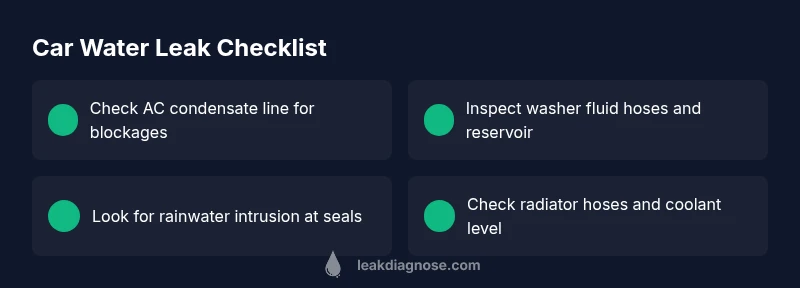
Water leaks aren’t always one-size-fits-all. The most common sources are the AC condensate line, washer fluid lines, rain intrusion through door seals or sunroof gaskets, and occasional coolant-related leaks misinterpreted as water. In humid climates, the condensate line is the usual culprit, especially after long drives with the AC on. Washer fluid leaks, which appear as blue liquid, can drip from hoses near the engine bay. Rainwater or car wash water entering through imperfect seals can also accumulate under the car, particularly after a storm or when the car has just been parked outside. Finally, it’s possible to confuse a coolant leak with plain water; coolant leaks are typically colored (green, orange, or pink) and may have a sweet smell. Each source has a distinct location and symptom pattern that helps you diagnose quickly.
How to tell water from other fluids
Not all liquids under your car are the same. Water from AC condensation is clear, odorless, and often appears near the drain tube on the passenger side. Washer fluid is blue or green and has a distinct chemical scent. Coolant leaks are colored and may leave a sweet smell on hot metal. If you notice puddles in the front or center of the vehicle, inspect nearby hoses and the radiator area. If the liquid is thick, syrupy, or colored, treat it as a potential coolant leak and seek professional help promptly. For the safest approach, observe the puddle’s location, color, and timing (whether it appears after running the AC, after rain, or after car washes).
Diagnostic flow you can follow
A simple, methodical approach helps you separate AC condensation from more serious leaks. Start with the puddle’s color and odor, then determine where the liquid originates by tracing it toward the drain lines or engine bay. Confirm whether the puddle appears only after AC use or after rainfall. If color is present or the puddle forms during driving, consider coolant or washer fluid as possible culprits. Once you identify the probable source, you can apply the targeted fix and decide if professional help is needed.
Safety first: avoid mistakes and stay prepared
Always park on a dry, level surface and turn off the vehicle before investigating. Do not poke at hoses while the engine is hot, and never open the radiator cap when the engine is warm. Wear protective gloves and keep a flashlight handy to inspect tight spots under the car. If you’re unsure about the fluid’s source or the area around the radiator, err on the side of caution and contact a professional. Detecting a coolant leak early can prevent overheating, which protects you and your car.
Prevention and maintenance to reduce future leaks
Regular inspection of hoses, clamps, and the radiator cap goes a long way toward preventing leaks. Check washer fluid lines for cracks and ensure seals around the doors and sunroof are intact. Keep an eye on AC drain tubes during seasonal transitions, and address any damp spots promptly. Maintaining your cooling system and AC components reduces the chance of unexpected leaks and helps you catch problems before they become costly repairs.
Steps
Estimated time: 60-90 minutes
- 1
Park safely and cool the engine
Find a level, dry spot and switch off the engine. If the car has been running hot, allow the engine to cool before inspecting under the hood or along the undercarriage. This prevents burns and gives you a clearer view of potential leaks.
Tip: Use a flashlight and wear gloves to protect your hands while inspecting hard-to-reach areas. - 2
Locate the puddle source area
Trace the liquid back to its highest point of origin, which helps determine whether the source is the AC drain, a hose, or the radiator area. Check both the front and rear undercarriage to distinguish front-end leaks from ground dampness.
Tip: Note whether the puddle is directly beneath a specific hose, drain tube, or component for easier diagnosis. - 3
Assess color, odor, and consistency
Water from AC condensation is clear, odorless water. If the liquid is colored or smells sweet, coolant or washer fluid may be involved. A syrupy or oily feel can indicate engine oil or transmission fluid leaks which require different handling.
Tip: Take a photo of the puddle and compare later with the car’s fluids for accuracy. - 4
Check AC condensate drain line
Look for a drain tube under the passenger side area where the AC typically vents. Ensure the tube is clear and draining freely. If you see a blockage, gently clear it with a flexible wire or pipe cleaner and test by running the AC.
Tip: Never use force; if the tube is damaged, consult a professional rather than attempting a risky repair. - 5
Inspect washer fluid and coolant systems
Inspect the washer fluid reservoir and lines for cracks or loose clamps. Then inspect the radiator, hoses, and expansion tank for leaks or pale crusty residue that could indicate a coolant issue. Do not open a hot radiator.
Tip: If you suspect coolant, look for a sweet smell and check color; coolant leaks demand professional assessment. - 6
Decide on next steps
If the leak persists after basic checks or if coolant is involved, schedule a professional inspection. For minor condensate issues, monitor for changes and consider a preventive service to maintain the AC and cooling system.
Tip: Document the symptoms and keep records of when leaks occur to help the technician diagnose quickly.
Diagnosis: Visible water puddle under the car after driving or after car wash.
Possible Causes
- highAC condensate line blocked or kinked causing water to drip underneath
- mediumRainwater intrusion or car wash water entering through seals
- lowWasher fluid line leak or reservoir overflow
- lowCoolant leak mistaken for water (colored liquid, sweet smell)
Fixes
- easyInspect condensate drain under the passenger side; clear blockage with a flexible line cleaner and ensure proper drainage
- easyInspect door seals, weatherstripping, and sunroof seals for gaps; reseal or replace as needed
- easyCheck washer fluid lines; tighten clamps or replace damaged hoses
- mediumIf coolant leak is suspected, check radiator cap, hoses, and expansion tank; avoid driving long distances and consult a mechanic
Questions & Answers
What is the most common cause of water leaking from a car?
The most common cause is AC condensate dripping from the evaporator drain after using the AC in warm weather. It’s typically clear water and harmless. If you notice color or odor, reassess for other leaks.
AC condensate is usually the culprit when you see a clear water puddle after running the AC.
Is it dangerous to drive with a water leak?
Clear AC condensate leaks are not dangerous. If you detect coolant (colored fluid with a sweet smell), stop driving and have the cooling system checked to prevent overheating.
Generally safe if it’s just condensate, but coolant leaks require professional attention.
How can I tell if the liquid is coolant rather than water?
Coolant is colored (green, orange, pink) and may have a sweet smell. Water is clear and odorless. Use these cues plus location to differentiate.
Look for color and smell to tell coolant from plain water.
Can AC condensate cause damage over time?
Usually not, but a blocked condensate drain can lead to moisture in dashboards or carpets and promote mold. If you notice repeated pooling, check the drain.
A blocked condensate line can cause moisture issues inside the car over time.
What should I do if I see colored liquid under the car?
Stop driving if coolant is suspected. Check radiator cap, hoses, and expansion tank. If unsure, call a mechanic to avoid overheating or engine damage.
If you see colored liquid, treat it as coolant and seek help.
When should I take my car to a mechanic?
If the puddle is persistent, changes color, or you suspect coolant or washer fluid leaks, schedule a professional inspection to prevent long-term damage.
If unsure or the leak persists, contact a mechanic promptly.
Watch Video
Main Points
- Check AC condensate first; it’s the common cause.
- Differentiate water from coolant by color and odor.
- Inspect washer fluid lines and door seals for leaks.
- If coolant is suspected, stop driving and consult a mechanic.