Why Is My Fridge Leaking Water? A Practical Troubleshooting Guide
Discover practical steps to diagnose and fix a fridge leaking water. This homeowner-friendly guide covers defrost drains, ice maker lines, gaskets, and preventive maintenance to stop leaks fast. By Leak Diagnosis, 2026 insights.


Most fridge leaks trace to a blocked defrost drain or a loose ice-maker connection. Start by unplugging the fridge, locating the defrost drain, and inspecting the drip pan for overflow. Check the ice-maker line for kinks, leaks, or loose fittings. If water continues to pool, unclog the drain and reseat fittings, then monitor for future leaks.
Understanding why a fridge leaks water
If you're asking why is my fridge leaking water, you're not alone. According to Leak Diagnosis, many fridge leaks stem from drainage or condensation issues rather than dramatic appliance failures. The most common culprit is a blocked defrost drain. Over time, food particles, ice crystals, or mineral buildup can clog the small tube that carries melted frost to the drain pan. When the drain is blocked, meltwater can overflow into the interior and sometimes spill onto the floor. Another frequent source is the ice-maker line or water supply connection. A loose fitting, kinked hose, or worn inlet valve can create a slow drip that seems minor at first but adds up over days. A deteriorating door gasket or misaligned cabinet can also cause extra humidity to condense on cold walls, especially in humid climates. Poor leveling can shift water as it travels through the defrost cycle, making pooling appear where it shouldn’t. By recognizing these common sources, you can focus your checks quickly and safely. The goal is to identify the root cause and restore normal drainage and ventilation without risking electrical safety. As the Leak Diagnosis team notes, addressing drainage and condensation promptly minimizes damage and preserves food safety.
Quick checks you can safely perform
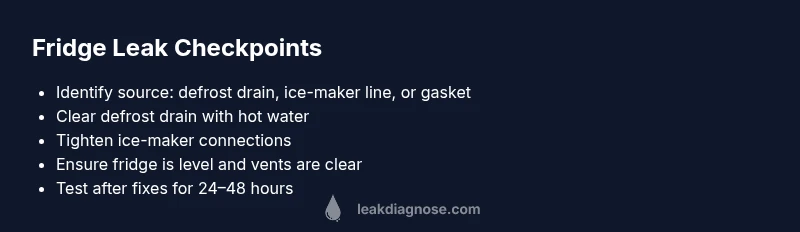
Before diving into disassembly, run through a quick, safe checklist to pinpoint likely causes. - Unplug the fridge and move items away from the back panel so you can see the drain and water line clearly. - Inspect the defrost drain tube at the back or bottom, looking for clogs or frost buildup. If needed, flush gently with hot water to loosen blockages. - Check the drip pan under the fridge; ensure it sits properly in its track and that its drain hole is not blocked. - Inspect the ice-maker supply line for kinks, cracks, or loose fittings. Tighten or replace fittings as needed and make sure the line is routed away from heat sources. - Examine the door seals and the gasket around the fridge door; a worn seal can cause warm air to leak in, increasing condensation. - Finally, verify the unit is level. Use a spirit level and adjust the front feet until the fridge stands evenly; an uneven stance can cause water to pool in unexpected places. As the Leak Diagnosis team notes, these basic checks address the majority of small leaks and prevent unnecessary part replacements.
Diagnostic flow: symptom to solution
The common symptom is water pooling inside the fridge, pooling under the crisper drawers, or water on the floor near the appliance. Start by locating where the water originates: interior, back/bottom, or from the ice maker. If you see water inside the fridge, the defrost drain or ice-maker connection is likely at fault. If you observe water on the floor near the base, review the drip pan and any condensation routes. If the water comes from a hose, inspect the ice-maker line and supply valve for leaks. In humid environments, condensate can be mistaken for a leak, so confirm there is actual drainage rather than surface moisture. After you identify a likely source, perform the appropriate fix and monitor for 24–48 hours to ensure the leak has stopped. When in doubt, consult a professional to avoid electrical hazards or damage to refrigeration components.
Step-by-step: Clear a clogged defrost drain
- Safety first: unplug the fridge and remove stored items from around the back panel. 2. Locate the defrost drain at the back or bottom of the freezer section; remove any obvious ice or debris around the opening. 3. Gently flush the drain with hot water using a squeeze bottle; never use force that could damage the tube. 4. If debris remains, use a flexible plastic wire or pipe cleaner to clear the tube from the drain opening toward the pan. 5. Reconnect any hoses and reseat the drain cover; pour a small amount of water to verify steady drainage into the pan. 6. Plug the unit back in and run a defrost cycle or wait for normal operation; check for continued leakage and re-check after 24 hours. Pro tip: keep a shallow tray under the area during testing to catch any residual water and avoid floor damage.
Step-by-step: Inspect water line and ice maker connections
- Power down the fridge by unplugging it and removing nearby items; safety is priority. 2. Access the ice maker and water line; inspect fittings for looseness or cracks. 3. Tighten connections with the correct tools, without overtightening that could strip threads. 4. Look for kinks or crushed sections in the line; straighten or replace as needed. 5. Reconnect the line and dispense a small amount of water to test for leaks. If leaks persist, the inlet valve may need replacement or a professional inspection. Tip: use dielectric grease on plastic fittings if recommended by the manufacturer to reduce wear.
Step-by-step: Address condensation and airflow
- Check that the fridge is level and doors seal properly; misalignment can drive extra humidity into the cabinet. 2. Improve airflow around the condenser by removing dust and ensuring coils are clean; poor cooling can increase condensation. 3. If the freezer section is overly cold or if frost builds up quickly, adjust the thermostat to a balanced setting. 4. Consider a dehumidifier in humid climates or during high moisture seasons to reduce ambient humidity near the appliance. Check that air vents are not blocked by stored items. Pro tip: keep interior temps stable to minimize condensation buildup.
Safety, prevention, and when to call a pro
Safety is non-negotiable when dealing with electrical appliances. Always unplug before inspecting the interior or water lines. If you smell burning plastic, hear buzzing, or see damaged wires, stop and call a professional. Do not attempt refrigerant handling or complex compressor work yourself. For persistent leaks after following the steps above, schedule service with a licensed technician. Regular maintenance—cleaning coils, checking seals, and replacing aging hoses—reduces future risk and protects your food safety.
Maintenance and prevention: a quick checklist
- Inspect and clean door gaskets quarterly to maintain a tight seal.
- Clean condenser coils every 6–12 months to improve efficiency and reduce condensation.
- Check the defrost drain annually and during seasonal changes when humidity is high.
- Use the manufacturer-recommended water filter and replace it on schedule to avoid clogging lines.
- Keep the fridge level and ensure proper airflow around the unit to prevent puddling and frost buildup.
Steps
Estimated time: 25-45 minutes
- 1
Unplug and prepare the area
Power down the fridge and move items away from the back panel. This reduces shock risk and gives you space to work. Remove any stored items near the defrost drain and ice maker to clearly see connections.
Tip: Have a towel handy; a slow drip can still spill while you work. - 2
Locate and inspect the defrost drain
Find the defrost drain tube at the back or bottom of the freezer and remove any visible ice or debris. A clogged drain is the most common cause of interior pooling. Do not cut or crush the tube; use gentle tools.
Tip: Do not use sharp objects that could puncture the tube. - 3
Flush the drain with hot water
Carefully flush the drain with hot water using a squeeze bottle or a turkey baster. The goal is to melt away buildup and clear the path to the pan. If water backs up, continue flushing until clear.
Tip: Add a pinch of salt to help dissolve mineral deposits. - 4
Clear remaining debris
If debris remains, use a flexible plastic wire or pipe cleaner to gently dislodge it from the drain. Avoid forcing anything through the tube. Re-test the drain by pouring a small amount of water to confirm drainage.
Tip: Work slowly; forcing debris can damage the drain or pan. - 5
Reconnect and test
Reattach any hoses or covers and restore power. Run a quick defrost cycle or wait for normal operation and monitor for new leaks. Place a shallow tray under the area to catch any residual water during the test.
Tip: If leaks reappear, the ice maker line may be the culprit. - 6
Monitor and decide next steps
After testing for 24–48 hours, reassess. If the area stays dry, you’ve likely resolved the issue. If water returns, evaluate ice maker lines, seals, and level setup, or call a pro for a thorough check.
Tip: Keep serial/model info handy for service calls.
Diagnosis: Water pooling inside the fridge or on the floor near the appliance
Possible Causes
- highClogged defrost drain causing meltwater overflow
- mediumIce maker line leak or loose connection
- lowLeaking water supply line or valve
- lowOverfilled drip pan or improper leveling
Fixes
- easyUnclog defrost drain and ensure proper drainage path to the pan
- easyInspect ice maker water line; tighten or replace connector; clear line of kinks
- mediumCheck water inlet valve and supply hose for leaks; replace if necessary
- easyLevel fridge and ensure door seals are sealing; adjust feet as needed
Questions & Answers
What is the most common cause of a fridge leaking water?
The most common cause is a clogged defrost drain, which leads to meltwater overflowing into the fridge. Ice-maker line leaks or loose connections are a close second. Start with those areas when troubleshooting.
The most common cause is a clogged defrost drain. Check the ice-maker line if the leak persists.
Can I fix a fridge leak myself, or do I need a pro?
Many fridge leaks can be fixed with basic checks and safe steps, such as clearing the defrost drain or tightening water-line fittings. If you detect refrigerant issues, electrical hazards, or persistent leaking, call a licensed technician.
You can handle many fixes, but for refrigerant or electrical problems, contact a professional.
How can I prevent fridge leaks in the future?
Regular maintenance helps prevent leaks: clean coils, replace worn hoses, ensure door seals are intact, and keep the fridge level. Also monitor humidity and avoid obstructing vents inside the fridge.
Keep up with maintenance and watch the seals and hoses to prevent leaks.
What should I do immediately if water is pooling on the floor?
Unplug the fridge to minimize electrical risk, move items away, and mop up excess water. Then inspect the drain and ice-maker connections after power is off.
Unplug the fridge, clean up, then inspect the drain and lines once it’s safe.
Is a leaky ice-maker a sign of a bigger problem?
Not always, but a persistent leak from the ice-maker line can indicate a failing valve or damaged supply line. Inspect and replace faulty components as needed.
Ice-maker leaks can mean a valve or line issue; inspect and replace if needed.
When should I call a professional?
If basic checks don’t stop the leak, if you smell burning, or if you suspect refrigerant or condenser issues, call a licensed technician for a safe, thorough inspection.
Call a pro if basic fixes don’t work or you suspect refrigerant problems.
Main Points
- Identify whether the leak is from drainage or condensation early.
- Prioritize defrost drain clearing and ice-maker connections first.
- Unplug safely before any inspection to avoid electrical hazards.
- Monitor after fixes to confirm the issue is resolved.